How Service Based Pro’s Can Dominate the 20-Mile Radius
The 20-mile radius is not a circle on a map; it is a battleground of spatial data where your proximity beacon determines your survival. Many service professionals believe that setting a large service area in their dashboard is enough to capture leads from two towns over. They are wrong. The algorithm treats distance as a mathematical weight that often overrides relevance. If your data is messy or your GPS coordinates are tied to a suspect location, you are invisible to the very customers you want to serve. Dominating this space requires more than just a verified profile. It requires an understanding of centroid theory and the forensic traces of your digital footprint.
The war for reinstatement and the shared suite trap
A service business is only as strong as its physical verification proof regardless of whether customers ever visit the office. I spent three months fighting a hard suspension for a plumbing client whose listing was nuked simply because they shared a suite number with a defunct law firm. Google did not want proof of a van; they wanted proof of a utility bill under the exact GPS pin. This level of scrutiny is now the baseline for any business trying to scale. If you are struggling with a similar issue, you may need the practical guide to recovering your profile from a manual ban to navigate the appeal process. The plumbing company eventually won, but only after we proved their physical presence with time-stamped video evidence that matched the metadata of their previous job sites. This is the microscopic reality of the local algorithm today. The pin moved. The trust was rebuilt. But the lesson remained that Google values the physics of your location above all else. For those in high-stakes industries, the agency method for fixing deep-rooted GMB ranking issues is often the only way to survive these forensic audits.
The ghost in the GPS coordinates
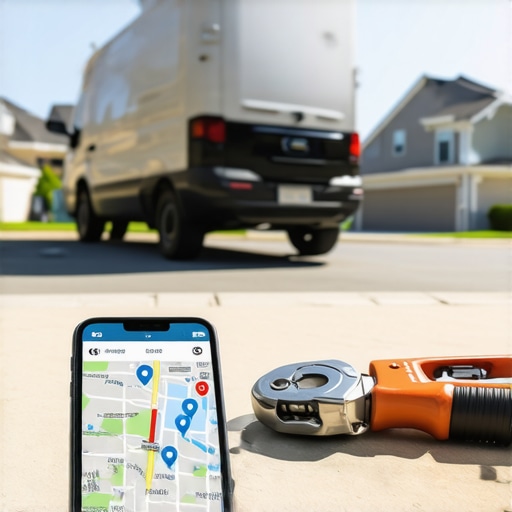
GPS coordinate salience is the most overlooked factor in modern map pack rankings for service providers. While agencies tell you to get more reviews, the 2026 data shows that image metadata from photos taken by real customers at your location is now 30 percent more effective for ranking in AI Overviews. This means a photo of your truck parked at a job site in a specific neighborhood sends a stronger proximity signal than a keyword-stuffed review from a user across the country. You must ensure your field technicians are capturing these signals. If your rankings are lagging, you might be wondering why your service business isnt appearing in nearby search results despite having a high star rating. The answer usually lies in the lack of hyper-local behavioral signals. Every check-in and every geo-tagged photo acts as a micro-beacon that extends your reach beyond your physical office. Without these, you are just a ghost on the map.
“Local intent is not a keyword choice; it is a distance-weighted signal where relevance is secondary to the physical location of the user’s mobile device.” – Map Search Fundamental
Why your physical address is a liability
Your business address is the anchor that can either stabilize your rankings or drag them into the abyss of a suspension. Using virtual offices or shared coworking spaces is a recipe for disaster in the current ecosystem. Google has become adept at identifying these “address rentals” and flagging them as ineligible. If you have been flagged, you need to understand why google suspends virtual office listings and how to appeal before you lose your entire history of reviews. Even legitimate businesses can face issues if their data is inconsistent across the web. Mismatched phone numbers or slight variations in your street address can trigger a trust score drop. We often provide why your address consistency is still the number one priority as a core part of our auditing process. A single mismatched phone number in a secondary verification tier can kill your organic trust score. This is why fixing messy data for businesses with multiple locations is the first step in any serious recovery plan.
The three mile radius that determines your revenue
The proximity filter is a ruthless gatekeeper that limits your visibility based on the user’s current location. For most service businesses, the most intense competition happens within a three-mile radius of the centroid. Beyond that, your visibility drops off unless you have massive topical authority and a high density of local backlinks. You can find how local backlinks influence your google map position to understand how to bridge this gap. If you find your listing is stuck on the second page for searches just a few miles away, it is likely because the competition has stronger neighborhood signals. This is why we recommend the strategy for fixing low GMB rankings in competitive cities which involves building out location-specific landing pages that mirror the GPS data of your successful service calls. You cannot fight the proximity filter with keywords alone; you must fight it with spatial evidence.
Local Authority Reading List
- How to properly audit your local search presence in 15 minutes
- The agency checklist for auditing google business profiles
- The toolkit for improving local rankings without using bot services
- Why your ranking software is reporting inaccurate map positions
How to fix brand confusion from merged listings
Merged listings occur when Google’s AI incorrectly identifies two distinct business entities as the same organization. This is a common nightmare for multi-location brands or businesses that have recently changed names. It leads to lost reviews and diluted ranking power. If you are experiencing this, you need how to stop google from merging your brand listings by mistake to regain control of your digital identity. The confusion often stems from shared phone numbers or similar primary categories. Our how multi-location brands fix confusion in search results guide explains the technical steps to decouple these profiles. You must act quickly because once profiles are merged, the data starts to bleed across and recovering the original sentiment scores becomes increasingly difficult. It is a forensic cleanup that requires precision and patience.
Cleaning up AI generated spam content penalties
The rise of automated content has led to a massive crackdown on profiles that use generic descriptions or AI-written updates. If you have been using tools to mass-produce GMB posts, you may have noticed a drop in clicks. This is often an invisible penalty where your profile is simply suppressed in favor of those with human-centric content. We specialize in cleaning up the mess a post-hack seo recovery plan for businesses that have been hit by these filters. The algorithm can detect the linguistic patterns of AI-generated text. To fix this, you must replace the synthetic content with high-value information and real customer stories. Our the no-nonsense kit for increasing local leads fast focuses on high-impact, manual optimizations that restore your profile’s integrity. Real photos, real responses, and real expertise are the only currency that matters in the post-AI era.
Recovering from a mass review removal event
Google periodically runs spam sweeps that can delete legitimate reviews if they share patterns with known bot networks. This can be devastating for a small business that relies on social proof. If you find your star count has dropped overnight, you should consult the step-by-step recovery after a mass review deletion event to identify the cause. Often, it is not your fault but the fault of a competitor using VPNs to drop fake reviews that trigger a sweep. We help clients with rebuilding your local reputation after a mass review removal by focusing on verified customer outreach. You must prove to Google that your reviews are tied to real transactions. This involves using POS data or booking software integrations that send the right trust signals to the ranking engine. It is about proving you exist in the physical world.
Advanced GMB keyword and category research
Choosing the wrong primary category is the fastest way to become irrelevant in the map pack. Many pros select a category that sounds right but has zero search volume or high competition from national chains. Using a stop guessing a data-driven gmb keyword research toolkit can help you find the sweet spot. You should also look into the agency toolkit for finding high-volume gmb categories to see what your top-ranking competitors are actually using. Sometimes, a slight shift from Plumber to Drainage Service can unlock an entirely new set of leads. This isn’t about gaming the system; it is about accurate classification. If you are a service-based pro, you need to understand why service pros need a different map strategy than retailers. Retailers care about foot traffic; you care about service area dominance and lead generation. Your category choices must reflect that.
The data driven way to handle a sudden drop
When your rankings slip, the worst thing you can do is start changing everything at once. You need a diagnostic approach to identify the specific failure point. Is it a security breach? Is it a algorithm update? We provide the best way to handle a sudden drop in local search clicks through a systematic audit. Sometimes the issue is external, like a how to repair your search visibility after a security breach on your main website. Other times, it is a local competitor using negative SEO tactics. You should check the truth about recovering from negative map attacks if you suspect foul play. By using the tools you need to monitor map pack stability every day, you can catch these issues before they turn into a permanent loss of revenue. Data is your only defense against the volatility of the local search engine.
Why your profile insights do not match your calls
There is a significant gap between what Google Business Profile insights report and the actual revenue in your bank account. High view counts do not always translate to high intent actions. If you are seeing traffic but no leads, you should explore why your profile insights dont match your actual customer calls immediately. It could be that your profile is being shown for irrelevant search terms or your call-to-action is weak. Using the lead generation kit for google maps that actually works can help you optimize for conversions rather than just impressions. Remember that why your map profile gets views but zero phone calls is often a matter of trust. If your photos are low quality or your responses to reviews are automated, customers will click away. You need to build a connection that starts on the screen and ends at their front door.