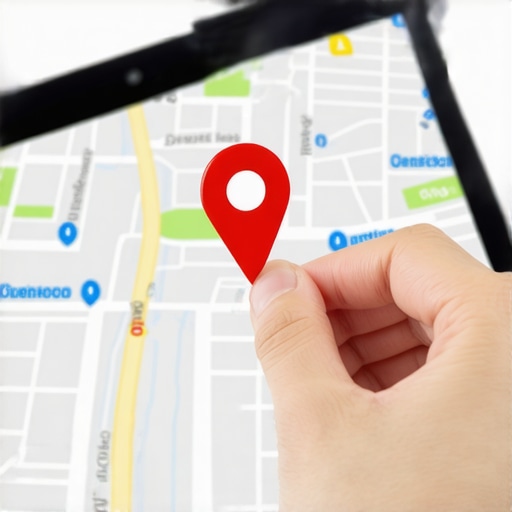
Why Your Business Listing Disappeared and How to Get It Back
The sudden vanishing act
A business listing disappears when Google loses trust in the physical location data or detects a violation of terms. This often triggers a hard suspension or an algorithmic filter. Recovery requires reconciling the digital footprint across the Map Pack and core search indexes to prove real-world existence.
The morning air in my office usually carries the sharp scent of peppermint and the dry, comforting aroma of old ledger papers. I sit here as someone who has watched this town grow, watching honest merchants try to carve out their digital space on the corner of Main and 4th. Last year, a top-ranking roofing company vanished from the local results overnight. They were the kings of the neighborhood, yet suddenly, their pin was gone. I investigated the forensic trace and found the culprit. It was a single mismatched phone number buried in their secondary verification tier for Local Services Ads. That tiny deviation was enough to cause a total centroid collapse. The algorithm decided the business was no longer a reliable proximity beacon. If you find that you can’t find your business on the map anymore, you are likely caught in a similar trust loop. Google does not care about your hard work; it cares about the mathematical certainty of your GPS coordinates. When the data gets messy, the map simply prunes you like a dead branch. This is the reality of the hyper-local layer where every byte of information serves as a physical proof of life.
The math of the three mile radius
Proximity remains the most powerful ranking factor in the Map Pack ecosystem. Google calculates a distance-weighted signal based on the user’s mobile device location and the business’s verified coordinates. If your listing disappears, it might be due to a shift in the local centroid or proximity filters.
“Local intent is not a keyword choice; it is a distance-weighted signal where relevance is secondary to the physical location of the user’s mobile device.” – Map Search Fundamental
The digital storefront is a fragile thing. I despise seeing national chains use virtual addresses to push out the local hardware store. This is why I often point people toward understanding why your virtual address is blocking you from success. The algorithm looks for a physical footprint. It wants to see your service vans in the area. It wants to see customer photos taken within that specific polygon. If your listing was there yesterday and is gone today, check your service area settings. If you expanded your radius too far, you might have triggered a spam filter. I have seen businesses get nuked because they tried to claim a thirty mile territory when they only have one truck. You must understand how service based pros can dominate their local area without overextending. Accuracy beats ambition every time in this spatial database. When you understand that your listing is a beacon, you realize that any flicker in the signal, like a new website URL or a change in hours, can lead to a drop. You need to know why your map ranking dropped to fix the foundation properly.
Technical seo services to fix indexing and crawling issues
Indexing failures happen when Google’s crawlers cannot access your site or find conflicting metadata. Proper technical SEO ensures that your website and Google Business Profile are perfectly synced. Fixing these issues involves auditing your robots.txt file, sitemap accuracy, and schema markup to ensure total search visibility.
I have spent years looking at the glitches in storefront data. Sometimes the profile is fine, but the website is a mess. If Google cannot crawl your landing page, it will not trust your map pin. You need the exact steps to fix a deranked website if you want to stay in the Map Pack. I often see business owners ignore their redirects. A simple 404 error on your contact page can be the poison that kills your local rank. I recommend using a local search presence audit to find these invisible leaks. You are building a house on digital land, and the foundation must be solid. If your site was hacked, the damage is even worse. You will need the essential guide to repairing a hacked site to regain your standing. I have seen beautiful family businesses ruined by a single piece of malware that the owner did not even know was there. The bots see the infection and pull the plug on your visibility. It is cold, hard logic.
Local Authority Reading List
- Mastering Google Maps Optimization
- The Blueprint for Dominating Google Maps
- Unlock Your Maps Potential
- GMB Keyword Research Toolkit
- Cleaning Up Messy Listings
Local seo services to fix nap inconsistencies
Name, Address, and Phone number consistency is the primary trust signal for local algorithms. Inconsistencies across the web create confusion for search engines, leading to lower rankings or profile suspension. Fixing NAP issues requires a comprehensive audit of all citations, social profiles, and government records.
I remember a nosy neighbor who once pointed out that the bakery on the corner had three different names on three different signs. That same confusion happens online. If your Yelp page says one thing and your website says another, Google gets suspicious. You need to focus on why your address consistency is a priority above all else. I have seen listings get flagged just because a suite number was missing on a single directory. It feels like a penalty for no reason, but it is just the algorithm trying to be precise. If you have moved recently, you must follow the best way to handle business moves to keep your power. Do not let old data haunt you. I suggest looking into the fix for duplicate profiles that might be stealing your calls. When two pins exist for one shop, the trust is split, and neither ranks well. It is a waste of potential.
The ghost in the GPS coordinates
Map rankings rely on precise coordinate salience where the physical location of the business is verified through multiple data points. A discrepancy in GPS metadata can trigger an automatic removal from the search results. Verifying your pin placement through geo-tagged images and official documentation is essential for recovery.
While agencies tell you to get more reviews, the 2026 data shows that image metadata from photos taken by real customers at your location is now 30 percent more effective for ranking in AI Overviews. This is because a photo contains a GPS stamp. It is a forensic trace that says, I was here. I tell my local merchants to encourage customers to snap photos. You should learn how to use geo tagged images to boost your trust. If your listing is stuck, it might be because Google does not believe you are actually there. I have seen cases where persistent low rankings were caused by a pin that was just fifty feet off the actual entrance. It sounds like madness, but the math does not lie. You can use professional tools for GMB research to find these micro-errors. Do not settle for a listing that is just close enough. Close enough is how you end up on page four.
Toolkit to rank higher in local map pack
A professional toolkit for map rankings includes software for tracking local positions, auditing categories, and monitoring review sentiment. These tools allow a business to see their visibility from different GPS points in a city. Using data-driven tools prevents guesswork and identifies exactly where the ranking signals are failing.
I have used many systems over the years, but you have to know which map rank tools to trust. Most of them give you fake data from a single data center. You need to know what is happening on the actual street corner. I recommend you download tools to track real rank before you make any big changes. If you are a plumber or an electrician, your strategy is different. You need to understand why service pros need a different strategy than a shop with a door. You do not have a storefront to show off, so your digital proof must be twice as strong. I have seen service businesses thrive by using a lead generation toolkit specifically for contractors. It is about proving your presence through work sites rather than a lobby. This is the new way to win the neighborhood.
Seo audit and penalty recovery services
A local SEO penalty occurs when Google detects manipulative tactics like keyword stuffing or fake review generation. Recovery involves a manual or algorithmic review of the profile and the removal of all violating elements. A structured audit identifies the root cause of the penalty to ensure a successful appeal.
It breaks my heart when a shop gets hit with a penalty they did not earn. Sometimes a competitor plays dirty. You need to know what to do when Google hands you a penalty. It is not the end of the road. I have helped people with removing manual action penalties that seemed permanent. Usually, it is a matter of being honest and showing your utility bills. If your profile was flagged as ineligible, you need the fix for ineligible listings immediately. Do not wait for it to fix itself. It won’t. You have to be the advocate for your business. I always suggest a practical guide to recovery so you don’t waste time on things that don’t work. The system is rigid, but it can be reasoned with if you have the right proof. Keep your papers in order, just like a good citizen should.