Why Service Pros Need a Different Map Strategy than Retailers
Why Service Pros Need a Different Map Strategy than Retailers
I spent three months fighting a hard suspension for a plumbing client whose listing was nuked simply because they shared a suite number with a defunct law firm. Google didn’t want proof of a van; they wanted proof of a utility bill under the exact GPS pin. This is the reality of the service area economy. I smell like diesel exhaust and stale coffee from sitting in traffic between client locations. I have watched a thousand plumbers and roofers lose their livelihoods because they did not understand that the algorithm treats a moving van fundamentally differently than it treats a stationary boutique. If you are a service professional, you are not just managing a profile. You are managing a proximity beacon in a shifting spatial database. The rules that apply to a coffee shop will get your contractor business banned if you follow them blindly.
The invisible walls of service area boundaries
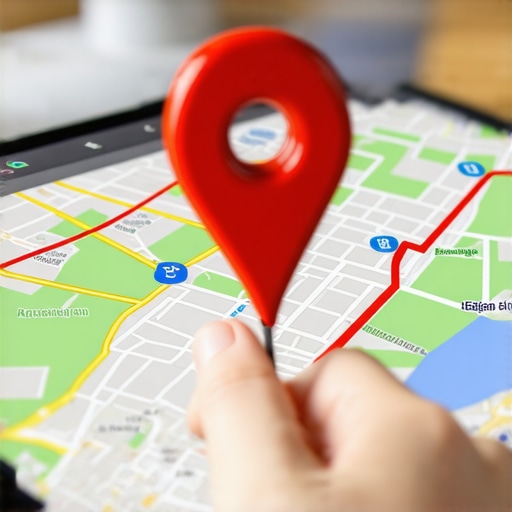
Service area businesses must define their reach through geographic polygons rather than static points on a map. While a retailer relies on the physical storefront to draw customers, a pro must signal activity across a wide radius. This involves using specialized tools and granular data to prove presence in every zip code served. The logic of the map pack is built on a centroid. For a retail shop, the center of that circle is the front door. For you, the center is a moving target. If you are trying to understand how local service pros can win the map pack without an office, you have to stop thinking about a single pin. You have to start thinking about territorial dominance. I often see pros make the mistake of setting a service area that is too large. When you tell Google you serve a 100-mile radius, you dilute your authority. The algorithm looks at your business and sees a lack of focus. It prefers a concentrated signal where you can prove consistent customer interaction. This is why the fix for map listings flagged as ineligible for local search often involves shrinking your service area to a manageable, verifiable zone.
“Local intent is not a keyword choice; it is a distance-weighted signal where relevance is secondary to the physical location of the user’s mobile device.” – Map Search Fundamental
Why your physical address is a liability
A physical address for a service business can often trigger automated filters designed to catch map spam. Google expects retailers to have signage and foot traffic, but for service pros, an address is frequently just a residential home or a shared suite. This creates a trust gap that leads to sudden suspensions. If you are using a home address, you have to hide it. If you don’t, you are a target for competitors. I have spent years as a map-spam investigator, and the first thing I look for is a contractor with a visible residential address. It is a signal of an amateur. Many pros struggle with why your virtual address is blocking you from the top 3 spots. Google has become incredibly sophisticated at identifying UPS stores, Regus offices, and coworking spaces. They use street view data and lease registries to verify if a business actually exists there. If you are caught in this trap, you need seo consulting services for complex penalty cases to untangle the mess. The algorithm wants to see a real footprint, not a rented mailbox. When a pro tries to use a fake address to rank in a nearby city, they are setting a ticking time bomb. The math of the proximity radius will eventually catch the mismatch between the stated location and the actual source of the service calls.
The math behind the three mile proximity radius
Proximity is the most powerful ranking factor in the modern local algorithm, often outweighing reviews and backlinks combined. For service pros, this means your ability to rank drops off significantly once a user is more than three miles from your verified location point. This is the vicinity effect. To combat this, you need a strategy that builds authority outside your immediate neighborhood. This is not about keyword stuffing. It is about behavioral signals. When a customer in a different zip code searches for your service, Google looks for proof that you have worked there before. This proof comes from geo-tagged images, localized reviews, and area-specific landing pages. If you notice your rankings are failing, you might need to identify why your profile rankings slipped. Often, it is because a new competitor has moved into a closer centroid. You cannot fight physics with just words. You need a lead generation kit for google maps that actually works by leveraging local justifications. Justifications are those small snippets of text in the map pack that say things like “Provides service to this area” or “Their website mentions boiler repair.” These are triggered by the connection between your website content and your Google Business Profile. Without this alignment, you are invisible beyond your front yard.
Local Authority Reading List
- The Essential Audit for GMB Category Choices
- Strategies to Stabilize Dropped Map Rankings
- How Agencies Fix Deep Rooted Ranking Issues
- Professional Tools for GMB Research
- Using Geo-Tagged Images for Map Success
The ghost in the GPS coordinates
GPS salience is the invisible score Google assigns to a location based on the historical data of mobile devices entering and leaving that space. For a service pro, this data proves that your business is active and legitimate even without a traditional retail storefront. It is forensic proof of life. When you take a photo of a completed job at a customer’s house and upload it to your profile, you are providing a coordinate signal. This is why I always tell my clients to stop using stock photos. Stock photos have no soul and no metadata. A real photo taken on-site contains a timestamp and a GPS coordinate that matches the service area you claim to cover. This is a massive boost for how to use geo-tagged images to support map rankings. If you are struggling with a lack of calls, you should check why your map profile gets views but zero phone calls. It is often because your profile lacks the visual proof of your local activity. People want to see your truck in their neighborhood. They want to see that you are actually a local merchant and not a lead-generation site based in another country. The algorithm is smart enough to detect these patterns. It tracks the movement of your fleet and the locations where your reviews are generated. If all your reviews come from one spot, but you claim to serve fifty cities, the math does not add up. This creates a trust deficit that keeps you on page two.
Fix the chaos of merged brand listings
Brand confusion occurs when Google merges two separate business listings because they share similar names, phone numbers, or addresses. This is a common nightmare for service professionals who have changed business names or moved locations without properly cleaning up their legacy data. I have seen entire companies disappear because Google decided their new profile was a duplicate of an old, abandoned one. Fixing this requires fixing brand identity issues across several map locations. You have to go into the data layer and prove to Google which listing is the authoritative one. This often involves seo services to fix brand confusion from merged gmb listings. You cannot just delete the old listing and hope for the best. You have to merge them correctly to preserve the review history and ranking power. If you don’t, you lose years of reputation. This is especially vital for multi-location brands. If your data is messy, Google will pick the wrong location to display, or worse, it will filter them all out. You need why your multi-location business needs a uniform data strategy to ensure that every branch of your company is seen as a distinct, legitimate entity. Mismanaged data is the fastest way to kill your local SEO efforts.
Stop buying citations that do nothing
Generic citation blasts to low-quality directories are a waste of resources for service professionals in 2025. The algorithm now prioritizes local, industry-specific relevance over a high volume of weak backlinks that carry no geographic weight or local trust. I hate seeing agencies sell these packages to honest tradespeople. They tell you that you need 200 citations to rank. It is a lie. You need the ten citations that actually matter in your city. These are your local chamber of commerce, local news sites, and niche trade directories. If you want to move the needle, you must stop buying citations that dont move the needle. Instead, focus on building local backlinks. A link from a local high school football team website is worth more than fifty links from a directory based in Eastern Europe. This is part of how local backlinks influence your google map position. The goal is to build a web of local relevance that anchors your business to your community. This tells Google that you are a vital part of the local economy. When you combine this with a clean profile, your rankings become much more stable. You should also consider using how to use keyword toolkits for better map visibility to find the terms that local customers are actually searching for, rather than just guessing.
“The distinction between a storefront and a service-area business is the single most important classification in the local ecosystem.” – Location Intelligence Report
Recover from the mass review deletion event
Mass review deletions usually happen when Google detects a pattern of suspicious activity or when your business profile is flagged for a manual audit. For service pros who live and die by their star rating, this can be a catastrophic loss of social proof. I once helped a roofer who lost 40 reviews in a single afternoon. We had to go through a forensic audit of every customer to prove they were real. If this happens to you, you need a plan for the step-by-step recovery after a mass review deletion event. Do not try to replace them all at once with fake reviews. That will only get you banned permanently. You have to earn them back the right way. This involves rebuilding your local reputation after a mass review removal by reaching out to your past happy customers. Ask them to mention the specific service you performed and the neighborhood they live in. This adds geographic context to the review, which helps Google’s AI understand that the review is legitimate. You might also need gmb spam fighting and review cleanup services if you are being targeted by a competitor’s negative SEO attack. Protecting your reputation is a full-time job in a competitive market.
The lead generation kit that works
A successful map strategy for service professionals integrates technical SEO, local brand authority, and aggressive conversion optimization. It is not enough to show up in the top three; you must also convince the user to click the call button. This is where most people fail. They focus so much on the ranking that they forget about the customer. You need to use the no-nonsense kit for increasing local leads fast. This includes things like setting up your Google Messaging, adding a clear call to action in your business description, and ensuring your phone number is visible on every page of your site. If your rankings are fine but your phone isn’t ringing, you should look at why your gmb profile gets views but no phone calls. It could be a mismatch between your primary category and the user’s intent. Choosing the right category is vital. You should use the agency toolkit for finding high-volume gmb categories to make sure you aren’t missing out on traffic. For example, a handyman might rank for “home repairs” but miss out on “deck builder” if they don’t have the right sub-categories selected. Every detail matters when you are competing for the limited space in the map pack.
Repairing the damage of a hacked site
A hacked or infected website can kill your local map rankings overnight because Google views your site as a threat to its users. For a service pro, this security breach often manifests as a sudden drop in the map pack or a red warning label in search results. I have seen perfectly good businesses destroyed because they didn’t update their WordPress plugins. If this happens, you need services to repair hacked or infected website for seo immediately. Cleaning the malware is only the first step. You also have to submit a reconsideration request and prove to Google that your site is safe. This is part of the essential guide to repairing a hacked site for local seo. If you wait too long, your competitors will move into your spot and it will be twice as hard to get back. You also need to check how we found and fixed the malware killing our clients rankings to understand the patterns of these attacks. Often, hackers will inject thousands of spam pages that have nothing to do with your business, which confuses the algorithm and dilutes your local relevance. Security is a ranking factor, whether you like it or not.
Final thoughts for the mobile professional
The service area business model is the hardest to master in local SEO because you are fighting against the physics of the map. You have to prove your location without a storefront, your reliability without a lobby, and your presence across a whole city. It requires a different set of tools and a much more aggressive approach to data management. Use the right toolkits. Watch your categories. Protect your reviews. If you do these things, you will move beyond the three-mile radius and start dominating the entire market. The pin on the map is just a starting point; the real work happens in the data layers between the GPS coordinates and the customer’s phone. Stay sharp and keep your data clean.