Managing Local Presence for 20+ Storefronts at Once
The logistics of managing twenty storefronts without losing your mind
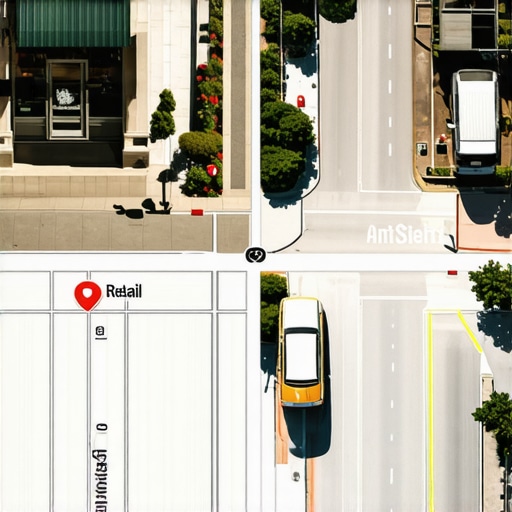
Managing twenty or more storefronts is not about marketing; it is about high-stakes spatial logistics. I smell the wet concrete of a new construction site and I see a data point. To me, a storefront is not a building. It is a Proximity Beacon in a complex spatial database. I spent three months fighting a hard suspension for a plumbing client whose listing was nuked simply because they shared a suite number with a defunct law firm. Google did not want proof of a van. They wanted proof of a utility bill under the exact GPS pin. This is the reality of the hyper-local layer. When you manage a large fleet of locations, you are not just a manager. You are a forensic investigator fighting a war against algorithmic distrust and the [risk of outsourcing your local seo to cheap agencies](https://mapsrankingoptimization.com/the-risk-of-outsourcing-your-local-seo-to-cheap-agencies) that leave a trail of digital debris. You must view each location as an individual entity while maintaining a rigid, centralized data structure to prevent a total network collapse.
The ghost in the GPS coordinates
Every physical storefront is defined by a unique set of GPS coordinates that serve as the primary trust signal for Google Maps. If these coordinates deviate from the real world location by even a few meters, the ranking power of that location begins to bleed out into the surrounding competitors. This is especially true in dense urban environments where a single building might house multiple businesses. I have seen rankings vanish because a business moved across the street but failed to update their [address consistency which is still the number one priority](https://mapsrankingoptimization.com/why-your-address-consistency-is-still-the-number-one-priority) for local trust. The algorithm calculates the distance from the user to the centroid of the business category. If your pin is floating in the middle of a parking lot instead of the front door, you are losing the proximity battle. You must audit these pins using professional [google business profile ranking software](https://mapsrankingoptimization.com/download-these-tools-to-track-your-real-local-search-rank) to ensure your visibility is not being swallowed by a nearby competitor.
“Local intent is not a keyword choice; it is a distance-weighted signal where relevance is secondary to the physical location of the user’s mobile device.” – Map Search Fundamental
The three mile radius that determines your revenue
Proximity filters act as a hard barrier that prevents businesses from ranking outside a specific geographic radius. Most local search results are dictated by a three mile radius that shifts based on the density of competition and the population of the area. If you are managing multiple storefronts, you must understand how to [overcome the proximity barrier in competitive markets](https://mapsrankingoptimization.com/how-to-overcome-the-proximity-barrier-in-competitive-markets) by focusing on behavioral signals. Google tracks how many users click for directions and actually complete the trip. This real world movement data is the ultimate verification of your business’s relevance. It is why [real customer feedback outranks keyword stuffing every single time](https://mapsrankingoptimization.com/why-real-customer-feedback-outranks-keyword-stuffing-every-single-time) in the modern Map Pack. You cannot fake a thousand people driving to your front door. If you try to expand your reach by creating [aggressive location page strategies](https://mapsrankingoptimization.com/how-to-write-city-landing-pages-that-rank-without-looking-like-bot-content), you risk a site wide penalty that can kill the organic traffic of all twenty locations simultaneously.
The hidden danger of virtual offices and coworking spaces
Google Business Profile guidelines strictly forbid the use of virtual offices or coworking spaces as physical business addresses unless they are staffed during business hours. I have investigated dozens of cases where an agency thought they could cheat the system by renting a mailbox in a prestigious zip code. This almost always leads to a hard suspension that is nearly impossible to reverse. If your business was flagged, you need to understand [why your virtual office address triggered a hard suspension](https://mapsrankingoptimization.com/why-your-virtual-office-address-triggered-a-hard-suspension) and how to fix it by moving to a legitimate physical space. The algorithm has become incredibly efficient at identifying the footprints of virtual offices, such as shared phone numbers and generic building photos. To fix this, you need [seo services to fix gmb issues caused by virtual office or coworking space](https://mapsrankingoptimization.com/the-no-fluff-script-for-fixing-a-suspended-business-profile) that focus on proving physical presence. This includes submitting floor plans, signage photos, and staff payroll records to the reinstatement team.
Local Authority Reading List
- The Audit Checklist for Cleaning Up Messy Business Listings
- Why Your Primary Category is Your Most Powerful Ranking Lever
- How to Spot a Fake Competitor Listing and Report It Correctly
- The Agency Method for Fixing Mixed Multi-Location Listings
- How to Verify Your Physical Shop When Standard Methods Fail
Why your physical address is a liability
A fixed physical address limits your reach to the immediate neighborhood, making you vulnerable to competitors who move closer to the city center. This is the paradox of local search. Your greatest asset is also your greatest constraint. Large enterprises often struggle with [ranking loss after moving city or service area](https://mapsrankingoptimization.com/how-to-recover-rankings-when-proximity-updates-push-you-out) because they do not understand the math of the move. When you change locations, you are essentially starting your trust score from zero in the eyes of the proximity algorithm. You must execute a [citation cleanup](https://mapsrankingoptimization.com/why-your-citation-cleanup-failed-and-how-to-do-it-right) to ensure every old directory on the internet is updated or deleted. If you leave old addresses active, Google will see conflicting signals and drop your rankings to protect the user experience. This is why [local seo services to clean up old or closed locations](https://mapsrankingoptimization.com/the-impact-of-duplicate-listings-on-your-local-foot-traffic) are vital for maintaining a clean digital footprint.
“Location is the new cookie. The physical world is the final frontier of search verification.” – Spatial Intelligence Quarterly
The truth about GMB ranking toolkits
Most GMB ranking toolkits focus on superficial metrics like keyword density instead of the underlying trust signals that drive the Map Pack. Professional tools should provide you with a heat map of your visibility across a specific grid. This allows you to see exactly where your rankings drop off. If you are using [google business profile ranking software](https://mapsrankingoptimization.com/why-most-gmb-ranking-tools-give-inaccurate-local-data), you need to ensure it is tracking actual user behavior and not just simulated pings. The best toolkits help you [audit your service area](https://mapsrankingoptimization.com/how-to-use-map-toolkits-to-audit-your-service-area) and find visibility gaps that your competitors are ignoring. They allow you to see the [hidden keywords your local competitors are hiding](https://mapsrankingoptimization.com/finding-the-hidden-keywords-your-local-competitors-are-hiding) by analyzing their review sentiment and image metadata. If you rely on cheap, automated tools, you are building your house on sand. You need to close the gap between [generic listing tools and professional GMB support](https://mapsrankingoptimization.com/the-costly-gap-between-generic-listing-tools-and-professional-gmb-support) to maintain a top position in 2025.
How to fight back against fake review extortion
Fake reviews are a weaponized tactic used by competitors to trigger manual reviews or automated filters that can hide your profile from search results. I have seen cafe owners call me at midnight because a competitor dropped twenty 1-star reviews in an hour using a VPN. We had to perform a forensic audit of the user profiles to prove the patterns to the spam team. This is why [seo services to fix fake reviews issues](https://mapsrankingoptimization.com/how-to-rebuild-your-rank-after-google-deletes-your-best-reviews) are becoming a standard part of multi-location management. You cannot just delete these reviews; you must report them with evidence of the coordinated attack. At the same time, you should [stop chasing reviews and start using customer prompts](https://mapsrankingoptimization.com/stop-chasing-reviews-and-start-using-these-4-customer-prompts) that encourage real people to leave detailed, photo-rich feedback. These organic signals are the best defense against a negative SEO attack. If your profile was already hit, you must follow the [step-by-step recovery after a mass review deletion event](https://mapsrankingoptimization.com/the-step-by-step-recovery-after-a-mass-review-deletion-event) to restore your reputation.
Repairing a hacked or infected website for local authority
A compromised website sends a massive negative signal to the local algorithm, often resulting in an immediate removal from the Map Pack. Google will not send its users to a site that contains malware or phishing scripts. If your site was hacked, you need [services to repair hacked or infected website for seo](https://mapsrankingoptimization.com/why-your-search-penalty-wont-go-away-and-how-to-fix-it) immediately. This is not just about cleaning the code; it is about restoring the trust of the search engine. A hack can lead to a [google map penalty](https://mapsrankingoptimization.com/how-to-spot-a-google-map-penalty-before-your-leads-stop) that lingers long after the site is clean. You must resubmit your sitemap and request a manual review of your business profile to ensure you are back in the good graces of the algorithm. This is why a [daily 5-minute routine that protects your map rankings](https://mapsrankingoptimization.com/the-daily-5-minute-routine-that-protects-your-map-rankings) is the only way to catch these issues before they destroy your revenue for the month.