What to Do When Your GMB Reinstatement Appeal Gets Rejected
What to Do When Your GMB Reinstatement Appeal Gets Rejected
I smell peppermint and old paper every morning when I open the files for another local shop fighting for its life. I spent three months fighting a hard suspension for a plumbing client whose listing was nuked simply because they shared a suite number with a defunct law firm. Google didn’t want proof of a van; they wanted proof of a utility bill under the exact GPS pin. The support team ignored the business license. They ignored the photos of the equipment. They only cared about the spatial math of that specific suite. It took a video of the owner unlocking the door and showing the lease on the wall to break the loop. This is the reality for local merchants today. A single error in a database can erase years of growth. You are not just a business; you are a coordinate in a vast web of proximity signals. When that signal breaks, the machine stops trusting you.
The cold reality of a denied appeal
Google Business Profile reinstatement requires verifiable evidence such as utility bills, business licenses, and physical storefront photos. When an appeal is rejected, it means the Google support team did not find enough location trust signals to validate your physical business address against the fraud detection algorithm. The rejection email is often vague. It mentions policy violations without naming them. This is because Google views transparency as a gift to spammers. If they tell you exactly why you failed, they believe you will use that data to game the system. Instead, you must perform a forensic audit of your own data. You should start by consulting the checklist for getting your suspended profile back online today to find the gaps in your documentation. Most rejections happen because the name on the utility bill does not match the name on the profile. A single comma or a missing ‘Inc’ can trigger the fraud filter. The machine is literal. It does not understand intent. It only understands data strings.
“Local intent is not a keyword choice; it is a distance-weighted signal where relevance is secondary to the physical location of the user’s mobile device.” – Map Search Fundamental
The ghost in the GPS coordinates
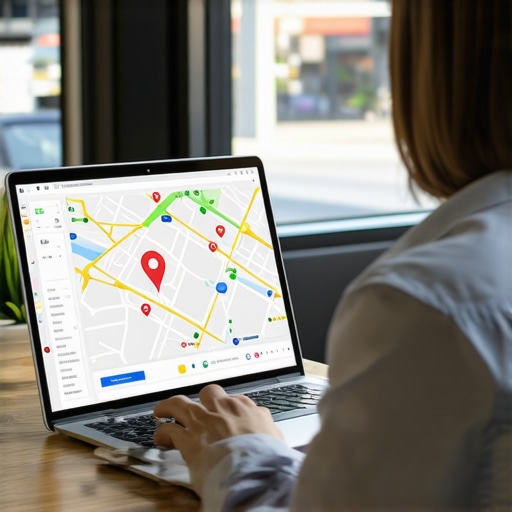
GPS coordinates and Wi-Fi triangulation are the primary ways that Google Maps verifies your physical location. If your latitude and longitude data are tied to a virtual office or a shared workspace, the reinstatement appeal will fail because of spatial signal overlap. Google hates shared addresses. They see ten businesses in one room and assume nine of them are fake. This is the Opossum filter in action. It hides similar businesses in the same building to keep the map clean. If you are stuck in this filter, you need to look at how to fix shared address issues that trigger location filters immediately. The pin must be exact. It cannot be in the middle of the street. It cannot be in the parking lot. It must be on the roof of the building where you pay rent. The algorithm tracks the movement of mobile devices. If no customers ever dwell at your pin, the trust score drops. The pin moves. The trust vanishes. The phone stops ringing.
Why your physical address is a liability
Physical business addresses that use P.O. boxes or UPS stores are the most common reason for permanent GMB suspension. Google requires a physical storefront or a service area boundary where you can meet customers face to face. If you try to hide behind a mail drop, the manual review team will find the Google Street View data and reject your reinstatement request. I see this often with national chains trying to look local. They rent a closet in a downtown building and call it a branch. It is a lie. The algorithm knows it. You must be honest about your space. If you do not have an office, you should learn how local service pros can win the map pack without an office by setting up a proper service area profile. This removes the address from the public view but keeps your ranking power. It is better to have a hidden address that ranks than a visible one that is suspended.
The three mile radius that determines your revenue
Proximity signals dictate that local search rankings are heavily weighted by the distance from the user to the business centroid. Even if your reinstatement appeal is successful, a mismatched address can lead to a GMB ranking loss that ruins your local visibility. You need to understand the physics of the map. When someone searches for a plumber, Google looks at the 3-mile radius. If your data is messy, you are invisible to that user. You might need the reinstatement secrets google wont tell you for profile recovery to understand how to rebuild that radius. It is not just about being live. It is about being relevant. The data must flow from your website to your profile to your citations. Any break in that chain causes a drop. I have seen businesses lose 80 percent of their calls because they changed their phone number without updating their old citations. It is a slow death by a thousand data errors.
“The Vicinity update significantly increased the weight of proximity as a primary ranking factor, effectively shrinking the reach of businesses that once dominated the entire city from a single centroid.” – Local Search Whitepaper 2024
A path through the verification labyrinth
Google Business Profile verification after a denied appeal often requires third party evidence such as Dun and Bradstreet records or Secretary of State filings. To prove your business is real, you must provide a video verification that shows the permanent signage, the interior workspace, and tools of the trade. Do not just send another copy of your lease. They have already seen it. They did not believe it. You need to show the life of the business. Take a photo of your branded truck parked in front of the building. Show the staff at work. Use how to prove your business is real during the gmb recovery process as your guide. If you have been flagged for keyword stuffing, you must fix it now. Use seo services to fix keyword stuffing and content issues to clean your digital trail. If your name on the map is ‘Best Plumbing Dallas’ but your legal name is ‘Joe Smith LLC’, you will be rejected every time. The name must be the name on the door. Nothing more. Nothing less.
The Local Authority Reading List
- the step-by-step recovery guide for a suspended gmb profile
- the practical checklist for google business profile recovery
- how to contact google support for a successful profile recovery
- recovering a disabled google business profile without losing reviews
Why your data consistency matters for AI
AI Overviews and search generative experiences rely on structured data found in your JSON-LD schema and NAP consistency across the web. If your reinstatement appeal is rejected, it may be because AI scrapers found conflicting business data on low quality directories or old locations. You must use local seo services to clean up old or closed locations to ensure the AI only sees one version of the truth. If there are three different addresses for your business online, the AI will tag your profile as high-risk. This leads to the ‘untrusted’ status that kills appeals. The machines are talking to each other. Your Facebook page, your Yelp profile, and your official website must all sing the same song. If one is out of tune, the whole performance fails. I hate seeing good people lose their livelihoods because they forgot to update an old Bing listing. It is tragic and avoidable.
The math of the three mile shift
Map pack rankings fluctuate based on the user’s physical movement because the proximity algorithm prioritizes hyper local results. When your address changes, you must expect a GMB ranking loss until the search engine re-verifies your new location authority. You should look into seo services to fix gmb ranking loss after address change if you have recently moved. Moving across the street can change everything. It changes your neighbors. It changes your competition. It changes which Wi-Fi signals your customers are using. Google sees all of this. If you move from a standalone building to a strip mall, your risk profile changes. The algorithm becomes more suspicious. You have to prove yourself all over again. It is like moving to a new town where nobody knows your face. You have to shake hands. you have to be seen.
How to handle the final support escalation
Escalating a GMB case to the Small Business Community or Google Support on Twitter is the last resort when the standard appeal process fails. You must provide a case ID number and a concise summary of your compliance evidence to a Product Expert for manual review. Do not get emotional. Do not complain about how much money you are losing. They do not care. They only care about the rules. Use how to contact google support for a successful profile recovery to structure your message. Mention that you have reviewed the guidelines. State that you have fixed the violations. Attach the utility bill. Attach the photo of the sign. Be the professional they expect. If you act like a spammer, they will treat you like one. If you act like a mayor, they might listen. This is the end of the road. If this fails, you may need to start over with a fresh listing and a clean slate, but that is a conversation for another day. Keep your peppermint handy. You will need it for the long hours ahead.