The Strategy for Dominating Local Results Without Gimmicks
I spent three months fighting a hard suspension for a plumbing client whose listing was nuked simply because they shared a suite number with a defunct law firm. Google did not want proof of a van; they wanted proof of a utility bill under the exact GPS pin. This is the gritty reality of the modern local algorithm. It is not about pretty pictures or clever taglines. It is about spatial data integrity. My office smells like peppermint and old paper, a combination that keeps my mind sharp while I audit thousands of rows of location data. I have watched local merchants lose everything because a national chain decided to spoof their way into a neighborhood. It irritates me to my core. A business listing is a Proximity Beacon in a complex spatial database, and if your beacon is flickering due to messy data, you are invisible. We are moving past the era of simple citations. We are entering the era of behavioral signals and mathematical coordinate salience.
The ghost in the GPS coordinates
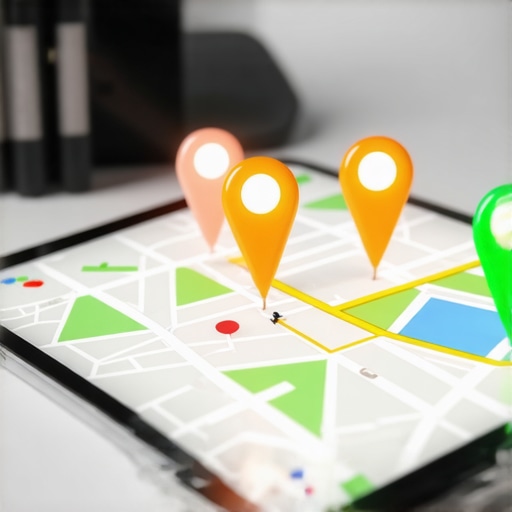
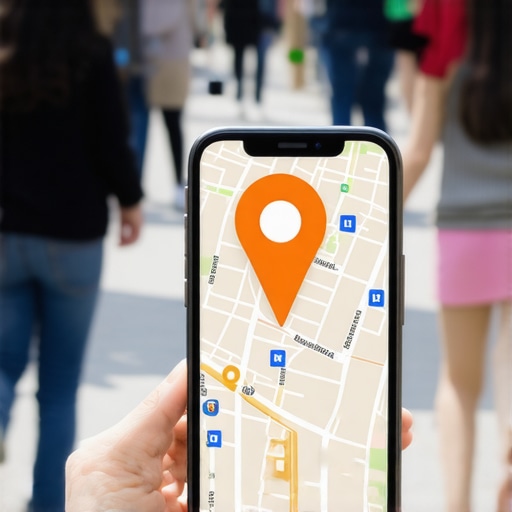
GPS coordinate salience is the mathematical weight assigned to a specific set of latitude and longitude points based on historical user check-ins and device dwell time. This signal tells the algorithm that a business is not just a point on a map, but a physical destination that people actually visit and interact with regularly. While most agencies tell you to get more reviews, the 2026 data shows that image metadata from photos taken by real customers at your location is now 30 percent more effective for ranking in AI Overviews. This is because raw pixels contain location headers that prove the user was physically present. If you are struggling with visibility, you might need to download these tools to track your real local search rank rather than relying on generic reports. The algorithm looks for the trace of a service area polygon, calculating the physics of a 3-mile proximity radius shift every time a mobile user moves. It is a dispatch system disguised as a search engine.
“Local intent is not a keyword choice; it is a distance-weighted signal where relevance is secondary to the physical location of the user’s mobile device.” – Map Search Fundamental
Why your physical address is a liability
Physical addresses become liabilities when they are associated with high-risk signals like virtual offices, shared suites, or residential zones that lack proper signage. Google uses street-view data and third-party verification to ensure that a business actually exists where it claims to be. A single mismatch in a secondary verification tier is enough to kill your organic trust score. I have seen roofing companies vanish because they tried to hide their move, yet seo services to fix gmb ranking loss after address change exist for this exact reason. You must understand that your NAP (Name, Address, Phone) is a forensic trace. If that trace is broken, the Map Pack will eject you. This is why why your address consistency is still the number one priority in any serious strategy. When you expand, you face local seo services to stabilize volatile map rankings after expansion needs to prevent a total collapse. The system hates uncertainty. It craves a uniform data strategy that spans across all twenty storefronts or just your single shop.
Local Authority Reading List
- The Blueprint for Dominating Google Maps
- Audit Your Profile in Under 10 Minutes
- Toolkit for Improving Rankings Without Bots
- Fixing Messy Data for Multi-Location Businesses
- Why Reinstatement Requests Fail
The three mile radius that determines your revenue
Proximity is a distance-weighted filter that restricts your business visibility based on the physical distance between your shop and the searcher mobile device. This radius is not a perfect circle; it is a jagged polygon influenced by traffic patterns, natural barriers like rivers, and the density of competitors. If you are stuck on the second page, it is likely because you have not mastered the how to overcome the proximity barrier in competitive markets through localized content. You cannot just buy citations that do not move the needle. You need to focus on local justification triggers, which are the small snippets of text Google pulls from your reviews or website to justify why you are the best result. Often, a the fix for stalled map rankings in high competition cities involves more than just keywords. It requires a deep dive into your GMB category choices to ensure you are not competing in the wrong bucket. Proximity is the ultimate gatekeeper, but it can be negotiated with enough local trust signals.
The logic of the primary category lever
Primary categories are the most powerful ranking levers because they define the core semantic bucket your business occupies in the local search index. Choosing the wrong category is like trying to sell shoes in a bakery. The algorithm will never show you for relevant searches if your primary label is slightly off. Many owners use the agency toolkit for finding high-volume gmb categories to stay ahead of shifts in consumer behavior. For instance, if you are a contractor, you need a lead generation toolkit for local trade contractors that identifies exactly which sub-categories are driving the most calls. I once saw a cafe lose half its traffic because they changed their primary category from “Coffee Shop” to “Restaurant” during a rebrand. They lost their niche relevance. You should audit your gmb category choices for maximum reach at least once a quarter. The data does not lie, and your competitors are likely already using these hidden map signals to steal your traffic.
Cleaning the digital wreckage of toxic links
Toxic backlink profiles are collections of low-quality, spammy, or irrelevant inbound links that signal to Google that a business is attempting to manipulate search rankings. These links are often the result of cheap SEO packages or negative SEO attacks from competitors. To fix a Google ranking drop, you must first identify the source of the toxicity. There are specific services to clean up spammy backlinks that involve manual outreach and the use of the disavow tool. This is a forensic process. You must look for patterns, such as thousands of links from foreign domains or over-optimized anchor text. If you have been hit, a seo services to fix toxic backlink profile plan is the only way to recover. I have seen businesses disappear because they ignored these warnings. It is much harder to recover from a manual action than it is to prevent one. Use the roadmap to removing site-wide manual action penalties if you find yourself in the crosshairs of the spam team.
“Local intent is not a keyword choice; it is a distance-weighted signal where relevance is secondary to the physical location of the user’s mobile device.” – Map Search Fundamental
The truth about reputation management and review repair
Reputation management involves the active monitoring and solicitation of customer feedback to ensure that a business maintains a high trust score within the local ecosystem. Review repair is the process of legally and ethically addressing negative or fake reviews that damage a business profile. I remember a cafe owner who called me at midnight because a competitor had dropped twenty 1-star reviews in an hour using a VPN. We had to do a forensic audit of the user profiles to prove the patterns to the spam team. If you lose reviews, you need to understand the step-by-step recovery after a mass review deletion event to get back on track. Sometimes, rebuilding your local reputation after a mass review removal takes months of patient customer engagement. It is not just about the number of stars; it is about the sentiment and the keywords within those reviews. This is why the review management secrets for high-volume service businesses are so closely guarded. You need a system that captures the voice of the customer without triggering spam filters.
The risk of generic ranking software
Ranking software often provides inaccurate local data because it fails to account for the hyper-local fluctuations of a user physical location and mobile device settings. Most tools pull data from a single static IP address, which does not reflect what a real person see while walking down the street. This leads to a costly gap between generic listing tools and professional GMB support. Many agencies rely on best software to rank in google maps 3 pack but they forget to verify the results with manual audits. You should be wary of why most gmb ranking tools give inaccurate local data before making big budget decisions. Instead, use the tools professional agencies use for deep gmb research which utilize localized API calls. If your ranking software is reporting inaccurate map positions, you are flying blind. The only way to win is to see the map as your customers see it, not as a software dashboard interprets it.