Replacing AI Content with Human Value to Fix Search Penalties
I spent three months fighting a hard suspension for a plumbing client whose listing was nuked simply because they shared a suite number with a defunct law firm. Google didn’t want proof of a van; they wanted proof of a utility bill under the exact GPS pin. This is the reality of the hyper-local layer. We aren’t just fighting for keywords anymore. We are fighting for the mathematical trust of a spatial database that has grown weary of synthetic identities and automated spam. When a business profile disappears, it is rarely a random glitch. It is usually a failure of physical proof. The engine that powers local results now looks for the forensic trace of a real human being operating in a real physical space. If your profile is built on thin AI content or rented addresses, you have a target on your back.
The ghost in the GPS coordinates
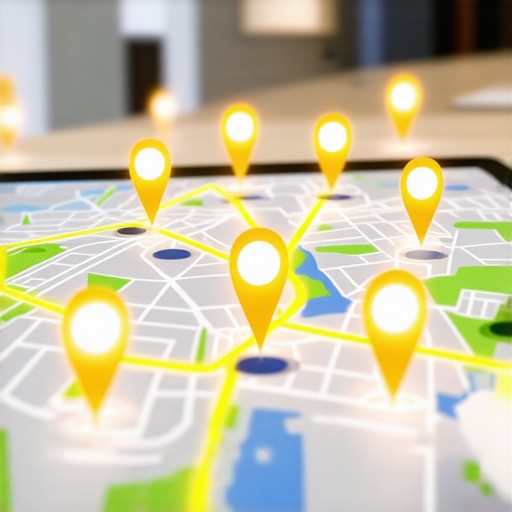
Google Business Profile proximity signals rely on GPS coordinate salience and NAP consistency to verify a physical store presence. Winning the local map pack requires human verified data like mobile photo metadata and verified review sentiment to bypass AI search penalties and listing suspensions. The algorithm is no longer satisfied with a simple address. It looks for the digital exhaust of a functioning business. This means it tracks the location of the mobile devices used to manage the listing and the coordinates where customers leave reviews. If you are managing a shop in Chicago from a laptop in Seattle without a proxy that matches the city, you are creating a red flag. This is why the agency method for fixing deep rooted gmb ranking issues focuses so heavily on cleaning up the digital footprint before even touching a keyword. The math of the centroid shift is brutal. If your business location is even slightly misaligned with the historical data of that address, you get filtered out. You become a ghost in the system.
“Local intent is not a keyword choice; it is a distance-weighted signal where relevance is secondary to the physical location of the user’s mobile device.” – Map Search Fundamental
Why your physical address is a liability
Virtual office addresses and coworking spaces often trigger location filters that hide your GMB profile from nearby search results. Using technical seo services to fix shared address issues is vital for service area businesses and local retailers who need to recover map authority. The proximity engine sees multiple businesses at one suite number and calculates a risk score. If that suite has a history of spam, your new business inherits that toxicity. You might need to learn why google suspends virtual office listings and how to appeal if you want to stay in the game. I have seen contractors lose twenty years of reputation because they moved into a shiny new tech hub that Google had flagged as a lead gen farm. The system hates ambiguity. It wants a front door, a permanent sign, and a utility bill that matches the government records exactly. Any deviation is seen as an attempt to game the map pack.
Local Authority Reading List
- How to fix shared address issues that trigger location filters
- The toolkit for fixing stalled rankings in the local pack
- Why your google business profile is stuck in the duplicated location filter
- How to fix verification problems for remote and service businesses
The math of human verified signals
Verified customer reviews and original location photos provide information gain that AI generated content cannot replicate for local seo rankings. Utilizing the best local seo tools allows you to track map positions while monitoring behavioral signals like click-through rate and driving direction requests. Google is now capable of identifying AI written reviews by their lack of sensory detail and their predictable syntactic structures. A real human says the coffee was lukewarm and the barista had a cool tattoo. An AI says the service was efficient and the atmosphere was pleasant. This is why what to do when google deletes 50 percent of your business reviews is a common question for those who used automated services. The algorithm is looking for the grit of reality. It wants photos taken on a smartphone with EXIF data that proves the photographer was standing in your lobby. If your gallery is full of stock images, you are signaling to the bot that your location might not exist. This is the new frontier of local verification.
“Relevance is now a combination of spatial proximity and the historical behavioral patterns of the user within a specific category vertical.” – Local Search Intelligence Report
Technical repair for broken local signals
Technical seo services fix indexing and crawling issues that prevent local landing pages from appearing in Google search results. Repairing broken redirects and 404 errors ensures that map pack visibility remains stable after a domain migration or website update. Many owners forget that the website linked to the GMB profile is the primary source of truth for the local bot. If your website is slow, or if your cleaning up messy internal linking and over optimized text is not a priority, your map rank will suffer. I have found malware on client sites that was redirecting local traffic to offshore betting sites. The owners had no idea why their phone stopped ringing. The connection between your site’s health and your pin’s position is absolute. You need a practical kit for fixing broken gmb listings for beginners to audit these connections weekly. One bad redirect can kill a decade of local authority in forty eight hours.
The three mile radius that determines your revenue
Proximity and behavioral zooming determine whether your service business appears in the top 3 spots for nearby customers. Optimizing for the vicinity algorithm involves managing centroid distance and local justification triggers found in customer review text. The three mile radius is a physical wall. Unless you have massive brand authority, Google will not show your business to someone four miles away if there is a competitor one mile away. You have to win your immediate neighborhood first. This is where how to scale your service business map rankings effortlessly comes into play. You don’t do it by pretending to be everywhere. You do it by dominating the blocks around your office and slowly expanding your footprint through real customer interactions. The pin must be accurate. The data must be human. The signals must be local. The system is designed to favor the merchant who is truly there, smelling the same rain and walking the same cracked sidewalks as their customers. Move the pin. Change the game. Win the map.