A Recovery Guide for Local Shops Hit Hard by Google Updates
The hard road to profile reinstatement and local ranking recovery
I sit here in my office, the scent of peppermint tea mixing with the dust of old city records on my desk. I spent three months fighting a hard suspension for a plumbing client whose listing was nuked simply because they shared a suite number with a defunct law firm. Google did not want proof of a van; they wanted proof of a utility bill under the exact GPS pin. This is the reality of the hyper-local layer. When a local business vanishes from the map, it is not just a digital error. It is a loss of a livelihood. The algorithm does not see the sweat or the service. It sees data points, proximity signals, and trust scores. This guide is for the shop owners who woke up to find their pins gone or their rankings buried under a mountain of synthetic spam.
The ghost in the GPS coordinates
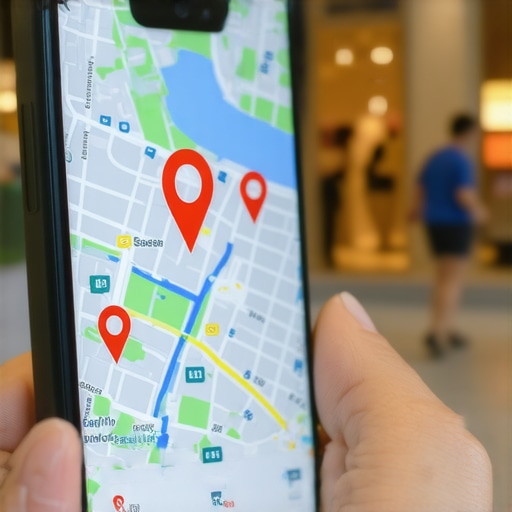
GPS coordinate salience refers to the mathematical precision of your business location as interpreted by the Google Maps engine and its proximity filters. To win here, you must ensure your latitude and longitude are consistent across all primary data aggregators and within your site metadata. The pin moved. It happens more often than people think. A small edit to your business hours or a slight change in your service area can trigger a re-evaluation of your centroid position. If you find your visibility has vanished, you might be dealing with a suspended profile that needs immediate forensic attention. Google is no longer satisfied with a simple address. They want to see the physical reality of your shop reflected in the digital mirror. If your coordinates overlap with another entity, the filter kicks in. This is the proximity filter, often called the Vicinity update logic. It prevents multiple businesses of the same category from dominating the same small radius. If you share a building, you are at risk. You need to understand how to fix shared address issues before you can ever hope to rank again.
“Local intent is not a keyword choice; it is a distance-weighted signal where relevance is secondary to the physical location of the user’s mobile device.” – Map Search Fundamental
Why your physical address is a liability
A physical address becomes a liability when it lacks unique identifiers or triggers the Google anti-spam filters due to historical data issues. In the world of local search, your location is your anchor, but it can also be your anchor in a storm. Many shops are being filtered because their office was previously occupied by a spammy lead-generation company. The history of the GPS pin matters. If you are struggling, you must look at a technical audit that fixes visibility leaks to see if your address is the problem. Sometimes, hiding your address is the only way to save your rankings, especially for service area businesses. You can learn the secret to high impressions when your address is private if you know how to configure your service polygons correctly. The algorithm is looking for a reason to trust you. A mismatched phone number or a suite number that does not exist in the postal database will kill your trust score faster than a bad review. I have seen businesses lose 80 percent of their calls because of a single digit error in their NAP data. You must be precise. You must be perfect. The map does not forgive sloppiness.
Local Authority Reading List
- The Blueprint for Dominating Google Maps
- Using Heatmap Tools for Better Data
- Tools That Give an Unfair Advantage
- Proving Your Business is Real
The three mile radius that determines your revenue
The proximity radius is the geographic boundary within which your business remains competitive for specific local search queries. This radius is not fixed. It breathes. It expands and contracts based on the density of competitors and the strength of your local authority signals. If your rankings dropped, you need to check if you are being unstuck from location filters. Behavioral signals such as click-through rates on your profile and the frequency of directions requests play a massive role here. If people are not clicking your pin, Google assumes you are not relevant to that radius. You need google business profile ranking software to track these micro-movements. It is not enough to rank in your own parking lot. You need to rank where the customers live. The physics of local search dictates that as distance increases, your relevance must increase exponentially to maintain a spot in the Map Pack. This is why localized content on your website is so important. If your site is suffering from coding errors that slow it down, your proximity power will suffer. Speed is a proximity signal. If a mobile user is on a slow connection, Google will favor the local listing with the faster-loading site.
Fighting the synthetic content plague
Synthetic content or AI generated spam is the biggest threat to local ranking stability because it devalues the authentic signals Google uses to verify business legitimacy. My eyes hurt from looking at AI generated junk. I see it every day. Agencies are pumping out thousands of low-quality pages to try and trick the local algorithm. It does not work for long. Google eventually catches on and the penalty is severe. If you have been hit, you need recovering from search penalties caused by ai articles. You must replace that junk with real, human value. I always tell my local shop owners that a single photo of their team working is worth more than ten AI blog posts. Real humans take real photos with real metadata. Google reads the EXIF data in your images. They know where the photo was taken. If you are using stock photos, you are telling Google you are not actually there. You should be replacing ai content with human value as fast as possible. The map thrives on authenticity. Use your real voice. Tell real stories about your customers. This is how you win in the age of automation.
The forensic audit of local signals
A forensic audit of local signals involves a deep examination of NAP consistency, citation health, and the technical integrity of your local landing pages. You need to look for why google thinks your two locations are duplicates. This often happens because of shared phone numbers or similar business names. You must separate them without losing power. Check your anchor text for overload. If every backlink to your site says “best plumber in New York”, you are going to get flagged for over-optimization. You need a natural profile. Use your business name. Use your URL. Use “click here”. Google is looking for patterns that look like manipulation. If you find your profile has limited features, you have likely tripped one of these filters. You have to clean up the mess. Start with your citations. Automated citations often leave info in a mess. You have to go in by hand and fix the errors. It is tedious. It is boring. But it is the only way to restore your reputation with the search engine.
“Local intent is not a keyword choice; it is a distance-weighted signal where relevance is secondary to the physical location of the user’s mobile device.” – Map Search Fundamental
Reclaiming the crown after a core update
Reclaiming local rankings after a core update requires a shift from keyword-centric tactics to authority-based and behavioral-focused strategies. When the core algorithm shifts, it often re-weights the importance of different factors. In 2025, behavioral data is king. How many people are calling you through the profile? How many people are looking for directions? If these numbers drop, your ranking will follow. You need local seo software for map ranking to see the truth. Don’t trust what you see on your own phone. Your phone is biased. Use tools that check rankings from different street corners. If you see a sudden drop in map pack visibility, check your technical health first. Did you change your domain? Did you move your office? These things matter. You must protect your rank during a domain migration. Every change is a risk. Treat your business profile like the asset it is. It is more valuable than your website in many cases. It is the first thing people see. It is your storefront on the digital street. Keep it clean. Keep it honest. And for heaven’s sake, keep it active.