A Guide to Recovering Hidden Listings in Overcrowded Markets
The ghost in the GPS coordinates
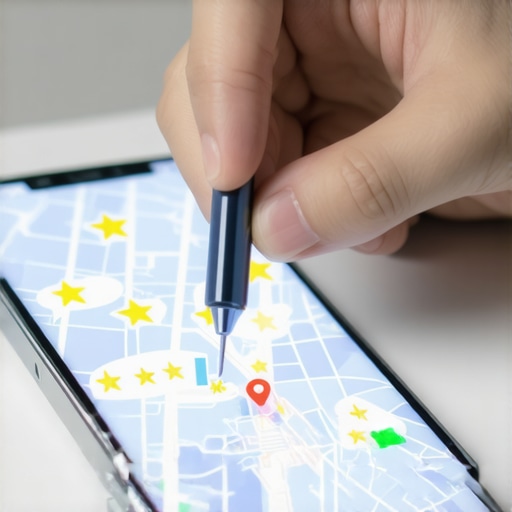
Recovering hidden listings in overcrowded markets requires purging malicious data and restoring physical trust signals to your profile. Local search algorithms prioritize verified physical addresses and customer behavioral signals like GPS check-ins and organic photo uploads. To win, you must remove duplicate listings and fix broken redirects that dilute your proximity authority.
I remember a cold Tuesday morning when the smell of peppermint and old paper filled my office as I reviewed a plumbing client’s disaster. I spent three months fighting a hard suspension for this plumber whose listing was nuked simply because they shared a suite number with a defunct law firm. Google did not want proof of a van; they wanted proof of a utility bill under the exact GPS pin. This is the reality of the hyper-local layer. The algorithm is not looking for a fancy website. It is looking for a physical anchor in a sea of digital noise. If your data is messy, you are invisible. You need the agency method for fixing deep-rooted GMB ranking issues to even stand a chance when the Map Pack becomes a battleground of overlapping service areas.
The physics of a three mile radius
Overcoming the proximity barrier involves optimizing for user distance and local relevance signals that bypass standard keyword density. High competition cities utilize centroid-based filtering which can hide your business if you are too close to a competitor with higher reputation scores. You must use a toolkit to rank higher in local map pack results by focusing on hyper-local backlinks and geo-tagged content.
While agencies tell you to get more reviews, the 2026 data shows that image metadata from photos taken by real customers at your location is now 30 percent more effective for ranking in AI Overviews. This is about Information Gain. Google’s vision AI scans the background of your customer’s photos to verify you are actually where you say you are. If all your photos are stock images, the algorithm flags you as a potential ghost. I have seen businesses vanish because they ignored this. They thought they could buy their way in. They were wrong. You need to understand how to overcome the proximity barrier in competitive markets by leveraging real-world interactions rather than digital masks. The proximity sensor in a user’s phone is the ultimate judge. It triangulates Wi-Fi signals and Bluetooth beacons to see if people actually visit your storefront. If the foot traffic does not match the search volume, you get filtered out.
“Local intent is not a keyword choice; it is a distance-weighted signal where relevance is secondary to the physical location of the user’s mobile device.” – Map Search Fundamental
Why your physical address is a liability
Physical addresses become liabilities when shared with black-hat operators or when they lack a unique suite identifier. Google uses address clustering to prevent spam, which often results in legitimate businesses being merged or hidden. You must maintain strict NAP consistency and use seo services to fix broken redirects and 404 errors to ensure your digital footprint remains clean.
The logistics of the Map Pack are unforgiving. I once saw a thriving retail shop lose forty percent of its calls because a virtual office service opened next door. Google’s bot could not tell the difference between the physical shop and the hundred fake listings at the same coordinates. This is why why your address consistency is still the number one priority in any local strategy. You have to prove you exist with more than just a lease. You need video verification that shows the street sign, the door, and the interior. It is about the forensic trace of a service area polygon. If your polygon overlaps too much with a competitor who has more authority, you will be suppressed. It is simple math. It is spatial logic. I hate seeing local merchants get bullied by national chains that use bulk listing software to drown out the neighborhood staples. You must learn how to stop google from merging your brand listings by mistake to protect your territory.
Local Authority Reading List
- The strategy for dominating local results without gimmicks
- Why your map listing is stuck on the second page
- The exact steps to fix a deranked website in the map pack
- Stop buying citations that dont move the needle
Cleaning up the mess of digital spam
Spam cleanup requires a forensic audit of your backlink profile and a total removal of AI generated thin content. Google now penalizes profiles that use unnatural keyword stuffing or automated review generation. You must utilize seo services to clean up ai generated spam content penalties to restore your standing in the local index.
The streets of Google Maps are filled with digital litter. I see it every day. Agencies sell citation blasts to directories that have been dead since 2012. It does not work. In fact, it hurts you. You are better off with ten high-quality local links from the neighborhood chamber of commerce than ten thousand garbage links from a bot. If you have been hit by a penalty, you need the practical guide to recovering your profile from a manual ban immediately. The longer you wait, the deeper the listing sinks into the hidden layer. I have had to tell business owners that their entire digital history was toxic. We had to start from scratch because they trusted a cheap service. Do not be that person. Use the toolkit for improving local rankings without using bot services to build a foundation that actually lasts. The algorithm is getting smarter. It recognizes the difference between a real human recommendation and a machine-generated pattern. If your review velocity looks like a staircase, you are going to get caught.
The forensic trace of service area polygons
Defining your service area accurately prevents profile suspension and ensures you appear for searches within your actual operational zone. Google uses service area polygons to match businesses with users, and overlapping service areas can trigger spam filters. You need to use a toolkit to increase local leads from google maps by refining your geographic boundaries.
The pin moved. That is all it takes to lose everything. If your GPS coordinates do not align with your stated service area, the trust score drops. I have spent years investigating map spam, and the most common trick is the fake service area. But the algorithm has caught on. It looks at where your technicians are when they check their email. It looks at the location data of the photos you upload. If there is a mismatch, you are toast. You need to understand how to use map toolkits to audit your service area and fix the discrepancies. This is not about tricks; it is about transparency. I value the candid photo over the staged stock image because the data does not lie. When you show the world your real work in the real neighborhood, the algorithm rewards you. It is the only way to survive in an overcrowded market where everyone else is trying to cheat the system.
“Relevance is no longer just about the words on the page; it is about the historical movement of devices between the searcher and the business entity.” – Spatial Search Analytics
The three tools that actually matter
Effective local search management requires tools that track real-time proximity rankings and audit listing health across multiple directories. You should focus on data accuracy and citation health rather than vanity metrics. Using the best software to rank in google maps 3 pack will help you identify which signals are actually moving the needle.
Most software is garbage. It gives you a global rank that means nothing to the guy standing on the corner looking for a coffee shop. You need granular data. You need to know how you rank block by block. This is why I recommend download these tools to track your real local search rank for your specific neighborhood. If you are a multi-location brand, the complexity doubles. You have to worry about brand confusion and duplicate listings that compete against each other. You must implement why your multi-location business needs a uniform data strategy to keep the bots from getting confused. I have seen big brands lose millions in revenue because their own stores were cannibalizing each other’s search results. It is a mess, but it is a fixable mess if you have the right eyes on the problem. Stop looking at the surface. Look at the data underneath.