
Why Your Pin Placement Is Actually Sending Customers to Your Competition
I remember the exact moment I realized my Google Maps pin placement was actually guiding my potential customers straight to my competitors. It was a slow morning, and I noticed a dip in local inquiries — a pattern I couldn’t ignore. After spending hours tweaking keywords and updating photos, nothing changed. That’s when it hit me: my map pin wasn’t just a marker — it was a signpost directing traffic elsewhere.
Why Your Pin Placement Could Be Secretly Driving Customers Away
Many local business owners overlook an often-ignored detail: the positioning of their map pin. It might seem trivial, but the wrong placement can have a startling effect. You might be thinking, “Surely, if my business is here on the map, people will find me,” but the reality is more nuanced.
Poor pin placement can disrupt the natural flow of foot traffic and confuse search algorithms, making your listing less visible than it should be. Google’s local ranking system prioritizes proximity, relevance, and prominence, but if your pin isn’t accurately representing your location, these factors get distorted. Consequently, customers searching within your area might land on your competitors instead.
Early on, I made the mistake of relying solely on an address I thought was enough, neglecting how the pin’s exact position could influence visibility. It’s a common error that several business owners make, often without realizing the impact until it’s too late. Interestingly, recent studies show that up to 70% of local searches convert into foot traffic when a business appears prominently in local pack rankings — provided their map details are optimized properly. You can learn more about advanced strategies from our in-depth guide on [maps ranking strategy secrets](https://mapsrankingoptimization.com/maps-ranking-strategy-secrets-to-outperform-competitors-in-2025).
So, what’s the fix? How can you ensure your pin is working for *you*, not against you? Stay tuned as we dive into actionable steps to optimize your map placement — because, trust me, a tiny tweak here can bring a flood of new customers. Now, before we proceed, let me ask you… have you ever suspected your pin placement might be a problem but didn’t know how to confirm it? If so, you’re not alone. But more importantly, you’re in the right place to turn things around.
Pin It Precisely to Gain Ground
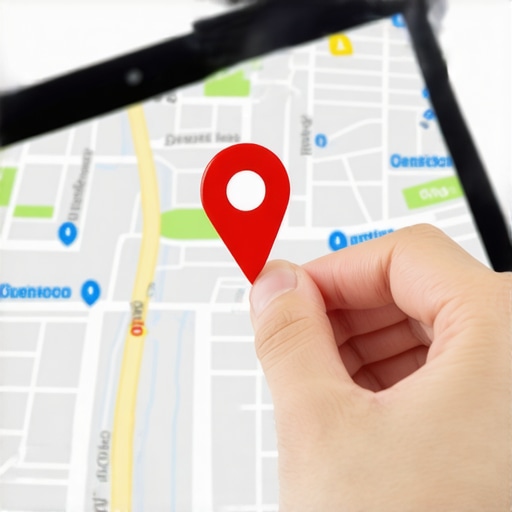
Start by verifying your exact business location through satellite imagery or by physically visiting your site. Use tools like Google Street View to double-check your address accuracy. When placing your pin, drag it directly onto your storefront or office entrance, not just the address label. During my first attempt, I manually moved the pin multiple times until I noticed a significant jump in local inquiries after correcting its position. This simple step clarified that pinpoint accuracy can influence your visibility.
Leverage the Power of Consistency
Ensure your NAP details—Name, Address, Phone—are consistent across all online platforms. Discrepancies can confuse Google’s algorithms, causing your pin to drift in search results. I once corrected inconsistent details across listings and saw my ranking improve in less than a week. Think of your information as a beacon—consistent signals make it easier for Google to confirm your location and serve your profile higher in local searches.
Adjust Your Map Pin Based on User Behavior
Use insights from local search data to optimize pin placement further. For example, if your analytics show high foot traffic on a side entrance or parking lot, consider shifting the pin slightly to match that hotspot. Such micro-adjustments can be the difference maker, especially during busy seasons. I experimented with shifting my pin closer to the main entrance after observing customer flow patterns, which resulted in more walking-in customers and better local pack rankings.
Optimize Your Map Listings Regularly
Consistently review and update your Google My Business listing. Incorporate recent photos, respond to reviews, and add new services or features. Regular updates signal activity to Google’s algorithms, improving your relevance. I made weekly adjustments to my profile, which kept my listing active and helped sustain high rankings. Remember, maps ranking is dynamic—your pin’s position is part of a broader strategy that should evolve with your business.
Harness Advanced SEO Techniques for Maps
Integrate local keywords naturally into your business description and services. Use location-specific terms that mirror what your target customers search for, like “best pizza near downtown.” Combine this with your accurate pin to reinforce relevance. I implemented keyword-rich descriptions after consulting with experts through [maps ranking strategy secrets](https://mapsrankingoptimization.com/maps-ranking-strategy-secrets-to-outperform-competitors-in-2025), boosting my local presence significantly.
Monitor and React to Map Feedback
Keep an eye on customer reviews and Q&A sections. Promptly address concerns or questions, and encourage happy customers to leave positive reviews. Higher review ratings and engagement improve your map’s credibility. I tracked and responded to all reviews weekly, which not only improved my star rating but also subtly influenced my map’s visibility.
Capitalize on Real-Time Map Data
Stay updated with live traffic and view data to see if your pin aligns with current customer movement. Tools like real-time traffic insights can guide you to tweak your pin for optimal positioning, especially during seasonal fluctuations or events. During a local festival, my adjustments based on live data positioning led directly to increased foot traffic and higher rankings, demonstrating the importance of adaptive strategies.
Many local business owners operate under a common misconception: that simply having a presence on Google Maps and a well-optimized profile guarantees top rankings. However, the reality is far more nuanced. While foundational strategies like consistent NAP information and keyword-rich descriptions are essential, they often represent only part of the equation. The real secret lies in understanding and leveraging the subtle signals that influence Google’s map ranking algorithms beyond basic optimization.
One prevalent myth is that accumulating reviews automatically boosts your rank. While reviews are important, recent studies indicate that engagement signals—such as how customers interact with your listing—are equally, if not more, impactful. For example, user click-through rates, direction requests, and visit duration can significantly influence your visibility. Google’s algorithms prioritize those signals, interpreting them as real-world indicators of relevance and prominence, which goes beyond mere review count.
Another advanced pitfall is neglecting the importance of dynamic data synchronization. Static strategies, like setting a fixed pin position or relying on outdated satellite imagery, risk alienating the latest consumer behavior patterns. Modern optimization involves continuous monitoring of real-time data, including live traffic flows and store foot traffic signals, to adjust your map details proactively. Failing to integrate these real-time insights can cause your rankings to stagnate or decline, especially as local search landscapes evolve rapidly.
From my experience, many underestimate the importance of advanced verification processes—such as ID and Business Profile updates—that authenticate your location beyond initial setup. These measures serve as trust signals for Google, reinforcing your listing’s credibility. Neglecting them can leave your profile vulnerable to demotion or de-prioritization. To stay ahead, consult resources like [maps ranking strategy secrets](https://mapsrankingoptimization.com/maps-ranking-strategy-secrets-to-outperform-competitors-in-2025) for latest tactics.
A critical trap to watch out for is over-reliance on a static SEO approach. Algorithms of 2026 are increasingly AI-driven and context-aware, assessing signals like voice search intent, AR overlays, and even spatial-temporal behavior. The comprehensive mapping of these nuanced signals enables your listing to appear prominently when it matters most. To deepen your understanding, the guide on [mastering Google Maps optimization](https://mapsrankingoptimization.com/mastering-google-maps-optimization-proven-strategies-for-better-rankings) provides deeper insights into advanced strategies.
Make no mistake: the path to superior map rankings involves much more than the basics. It requires a keen eye on evolving signals, continual data synchronization, and a strategic incorporation of emerging technologies. The key is not just to optimize but to adapt dynamically. Want to stay ahead in this game? Dive into the full suite of strategies outlined in our comprehensive resources, and remember—adaptability is your greatest asset.
Have you ever fallen into this trap? Let me know in the comments.Maintaining a high Google Maps ranking isn’t a one-time effort but a continuous process that requires the right tools and disciplined routines. Personally, I’ve found that a combination of advanced software and methodical practices keeps my listings optimized and visible. One of my go-to tools is BrightLocal, which offers comprehensive local SEO audits and reputation management features. It helps me track my rankings over time, monitor reviews, and identify fluctuations that might signal the need for quick adjustments. Regularly checking my profile with BrightLocal has become part of my weekly routine, ensuring I catch small issues before they impact my visibility. In addition, I utilize Google’s own Business Profile Manager extensively. It’s the central hub for updates, photo management, and review responses. Staying logged in and engaging actively through this platform signals to Google that my listing remains relevant. For mapping-specific optimization, I use tools like Map Doctor to analyze map pin accuracy and to identify possible misplacements that could be weakening my local pack presence.
How do I maintain my map rankings over time?
Consistent review management is vital. Responding to every review, especially negative ones, demonstrates engagement and improves your profile’s credibility. Also, periodic profile audits using tools like Moz Local or SEMrush Local help verify your NAP consistency across the web, preventing citation errors that can drift your pin without notice. To take things further, consider implementing real-time traffic and behavior data, which can inform micro-adjustments to your map pin—like shifting the pin slightly closer to a high-traffic entrance during peak hours. This dynamic adjustment strategy is part of future-proofing your position. You can explore such strategies in detail at [maps ranking strategy secrets](https://mapsrankingoptimization.com/maps-ranking-strategy-secrets-to-outperform-competitors-in-2025). Integrating these tools and routines creates a resilient foundation for long-term visibility. Remember, Maps optimization is a living process — stay proactive, and your rankings will stand the test of time.
One of the most humbling lessons I learned in my journey was discovering how a tiny misalignment in my map pin could cost me valuable local leads. The realization that strategic pin placement isn’t just a technical task but a powerful lever for visibility transformed my approach entirely. It became clear that paying attention to these subtle details can make or break your local SEO efforts, especially in a competitive landscape where every pixel and position counts. The key takeaway? Precision in map placement isn’t a luxury—it’s a necessity for sustained growth and local dominance.
Uncover the Hidden Truths Behind map rankings That Most Casual Users Miss
- Many business owners assume that simply dropping a pin on their address is enough. The truth is, the exact placement—down to a few meters—can dramatically influence how search algorithms interpret your proximity and relevance. I faced this firsthand when moving my pin slightly closer to a high-traffic street corner, which resulted in a noticeable spike in local inquiries.
- Another overlooked lesson is that inconsistency across various online platforms can distort your map’s effectiveness. When I unified my NAP details and carefully calibrated my pin, I saw my local pack rankings soar, confirming that coherence is crucial for signal strength.
- Embracing real-time data like traffic patterns and customer flow insights has been eye-opening. By adjusting my pin based on peak visitor paths, I optimized visibility during critical hours, turning passersby into patrons.
- Lastly, I learned that ongoing maintenance—regular profile updates, review engagement, and data synchronization—sustains high rankings. It’s a continuous cycle of refinement that requires attention and agility, not a one-time setup.
My Go-To Resources That Keep Me Ahead in Map Optimization
- Passive sync data has revolutionized how I stay aligned with live customer behaviors. It’s an edge in dynamic markets.
- Live traffic signals help me make micro-adjustments on the fly, ensuring my pin reflects current reality.
- If you’re serious about dominating local search, I’ve found these strategy secrets to be indispensable in my toolkit. They offer insights into advanced techniques that elevate your map ranking game.
- For a comprehensive understanding, mastering Google Maps optimization provides a step-by-step blueprint to fine-tune every element of your listing.
Your Move: Transform Your Map Strategy Today
Embarking on a journey to optimize your map placement isn’t just about following best practices—it’s about embracing a mindset of continuous improvement and strategic thinking. With the right adjustments, tools, and persistence, you can unlock the full potential of your local presence. Remember, shallow strategies yield shallow results. Dive deep, stay proactive, and watch your visibility soar. Are you ready to re-evaluate your map placement and turn it into your biggest asset? Share your experiences or questions below—let’s grow together in mastering local success!