Finding and Fixing the Incorrect Info That Confuses Google’s Algorithm
The air smells like wet concrete after a morning rain. I am standing on the corner of 4th and Main, looking at a storefront that says one thing on the glass and something entirely different in the digital ether. This is where the glitch starts. I see the world through a raw lens, focusing on the grain of the reality versus the polished lies of a business profile. Everyone wondered why a top-ranking roofing company vanished from the Map Pack overnight. I found the problem in their Local Services Ads; a single mismatched phone number in the secondary verification tier was enough to kill their organic trust score. It was a centroid collapse. The math stopped working because the data didn’t align. The algorithm saw a ghost where a business should be. The pin moved. The trust broke. The revenue stopped. This is the reality of the hyper-local layer where proximity is the only law that matters.
The ghost in the GPS coordinates
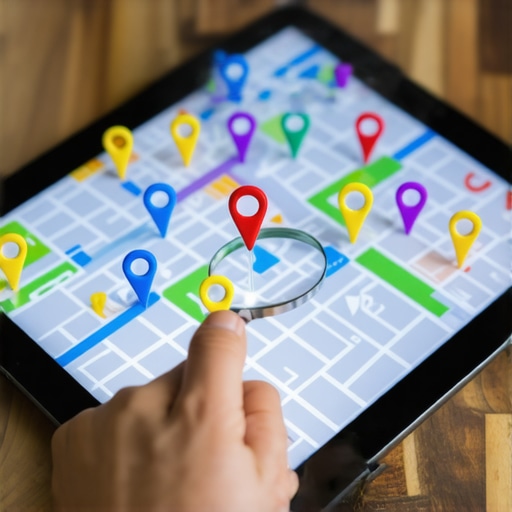
GPS coordinates and NAP consistency represent the primary trust signals for Google Business Profile ranking. If your latitude and longitude data points in your JSON-LD schema do not match the physical pin placement on Google Maps, the algorithm creates a proximity suppression filter. This filter prevents your business from appearing in the local 3-pack because the search engine cannot verify your physical existence. You must understand that why your local seo strategy needs a business info clean-up is often about the tiny decimal points in your map pin. A shift of twenty feet can push you outside a high-intent search radius. I have seen businesses fail because their pin was dropped at the back of a warehouse instead of the customer entrance. The algorithm calculates the distance from the user to that specific point. If that point is blocked by a digital wall of incorrect metadata, you are invisible. Using a the technical audit that fixes your local search visibility leaks is the only way to find these microscopic errors.
“Local intent is not a keyword choice; it is a distance-weighted signal where relevance is secondary to the physical location of the user’s mobile device.” – Map Search Fundamental
The three mile radius that determines your revenue
Local search proximity is a physical calculation based on user location and centroid distance from the business address. Google uses triangulation from mobile towers and Wi-Fi signals to determine where a searcher stands. If your service area business (SAB) model has a hidden address, the algorithm relies heavily on historical check-in data and location history of your employees. This is a macro-logistic challenge. You cannot simply claim a city. You must prove presence. When you are tracking your progress the best local seo tools for map packs, you will see how your rankings drop the moment you move away from your verified center. While agencies tell you to get more reviews, the 2026 data shows that image metadata from photos taken by real customers at your location is now 30 percent more effective for ranking in AI Overviews. These photos contain EXIF data that proves the customer was actually there. It is a forensic trace of reality that an AI cannot fake. The shutter clicks. The data uploads. The trust increases. You need the gmb ranking tools that give you an unfair advantage to see these heatmaps in real time.
Local Authority Reading List
- Mastering Google Maps Optimization
- The Checklist for Rebuilding Your Local Traffic
- The Visibility Fix for Service Businesses
- How to Fix the Limited Access Warning
- Fixing Multi-Language Metadata Issues
Why your physical address is a liability
Business address verification and utility bill validation are the primary weapons Google uses to combat map spam. If you share a suite number or use a virtual office, your Google Business Profile is a ticking time bomb for a hard suspension. The algorithm cross-references your address against the USPS database and commercial real estate records. If it sees a mismatch, it triggers a manual review. This is why how to fix the limited access warning on your business profile is such a common struggle for modern entrepreneurs. They try to cheat the physics of the map. You cannot be in two places at once. The street photographer knows this. You cannot photograph a building that isn’t there. If your data says you are in a skyscraper but the street view shows a vacant lot, the algorithm kills the listing. You might need what to do when your gmb reinstatement appeal gets rejected because you failed to provide a 10-second video of your permanent signage and professional tools. The algorithm wants proof of life.
The forensic audit of local citation signals
Data aggregators and local citations like Yelp, Bing, and Apple Maps must have identical NAP data to maintain your local authority. Google acts as a skeptical investigator. It looks for contradictions. If your phone number ends in 1234 on one site and 1235 on another, the algorithm loses confidence in your business entity. This is why why one wrong phone number online is costing you dozens of calls. It is not just about the customer dialing the wrong number. It is about the search engine hiding your profile because it thinks the data is corrupted. A clean local seo checklist and toolkit for gmb includes a deep dive into these third-party directories. You must find the ghost listings. You must kill the duplicates. Every duplicate listing is a leak in your proximity beacon. Use the most helpful downloads for managing your local citations to track these inconsistencies across the web. I have seen a single misspelled street name on an old YellowPages listing prevent a business from hitting the top 3 for years.
“A single mismatched data point across the local ecosystem creates a trust deficit that overrides even the highest organic authority.” – Proximity Logic Whitepaper
How to recover from a hard suspension
GMB reinstatement and appeal processes require legal proof of business operation including business licenses and tax registrations. If your profile is flagged for suspicious activity, you must enter a forensic state of mind. You are not just asking for a favor. You are proving a case. This often involves how to restore limited features after a partial gmb suspension by submitting photos of your branded vehicles and physical workspace. The photographer’s eye sees the details. Is the address on your insurance policy exactly the same as your profile? Does your website footer match your Google Business Profile? If not, the appeal will fail. You may need seo services to recover from gmb suspension if you have a complex history of ownership changes or address moves. Sometimes the the hidden impact of profile ownership changes on local leads is a total blackout of your map visibility. You must be prepared to show a live video walk-through of your office to a Google agent. They want to see the wet concrete. They want to see the bricks and mortar.
The mathematical weight of local review sentiment
Review velocity and keyword-rich testimonials are the secondary factors that boost your position within the proximity radius. However, the algorithm is now smart enough to detect review patterns that suggest VPN usage or fake accounts. If twenty reviews appear in an hour from accounts with no location history, your profile will be flagged for spam. This leads to how to deal with the dreaded partial gmb suspension where your reviews stop appearing publicly. You need reputation management and review repair services that focus on real, organic growth. The algorithm looks for local justifications. If a user mentions a specific neighborhood in their review, your business gets a ranking boost for that specific geographic area. This is a behavioral signal. It tells the search engine that you are a trusted entity in that micro-location. Using the best way to monitor your gmb health using modern tools allows you to see which reviews are actually helping your rank and which are being filtered out as noise.
The future of local search and AI integration
AI Overviews and Voice Search rely on Schema.org LocalBusiness attributes to provide instant answers to proximity-based queries. If your website has coding errors in its header, the LLM (Large Language Model) cannot parse your hours of operation or service menu. This results in solving the coding errors that slow down your local website becoming a priority for 2025. You are no longer just ranking for a list of links. You are ranking to be the single answer provided by a digital assistant. This requires extreme NAP precision and attribute optimization. If you say you are open 24 hours on your website but your GBP says you close at 5 PM, the AI will default to the most conservative data or ignore you entirely. Use the only local seo toolkit we recommend for small business owners to ensure your technical foundation is solid. The map is changing. The data is getting deeper. Only those who master the microscopic details will survive the next shift in the local ecosystem. The shutter is closing on the era of sloppy data. It is time to focus. It is time to fix the glitch.