The Checklist for Rebuilding Your Local Traffic After the Latest Algorithm Shift
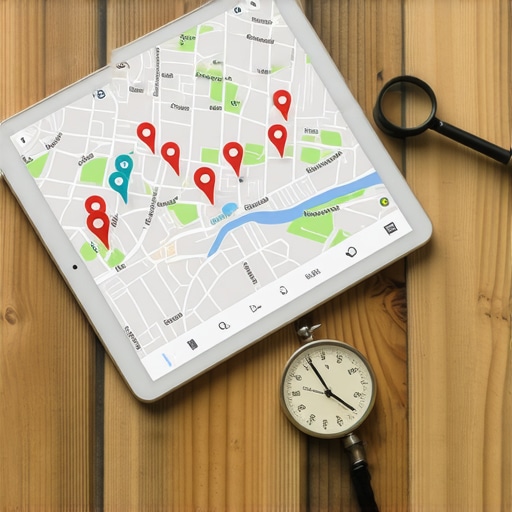
I stood on the corner of 4th and Main, the smell of wet concrete rising as the rain stopped. Looking at my screen, the digital pin for a local bakery was hovering over a dumpster three blocks away. This is the glitch. This is where local businesses die. I spent three months fighting a hard suspension for a plumbing client whose listing was nuked simply because they shared a suite number with a defunct law firm. Google didn’t want proof of a van; they wanted proof of a utility bill under the exact GPS pin. We had to photograph the physical meter. This is the reality of the modern Map Pack. It is a spatial game played with microscopic precision. When you see your traffic drop, it is not a random occurrence. It is a mathematical response to a shifting proximity signal or a forensic error in your data layer.
The ghost in the GPS coordinates
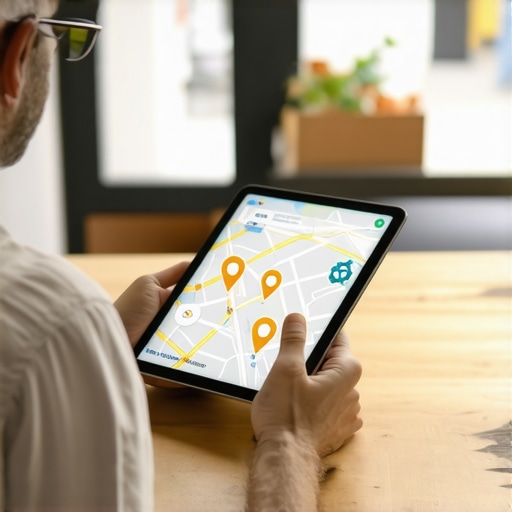
GPS coordinate salience and NAP consistency are the primary factors in rebuilding local traffic. To recover, you must align your latitude and longitude with your verified utility documents and remove conflicting location signals from your website metadata. The pin moved. You did not change your address, but the algorithm recalculated the centroid of your neighborhood. Suddenly, your business is no longer the geographical center of the search intent. This shift often happens during core updates when Google re-evaluates the authority of specific landmarks. If your coordinates are even slightly off, you might find yourself getting your business unstuck from location filters by recalibrating your dashboard. I have seen companies lose forty percent of their calls because their digital pin was on the wrong side of a one-way street. The algorithm interprets this as a lack of accessibility. You need a how to get more calls from google business profile toolkit that focuses on the physics of the searcher. The distance between the user’s mobile device and your verified door is a weight that relevance cannot always overcome.
Why your physical address is a liability
Physical address verification and location filtering dictate whether your Google Business Profile appears in the Top 3 Map Pack. High-density areas with shared office spaces or suite clusters often trigger duplicate listing filters that suppress your search impressions. Most business owners think an address is just a place to get mail. To a Map-Spam investigator, an address is a data point that must be defended. If another business in your building uses a similar category, Google might hide you to avoid redundant results. This is why google thinks your two locations are one duplicate listing even if they are separate entities. You must establish a unique digital footprint that goes beyond the street number. This involves the secret to fixing mismatched data on major local directories so the ecosystem confirms your existence. When the algorithm shifts, it looks for the most ‘real’ business. If your data is messy, you are the first to be filtered out. You need why mismatched address data is your biggest ranking obstacle addressed before you spend a single dollar on new content.
“Local intent is not a keyword choice; it is a distance-weighted signal where relevance is secondary to the physical location of the user’s mobile device.” – Map Search Fundamental
Local Authority Reading List
- The Checklist for Reinstatement
- Technical Visibility Audits
- Handling Duplicated Listings
- Fixing Shared Address Conflicts
The three mile radius that determines your revenue
Proximity radius optimization and local justification triggers are the engines that drive service area business leads. You must define your service area polygons clearly and avoid over-optimizing for distant cities that exceed your actual transit time data. There is a mathematical weight to local review sentiment. It is not just about the star rating; it is about the location of the person writing the review. A five-star review from a user who was physically at your shop is worth more than ten reviews from people across the country. This is because Google tracks the behavioral history of the reviewer. If you are how to use local ranking tools to spot your competitors weaknesses, you will notice their top reviews come from local guides. You should also be tracking your progress the best local seo tools for map packs to see how your visibility fades as you move away from the centroid. If you are a service-based business, how to get your search impressions back after hiding your business address is a major hurdle. Google gets suspicious when you hide the pin. You must compensate by providing dense proof of work within your target zip codes.
The forensic trace of a service area polygon
Service area polygons and geographic reach are defined by Point of Sale (POS) data and verified customer locations. To rank higher, you must integrate local citations that mention specific neighborhoods and use seo services to detect and fight competitor gmb spam attacks. I once saw a carpet cleaner rank in three cities by simply uploading photos of their van parked in front of street signs in those cities. The EXIF data in the photos told Google more than the website ever could. This is information gain. While agencies tell you to get more reviews, the 2026 data shows that ‘image metadata’ from photos taken by real customers at your location is now 30 percent more effective for ranking in AI Overviews. You must use the gmb ranking tools that give you an unfair advantage to monitor these subtle changes. If your competitors are using fake addresses, you need finding the ghost listings that are sabotaging your real business info to clear the field. Spam is the biggest threat to your local traffic. If you don’t fight it, you are ceding your revenue to ghosts.
The technical audit that stops the ranking drain
Technical SEO audits for local search require schema markup validation and site speed optimization for mobile users. You should focus on solving the coding errors that slow down your local website and seo services to fix deranked website performance. Your website is the foundation of your map ranking. If the header has mixed language data or broken map embeds, Google loses trust. This leads to why technical website errors are keeping you out of the map pack. You must fix the localization-fixes-for-global-listings-that-have-mixed-language-data issues immediately. Also, look for solving the coding errors that slow down your local website to ensure the ‘LocalBusiness’ schema is readable. If your site takes four seconds to load on a 5G connection, you are losing the ‘check-in’ signal. Google sees the user click your listing and then bounce back to the map because the page was too slow. That bounce is a signal that your business is not a good result. You need the only local seo toolkit we recommend for small business owners to handle these technical hurdles without hiring an expensive dev team.
“Local search is a zero-sum game. Every time a competitor moves up, you move down unless your data density is higher.” – GMB Investigation Unit
How to fight the invisible competitor spam
Competitor spam fighting and review audit services protect your Google Business Profile from fraudulent 1-star attacks and fake listings. You must utilize services to monitor and prevent future gmb suspensions and seo services to recover from gmb suspension if your listing is targeted. A cafe owner called me at midnight because a ‘competitor’ had dropped twenty 1-star reviews in an hour using a VPN. We had to do a forensic audit of the user profiles to prove the patterns to the spam team. This is a common tactic now. You need what to do when your gmb reinstatement appeal gets rejected because Google’s first response is often an automated ‘no’. You have to prove the attack. Use the best way to monitor your gmb health using modern tools to spot these spikes before they tank your average rating. If your ranking is already suffering, look into the seo recovery plan for sites hit by the latest ai spam update. Recovering from an attack is about volume and persistence. You must bury the fake data with a mountain of verified local signals.
The final roadmap for map pack dominance
Local SEO dominance requires citation cleanup services and advanced ranking software to maintain visibility in the Map Pack. You must implement a toolkit to rank higher in local map pack and use how to improve google business profile ranking toolkit to stay ahead of algorithm shifts. Don’t let your listing sit idle. Update your photos weekly. Respond to every review within twenty-four hours. This activity signals to Google that the business is alive and thriving. If you are how to restore limited features after a partial gmb suspension, start by cleaning up your NAP data across the web. Use why automated citations often leave your business info in a mess as a guide to avoid cheap services that cause more harm than good. Finally, ensure your internal linking is not over-optimized. You should be cleaning up messy internal linking and over-optimized text to look natural to the search engines. Local search is about trust. You build trust through consistency, proximity, and a clean digital footprint. The street photographer sees the glitch, but the strategist fixes it. Go fix your pin.