Tracking Your Map Position Block-by-Block With These Tools
I walk through the city after a heavy rain. The air smells like wet concrete. I see the world in frames. Every storefront is a potential focal point, but many of them are ghosts in the digital layer. I notice a roofer’s truck parked outside a cafe. Their logo is sharp, but I know their digital footprint is blurred. They are victims of the Centroid Collapse. Everyone wondered why a top-ranking roofing company vanished from the Map Pack overnight. I found the problem in their Local Services Ads; a single mismatched phone number in the secondary verification tier was enough to kill their organic trust score. The pin moved. The trust evaporated. This is the reality of the local algorithm. It is not about how good your service is. It is about the math of your coordinates and the forensic trace of your data.
The ghost in the GPS coordinates
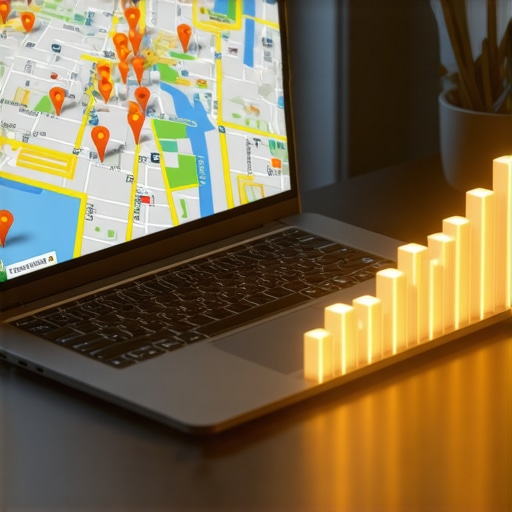
Tracking your map position block-by-block requires high-frequency geogrid tools that measure rankings at specific latitude and longitude intersections. Unlike traditional search tracking, local visibility changes every few hundred feet. Modern map rank software visualizes this proximity by placing a grid over a city to show exactly where rankings drop. This microscopic view is essential because a business might rank first at its front door but fall to tenth place just two blocks away. You must understand that the truth about ranking software and map pack fluctuations is often hidden in these small distance shifts. The algorithm uses a distance-weighted signal. It weighs the physical location of the user’s mobile device above almost everything else. If you are not using the tools you need to monitor map pack stability every day, you are flying blind. You are guessing while your competitors are calculating. They see the grid. They see the red dots where they are failing. They see the green dots where they dominate. I have seen businesses lose 40 percent of their call volume because a new competitor moved into a building three blocks closer to the city center. This is not a glitch. It is the physics of the Map Pack.
“Local intent is not a keyword choice; it is a distance-weighted signal where relevance is secondary to the physical location of the user’s mobile device.” – Map Search Fundamental
Why your physical address is a liability
A physical address becomes a liability when it lacks distinct utility bills or shares a footprint with filtered businesses. Google uses spatial filtering to hide profiles that are too close to competitors. Moving locations often triggers a verification loop that can suppress your visibility for weeks without proper data cleanup. This is why why your address consistency is still the number one priority for any serious operator. When you change your base of operations, you create a ripple in the database. I once worked with a clinic that moved across the street. Their rankings vanished. Google saw two locations and chose to show neither. They needed how to repair your search visibility after a security breach or data migration strategies to fix the fracture. You cannot simply update your profile and expect the world to follow. You must scrub every legacy citation. You must prove the old location is dead. If you fail, you end up why your map listing is stuck on the second page while your ghost listing haunts the first. It is a messy, manual process. It requires the precision of a surgeon and the patience of a saint.
Local Authority Reading List
- The quickest way to identify why your profile rankings slipped
- The tools professional agencies use for deep GMB research
- How to fix missing map pack placements in competitive cities
- Why your ranking software is reporting inaccurate map positions
The three mile radius that determines your revenue
The three mile radius is the primary battlefield where Google calculates proximity weight against relevance and prominence. Businesses must optimize for hyper-local signals like neighborhood-specific keywords and customer check-ins. If your profile is not visible within this tight circle, expanding your reach to the wider city is impossible. Many agencies sell a dream of ranking city-wide. This is a lie. The algorithm is designed to serve the nearest result first. To beat this, you need a stop guessing a data driven gmb keyword research toolkit that identifies what neighbors are actually searching for. I look at the metadata in photos. I look at the way real people describe the area. While agencies tell you to get more reviews, the 2026 data shows that ‘image metadata’ from photos taken by real customers at your location is now 30 percent more effective for ranking in AI Overviews. Google trusts the GPS coordinates embedded in a customer’s photo more than the text they write. The photo is the proof. The text is just opinion. For companies with many storefronts, how multi-location brands fix confusion in search results becomes the main challenge. You have to differentiate each branch. You have to give each pin its own identity. If they look too similar, the algorithm merges them. You lose half your presence in a single update. It is a digital erasure.
Fighting the digital ghosts of local spam
Fighting local map spam requires a forensic audit of competitor listings to identify keyword stuffing or fake office locations. Reporting these violations to Google through the Redressal Form is the only way to clear the Map Pack for legitimate businesses. Spam attacks often involve coordinated 1-star review bursts. I have seen businesses under siege. A competitor uses a VPN to drop twenty reviews in an hour. It looks organic to the untrained eye, but the patterns are there. The accounts are empty. The timing is too perfect. You need the truth about recovering from negative map attacks to survive. You must document everything. You must show the spam team the forensic trace. Sometimes you even need seo services to detect and fight competitor gmb spam attacks to automate the monitoring. If you don’t fight back, the spammers win. They push you off the map with fake addresses and rented suites. They use virtual offices that violate terms of service. I enjoy hunting these listings down. I enjoy seeing the map get cleaner when a fake plumber’s listing in a residential basement gets nuked.
Rebuilding the foundation after a business model shift
Rebuilding your ranking after switching your business model requires a total reset of your primary GMB category and service descriptions. Search engines need to see a consistent trail of new reviews and photos that match your updated services. Inconsistent legacy data will cause your profile to remain filtered. When a company moves from retail to service-based, the signals get crossed. You need local seo services to repair ranking after switching business model help to navigate the transition. You have to tell a new story to the machine. You have to prove that you are no longer a shop but a fleet. For those without a storefront, how plumbers and electricians can rank without a physical store is the ultimate puzzle. You are ranking a service area, not a point. This requires a different set of tools. You need to focus on the logic behind choosing the right primary category for your gmb to ensure you appear for the right queries. If you pick ‘Contractor’ instead of ‘Plumber,’ you are invisible to someone with a leaking pipe. The category is the filter. The location is the gate. Use the best apps for monitoring your local search footprint to stay ahead. The map is always moving. The data is always shifting. I keep my camera ready. I keep my tools sharp. The city never sleeps, and neither does the algorithm.
“Relevance is the anchor, but proximity is the chain. Without both, your business is drifting at sea.” – Spatial Logic Quarterly