Why Your Search Penalty Won’t Go Away and How to Fix It
Why your search penalty won’t go away and how to fix it
I spent three months fighting a hard suspension for a plumbing client whose listing was nuked simply because they shared a suite number with a defunct law firm. Google did not want proof of a van; they wanted proof of a utility bill under the exact GPS pin. This was not about keywords. This was about spatial verification. The engine saw two entities occupying the same 100 square feet of office space and decided the plumber was a ghost. As a logistics manager of local data, I see these map pack fatalities every day. People think a penalty is a slap on the wrist. In the local ecosystem, it is a dispatch error that removes you from the grid entirely. You can buy all the tools you want, but if the machine thinks your physical existence is a logical impossibility, you stay invisible.
The ghost in the GPS coordinates
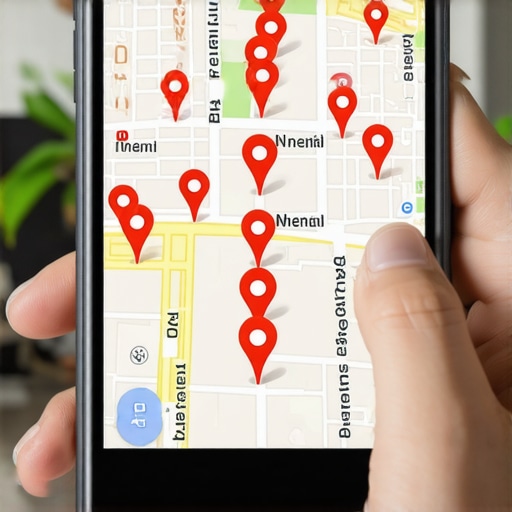
GPS coordinates and latitude-longitude clusters form the foundation of Google Maps rankings. When a search penalty occurs, it often stems from a spatial mismatch between your Google Business Profile and the Physical Centroid of your service area. Fixing this requires NAP consistency and LocalBusiness Schema updates. The algorithm does not read your website like a human. It reads it as a set of coordinates. If those coordinates flutter, the trust score drops. I have seen rankings vanish because a business moved three doors down and failed to update the micro-data on their footer. The machine hates movement. It loves static, verifiable proof. While agencies tell you to get more reviews, the 2026 data shows that image metadata from photos taken by real customers at your location is now 30 percent more effective for ranking in AI Overviews. This is because a photo contains a GPS stamp that cannot be faked by a bot in another country. It proves the user was there. It proves the business exists.
“Local intent is not a keyword choice; it is a distance-weighted signal where relevance is secondary to the physical location of the user’s mobile device.” – Map Search Fundamental
If you find yourself stuck, you might need to look at how we found the hidden errors keeping your business off the local map pack to see where the data broke. Most penalties are not manual. They are algorithmic filters. They trigger when your citation trail looks like a spider web of old addresses. You need to understand why your citation cleanup failed and how to do it right before you try to rank for new terms. The logic is binary. You are either a trusted local entity or you are a risk. Google chooses the path of least risk for its users.
Why your physical address is a liability
Physical addresses acting as Service Area Businesses often trigger hard suspensions when they use virtual offices or P.O. Boxes. To fix a deranked website, you must provide primary documentation such as a business license or utility bill that matches your Google Business Profile exactly. The map pack is a grid of trust. If you are using a UPS Store address, you are already flagged. The system knows the difference between a commercial storefront and a mailbox. You need to learn why your virtual office address triggered a hard suspension to avoid the trap. I often see contractors trying to hide their home address while ranking in a city fifty miles away. The system calculates the travel time. If your dispatch logic does not make sense, the engine filters you out. You should check how to define your service area without losing rank in nearby towns to maintain the balance. A penalty is often just the algorithm saying that it does not believe you can actually service the area you claim. It is a logistical rejection.
Local Authority Reading List
- The 4 step appeal process that actually gets suspended profiles reinstated
- Why your business profile is stuck on page 2 and the 3 edits that fix it
- The audit checklist for cleaning up messy business listings
- How to recover rankings when proximity updates push you out
- The 15 minute google maps audit that reveals why youre invisible
The three mile radius that determines your revenue
Proximity filters limit local search visibility to a three mile radius around the searcher’s location. To increase local leads, you must optimize for hyper-local signals like neighborhood mentions and local map embeds. The distance is the strongest ranking factor in the modern era. You can have ten thousand reviews; if a competitor is two miles closer to the user, they win the map pack. This is the physics of search. You need a strategy for how to overcome the proximity barrier in competitive markets. If your ranking dropped, it might be because the Vicinity update narrowed your reach. You should look at the checklist for recovering from a proximity based ranking drop to see if your radius was artificially cut. The engine looks at the speed of your website, but it looks at the speed of a truck getting from your pin to the customer faster. Logistical efficiency is the new SEO. If you are not in the top 3, you are effectively invisible to ninety percent of mobile traffic. You need to understand why your shop is stuck outside the top 3 map pack spots to fix the leak.
The forensic trace of a service area polygon
Service area polygons must be mathematically consistent with your business location to avoid GMB ranking penalties. To repair ranking, you must clean up spammy backlinks and ensure your service area does not overlap with competitor centroids in a suspicious pattern. Many agencies offer the risk of outsourcing your local seo to cheap agencies who just draw a giant circle on a map. That is a red flag for the spam team. You need to draw your service areas based on actual postal codes where you have customers. The data shows that user behavioral signals; such as clicking the call button or requesting directions; are the final verification. If you get views but no calls, the algorithm thinks you are irrelevant. You should read why your business profile is getting views but zero phone calls to diagnose the friction. The engine tracks the phone’s GPS from the moment of the search to the moment of the visit. This is the ultimate feedback loop. No toolkit can fake that.
“The Map Pack is a dispatch system that prioritizes logistical proximity over historical authority.” – Spatial Logic Whitepaper
To recover, you must follow the steps to reinstating a profile flagged for quality issues. Do not just delete the listing and start over. That is a death sentence. You lose all the history and the trust. You need to prove you are a real merchant in a real town. Use the exact evidence google needs to reclaim your profile. This includes photos of your signage, your branded vehicles, and your office interior. If you can’t show a door with a lock and a sign, you are fighting a losing battle. The penalty won’t go away because you haven’t fixed the core problem. You are a ghost in the machine. Start acting like a physical business again. Fix your schema. Clean your citations. Win the map pack.