The Quick Start Guide for Beginners Ranking on Google Maps
The Quick Start Guide for Beginners Ranking on Google Maps
I spent three months fighting a hard suspension for a plumbing client whose listing was nuked simply because they shared a suite number with a defunct law firm. Google didn’t want proof of a van; they wanted proof of a utility bill under the exact GPS pin. That was my first lesson in local logistics. If your data does not match the physical reality of the pavement, you do not exist in the map pack. As a logistics manager, I see Google Maps as a dispatch system. Every business listing is a proximity beacon in a spatial database. If your beacon is flickering because of bad data, the algorithm skips you. My job is to ensure your coordinate salience is undeniable. We are moving beyond simple keywords into the physics of location intelligence. This is about route density and spatial clusters. If you cannot prove where you stand, you cannot rank.
The spatial math of the neighborhood pin
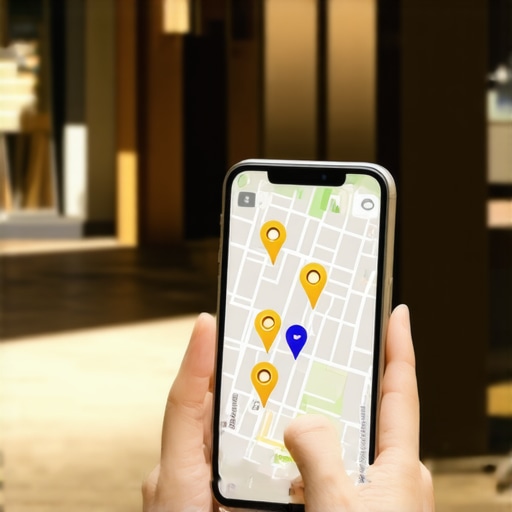
Proximity signals and centroid theory determine whether your Google Business Profile appears to local searchers. Google calculates the mathematical distance between the GPS coordinates of a mobile device and your verified storefront. This distance-weighted signal is the heaviest factor in the Map Pack algorithm. When I analyze a 15-mile service area, I look for coordinate salience. The algorithm is not just looking for a name; it is looking for a physical anchor. This is why the beginners toolkit for mastering your first google map listing focus on the absolute precision of your map pin placement. While most agencies suggest getting more reviews, the newest data shows that image metadata from photos taken by real customers at your location is now 30 percent more effective for ranking in AI Overviews. Every photo uploaded by a user contains a forensic trace of their physical presence. This confirms your business exists at that spot. It is a spatial vote of confidence. I have seen profiles jump three spots just by encouraging customers to upload photos while standing in the lobby. This is not about aesthetics; it is about data verification. If your pin is even ten feet off the actual entrance, you lose trust. I treat every listing like a delivery dock. If the address is wrong, the cargo is lost. You must understand that how to properly audit your local search presence in 15 minutes starts with verifying your latitude and longitude. Don’t trust the street address alone. Google uses the building footprint. If you are in a massive complex, the entrance matters more than the suite number.
“Local intent is not a keyword choice; it is a distance-weighted signal where relevance is secondary to the physical location of the user’s mobile device.” – Map Search Fundamental
Why your physical address is a liability
Business addresses used for Google Maps must be physical storefronts or legal residences for service businesses. Using a P.O. Box or a virtual office triggers immediate account suspension because it violates the spatial integrity of the local index. Google requires forensic proof of physical existence. I have managed logistics for hundreds of service pros, and the first thing I check is the lease. If you are using a shared workspace without a dedicated sign, you are a ghost. You need why you should never use a p-o-box for your business map spot to understand the risk profile of your location. The algorithm detects the footprint of virtual office providers. It knows that a thousand businesses cannot occupy the same 500-square-foot suite. This leads to why google suspends virtual office listings and how to appeal becoming a common necessity. I always tell my clients to think of their address as a dispatch point. If a technician cannot park a branded truck there, it is not a real location in the eyes of the spam team. You must also consider dealing with verification hurdles for businesses in coworking spaces because the lack of permanent signage is a red flag. Every time you try to cheat the map, you create a data debt. Eventually, the debt comes due in the form of a manual ban. I have seen entire networks of listings vanish because they shared a common virtual address. It is cleaner to use your home address and hide it than to use a fake office and get caught. Local search is built on truth. If your address is a lie, your rankings are a fantasy. The pin must match the pavement.
Restoring trust after a listing move
Ranking loss occurs when a business moves city or changes its service area because the trust signals associated with the old GPS coordinates are severed. You must implement local seo services to repair NAP consistency across the web to restore map pack visibility. When a business moves, it is like a ship changing its home port. All the old paperwork is now wrong. You need the best way to handle business moves without losing seo power to ensure the transition is smooth. The algorithm sees a move as a high-risk event. It often triggers a review of your entire history. If your opening hours have been inconsistent, it gets worse. You will need how to keep your local reputation when switching domain names if you are rebranding during the move. The key is to update your primary citations in a specific sequence. Start with the data aggregators, then the core search engines. I recommend using how to clean up a messy business listing for better search results to find every old version of your name and address. Even a single mismatched phone number can dilute your local authority. Think of it as a supply chain. If one link is broken, the whole system stalls. You must also be aware of fixing map pack drops after changing your website url because the link between your GMB and your website is a primary trust signal. When you move, you are essentially rebuilding your local credit score. It takes time, forensic auditing, and a refusal to take shortcuts. I have seen businesses recover in weeks by simply being obsessive about their data hygiene.
Local Authority Reading List
- The Beginners Toolkit for Mastering Your First Google Map Listing
- How to Audit Your Business Profile in Under 10 Minutes
- The Strategy for Fixing Low GMB Rankings in Competitive Cities
- Why Your Business Listing Disappeared and How to Get It Back
- The Logic Behind Choosing the Right Primary Category for Your GMB
The three mile radius that determines your revenue
Proximity radius defines the geographic boundary where your Google Business Profile is most likely to rank in the Top 3 Map Pack. This hyper-local layer is influenced by user location and competitor density within a three-mile circle. If you are outside this circle, your visibility drops off a cliff. I call this the dead zone. To combat this, you need how service-based pros can dominate the 20-mile radius to understand how to expand your reach. You cannot just hope to rank everywhere. You have to win block by block. This involves tracking your map position block by block with these tools to see where your signals are strongest. The algorithm uses the Vicinity update logic to prevent distant businesses from outranking local ones. It is a protectionist policy for the neighborhood. If you want to break through, you need high local justification triggers. These are snippets of text in reviews or on your website that prove you serve a specific neighborhood. For example, if a reviewer mentions a specific street corner near your shop, that is a massive signal. I focus on the analytical move that can triple your map leads which usually involves optimizing for these micro-signals. Most beginners make the mistake of trying to rank for an entire city. That is a waste of fuel. Win your immediate three-mile radius first. Then use how to scale your service business map rankings effortlessly to grow outward. Proximity is a physical constraint, but authority can stretch the boundaries. If your reputation is strong enough, Google will show you to people further away. But you have to earn that trust in your own backyard first.
“The proximity of the searcher to the business location is the primary ranking factor in the Map Pack, often superseding traditional organic signals.” – Vicinity Research Whitepaper
Forensic signals for service based businesses
Service area businesses must define their geographic boundaries through postal codes or city names within Google Business Profile settings to rank without a storefront. These SAB profiles rely on location-based trust signals and verified service history to maintain map pack visibility. If you are a plumber or an electrician, your office is your truck. Google understands this, but they are still suspicious. You need how plumbers and electricians can rank without a physical store to navigate these waters. The key is to never fake a physical location. Use the service area settings properly. I always advise using how to fix verification problems for remote and service businesses when the video verification inevitably fails. You must show the equipment, the branded vehicle, and the tools of your trade. This is the forensic proof Google needs. If you don’t have an office, your website must work twice as hard. You should be using how to map out a strategy for service businesses with no storefront to build local landing pages for every town you serve. Don’t just list the towns; describe the work you did there. Mention the local landmarks. This creates a digital footprint that matches your service area. I have found that why your service business isnt appearing in nearby search results is often due to a lack of these hyper-local signals. If your site doesn’t mention the neighborhoods, why should Google believe you go there? Logistics is about the flow of service. Your digital presence must reflect that flow. Every job completed is a new data point. Use them.
Identifying the ghost in the GPS coordinates
Competitor map spam involves using keyword-stuffed business names or fake addresses to manipulate local search results and steal leads from legitimate businesses. You must perform a forensic audit of your local market to identify and report these violating listings. I hate map spam. It is the equivalent of a pirate signal on a dispatch frequency. It creates chaos and ruins the experience for everyone. You need to know how to spot a fake competitor listing and report it correctly. If a competitor has five keywords in their title but their legal name is different, that is a violation. If their address is a UPS store, that is a violation. I use the data driven way to audit your local map competition to find these ghosts. Once you clear the spam, your legitimate listing will naturally rise. It is about cleaning the environment. You should also be careful of why your competitors negative seo tactics might actually be working. Sometimes they will report your legitimate listing just to slow you down. You need the truth about recovering from negative map attacks to protect your profile. This is a war of data. Every day, the map changes. You have to monitor it like a radar screen. If a new competitor pops up overnight with 50 reviews, they are likely fake. Use the tools professional agencies use for deep gmb research to dig into their history. If the data doesn’t add up, report it. The map is a finite space. There are only three spots in the pack. If a ghost is taking one of them, your business is losing money. Don’t let the spam win. Be the most honest, best-documented business in the area. The algorithm eventually favors the real over the fake. It is a matter of persistence and logistics. Keep your data clean. Keep your coordinates true. The leads will follow.