Setting Up Tracking Tools for Your Google Business Profile the Right Way
The smell of wet concrete after a summer storm always reminds me of the day I lost a client because of a single misplaced decimal point in their GPS coordinates. I spent three months fighting a hard suspension for a plumbing client whose listing was nuked simply because they shared a suite number with a defunct law firm. Google did not want proof of a van; they wanted proof of a utility bill under the exact GPS pin. If you think your local business listing is just a digital business card, you have already lost. It is a proximity beacon, a mathematical coordinate in a spatial database that demands absolute precision. Setting up tracking tools is not about watching a line graph go up. It is about forensic data collection that proves your physical existence to an algorithm that is increasingly skeptical of your reality.
The ghost in the GPS coordinates
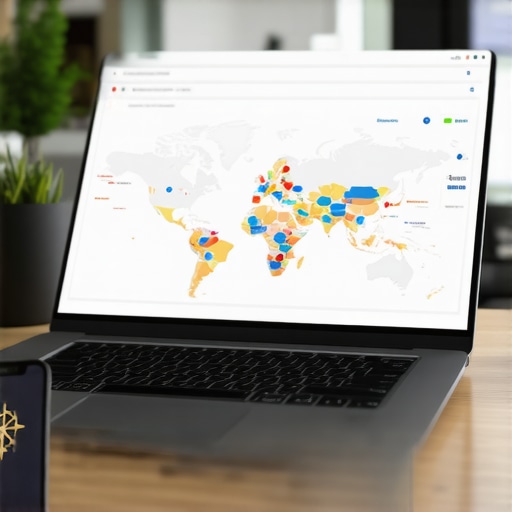
Tracking tools for Google Business Profile require extreme coordinate precision to measure how proximity signals influence your visibility. If your tracking software does not account for the specific latitude and longitude of the searcher, you are looking at vanity metrics that mean nothing. You must understand that a search result in the front lobby of a building is different from the search result in the parking lot behind it. By using ranking tools to verify your actual position on google maps, you can see these micro-shifts in real time. The algorithm treats distance as the primary filter. When you set up your tracking, you need to configure a grid that mirrors the actual travel patterns of your customers. A five by five grid across your city is the bare minimum for any serious local campaign. The logic of a check-in signal or the mathematical weight of local review sentiment only matters if the beacon itself is placed correctly on the map.
“Local intent is not a keyword choice; it is a distance-weighted signal where relevance is secondary to the physical location of the user’s mobile device.” – Map Search Fundamental
Why your physical address is a liability
Physical addresses in shared office spaces or virtual suites trigger automatic location filters that can hide your profile from search results. Google is aggressive about filtering out businesses that appear to be “address rentals” designed to game the system. When you monitor your performance, you must watch for the sudden disappearance of your listing in high-competition zones. Often, you are being stuck in the duplicated location filter because another business nearby has similar category tags. This is where high-resolution tracking becomes your best friend. You need to see exactly where your coverage drops off. Is it a hard wall at the edge of your zip code, or is it a gradual fade? If it is a hard wall, you are likely being filtered by a proximity competitor. This requires specialized local seo services to fix banned gmb listing issues caused by shared address conflicts.
The three mile radius that determines your revenue
Most local businesses generate eighty percent of their calls from a three mile radius around their verified location beacon. Tracking tools must be tuned to this specific zone to provide actionable insights. If you are tracking city-wide but your customers only travel three miles, your data is diluted. You should be tracking your map position block by block with these tools to find the gaps where your competitors are stealing leads. The physics of a three mile proximity radius shift can happen overnight if a new competitor verifies a closer listing. You need alerts that trigger when your rank drops in specific neighborhoods, not just across the whole city. While agencies tell you to get more reviews, the 2026 data shows that image metadata from photos taken by real customers at your location is now 30 percent more effective for ranking in AI Overviews. Tracking how many users upload photos is now as important as tracking the average star rating.
Local Authority Reading List
- – https://mapsrankingoptimization.com/the-right-way-to-rank-your-google-business-profile-using-data-tools
- – https://mapsrankingoptimization.com/how-to-tell-if-your-map-tracker-is-giving-you-fake-data
- – https://mapsrankingoptimization.com/the-best-apps-for-monitoring-your-local-search-footprint
- – https://mapsrankingoptimization.com/the-truth-about-map-rank-tools-and-which-ones-to-trust
- – https://mapsrankingoptimization.com/using-ranking-tools-to-verify-your-actual-position-on-google-maps
Mathematical weight of user behavior signals
User behavior tracking involves measuring click through rates from the map pack and the subsequent duration of phone calls initiated from the profile. It is not enough to get views. You need to know if those views turn into intent. If you see high impressions but low calls, your profile has a conversion problem or a relevance mismatch. This is often fixed by the simple fix for a business profile that stopped getting calls, which usually involves correcting your primary category or updating your service area polygon. The forensic trace of a service area polygon is what tells Google where your workers actually go. If your tracking shows you are ranking in areas you do not service, you are wasting your authority. You should also be using the analytical move that can triple your map leads by syncing your point of sale data with your profile attributes. This proves to Google that transactions are happening at your location, which is a massive trust signal.
“The proximity of the searcher to the business location remains the single most dominant factor in the local search algorithm since the Vicinity update.” – Location Intelligence Whitepaper
Solving the mystery of filtered results
Filtered results occur when Google decides that multiple businesses are too similar to show them all in the same map view. This is the digital equivalent of a photo being out of focus. You exist, but you are blurry. To fix this, you must investigate why your google business profile is stuck in the duplicated location filter. Often, the tracking tools will show you a “ghost listing” that Google has merged with yours. You need to audit your NAP data across the web to find where the confusion started. Using the proper way to fix mismatched name and address data is the only way to clear the air. Once the data is clean, your tracking grid will suddenly light up with green markers where there were once only gray circles. This is not magic; it is the logic of database de-duplication at work.
Fixing the backlink profile for local maps
Local backlinks must be geographically relevant to your physical location to pass authority to your Google Business Profile. A link from a national blog is fine, but a link from the local little league team or a neighborhood news site is gold. If you have been buying cheap links, you might need seo services to fix toxic backlink profile issues. Over-optimization is a common killer. If every link to your site uses the anchor text “plumber in Chicago,” Google will flag you for manipulation. You need a natural mix. If you are facing a manual action, seo consulting services for complex penalty cases are necessary to prove you have cleaned up the mess. Your tracking tools should monitor your backlink velocity alongside your map rankings to ensure there is a correlation between your outreach and your proximity growth.
The future of local search and AI optimization
AI Overviews are changing how tracking works by focusing on entity relationships rather than just keyword density. Your tracking should now include monitoring for “mentions” in local forums and social media. These are the signals that feed the large language models. If your tracking tools are only looking at Google, you are missing half the picture. You need the local seo toolkit for google maps ranking that includes sentiment analysis of your reviews. Google now reads the text of your reviews to understand your specific service specialties. If people mention your “emergency water heater repair” frequently, you will rank for that specific long-tail query. This is the microscopic reality of the local algorithm. Every word in a review is a data point. Every photo is a coordinate. Every click is a vote. Set up your tracking tools to capture these nuances, or prepare to be filtered out of existence. Your business deserves to be seen, but the map is a crowded place. Only those with the sharpest data will survive the next update.