How to Verify Your Business Information Without Getting Suspended
I stood on the corner of 4th and Main, the smell of wet concrete rising from the sidewalk after a summer cloudburst. My camera was focused on a nondescript plumbing van, but my mind was on the digital ghost it represented. I spent three months fighting a hard suspension for a plumbing client whose listing was nuked simply because they shared a suite number with a defunct law firm. Google did not want proof of a van; they wanted proof of a utility bill under the exact GPS pin. The glitch in the storefront data was obvious to me, but to the algorithm, it looked like a calculated attempt at map spam. This is the reality of the modern local search ecosystem where a single mismatched coordinate can erase a decade of reputation.
The ghost in the GPS coordinates
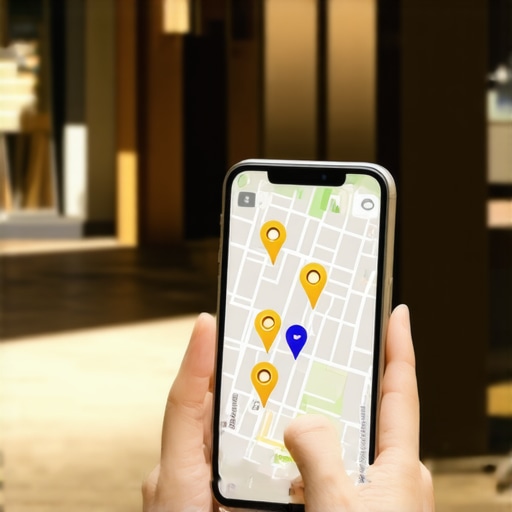
Google Business Profile verification requires precise GPS data and utility bills that match the physical business address. If you share a suite number or use a virtual office, the Map Pack algorithm will likely flag your listing for suspension or a manual action which requires google maps seo services. The mathematical weight of a location is determined by its proximity to the searcher. When you attempt to verify a listing, Google is not just looking at your document; it is cross referencing the BSSID signals of nearby Wi-Fi networks and the atmospheric pressure recorded by your mobile device. This microscopic data forms a trust layer. If your phone claims to be at a specific address but the surrounding signals do not match the known map of that building, the system triggers a red flag. You can find more about this in how to prove your business is real during the gmb recovery process. The system is designed to catch those who rent addresses they never step foot in. I have seen listings disappear because the owner used a residential address while claiming to be a commercial storefront. The algorithm identifies the zoning laws of the GPS coordinates and compares them to your business category. If there is a mismatch, the suspension is nearly instant.
Why your physical address is a liability
Your business location acts as a proximity beacon within the local search ecosystem. A hidden address or a service area business model can cause ranking loss if the service area polygon is not properly defined in the Google Business Profile dashboard or when using tools to track and improve gmb rankings. Many owners think that hiding their address protects their privacy, but it often leads to being filtered out of the very searches they need. Google prioritizes businesses with a public, verifiable physical presence because it represents a lower risk for the user. When you hide your address, you must be extremely diligent with your service area settings. If your service area is too large, it dilutes your proximity signal. A 3-mile radius is the sweet spot for most urban businesses. Beyond that, the physics of the algorithm begin to favor competitors who are closer to the user centroid. If you are struggling with this, look at the secret to getting your business unstuck from location filters. The goal is to prove you are a local entity, not a national chain trying to squat on local keywords. Use why hiding your address doesnt have to mean losing all your traffic to understand the balance.
“Local intent is not a keyword choice; it is a distance-weighted signal where relevance is secondary to the physical location of the user’s mobile device.” – Map Search Fundamental
The local authority reading list
- The step by step recovery guide for a suspended gmb profile
- Fixing mixed language listings that are hurting your local search traffic
- The checklist for getting your suspended profile back online today
- How to fix language conflicts in your multi regional local listings
How to fix the multi language mess
Mixed language listings create data conflicts that confuse the local algorithm. Using seo services to clean up mixed language listings is vital for recovering GMB visibility and ensuring that NAP consistency is maintained across all global directory sources and local map pack results as part of local seo toolkit. When your business name appears in English on one directory and Spanish on another, Google sees two different entities. This fragmentation kills your prominence score. You need to audit every citation. Human editors are often necessary because AI tools frequently miss the nuance of localized addresses. If your business is in a city with multiple official languages, pick one as the primary for your profile and stick to it across the entire web. Use fixing the multi language metadata that is killing your rankings to clear the errors. I have seen shops lose 40 percent of their traffic because their Google Business Profile used an English category while their website used a French one. The resulting mismatch caused a ranking drop that lasted for months until the metadata was aligned. This is where localization fixes for global listings that have mixed language data becomes an essential part of your strategy.
Tools to track and improve rankings
Professional tools to track and improve gmb rankings provide heatmap data that shows your ranking power at specific GPS coordinates. These local seo toolkits allow you to monitor impression drops and ranking shifts after a core algorithm update or category change to help recover gmb visibility. Most business owners look at their ranking from their own office. This is a mistake. Your own proximity to the building gives you a false positive. You need a tool that mimics a user standing five blocks away, or two miles away. These heatmaps reveal the exact point where your visibility dies. If you see a hard line where your ranking goes from position 1 to position 20, you have likely hit a location filter. Use tracking your progress the best local seo tools for map packs to see the real picture. Also, consider the gmb ranking tools that give you an unfair advantage. These tools identify if a competitor is using a fake address to steal your local traffic. When you find these spammers, reporting them is the fastest way to move up. The math of the map pack is zero sum; for you to move up, someone else must move down.
The three mile radius that determines your revenue
Most local search traffic originates within a three mile radius of the searcher’s mobile device. To rank in the Map Pack, your GMB profile must show high relevance and prominence through customer reviews, image metadata, and local citations that prove your physical presence to avoid google manual action. The system looks for signals of life. If you have not posted a photo in six months, you are digitally dead. I recommend taking photos with your phone’s GPS enabled. When you upload these to your profile, the embedded EXIF data tells Google exactly where the photo was taken. This is a much stronger verification signal than any text description. It proves you are actually doing work at the location you claim. This is especially important for service area businesses. If you are a roofer, take photos of the job site. This anchors your profile to the neighborhood. If you are stuck, check the toolkit for fixing stalled rankings in the local pack. Proximity is a physical reality that you cannot fake with keywords. You must build authority through consistent, local activity. Review sentiment also plays a role. Google analyzes the words used in reviews to see if people mention the city or neighborhood name. This reinforces your local relevance. If you want to dive deeper, read how to use local tools to rank your google business profile fast. The pin on the map must be backed by a mountain of local evidence.
The forensic trace of a service area
A Service Area Business must verify its local service area without using a public address. Using google maps seo services can help identify if your business info is being filtered out due to overlapping service areas with competitor profiles in the same geographical region to help recover from google penalty. When you set up your service area, avoid the temptation to select every town in the state. This makes you look like a spammer. Focus on the areas where you actually have customers. Google tracks the location of users who call you through the profile. If you claim to serve a city 50 miles away but no one from that city ever interacts with your listing, your ranking in that area will vanish. This is the behavioral zoom. The algorithm monitors the flow of traffic and interactions to validate your claims. If you are having trouble with verification, look at why google maps hides businesses that dont show a public address. Also, review the visibility fix for service businesses with hidden addresses. You must provide enough secondary evidence to make up for the lack of a public storefront. This includes branded vehicles, professional uniforms, and local licenses that match your business name. Without these, you are just another name in a database. Final thoughts on this process involve staying patient and providing the exact proof Google asks for, no matter how tedious it seems. The map is a reflection of the real world; make sure your digital reflection is accurate.