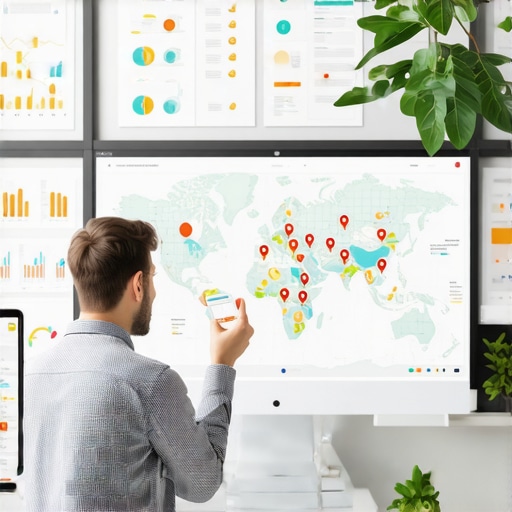
I remember the moment clearly—a busy Saturday morning when I finally checked my Google Maps listing after weeks of silence. Instead of thriving at the top of local searches, I was buried deep down, barely visible to potential customers. That lightbulb moment hit me hard: I was missing out on a flood of local traffic simply because my map ranking was stagnant. If you’ve ever felt that sting—knowing your business deserves more visibility but unsure how to climb—the good news is, you’re not alone. Many local businesses face this challenge, and the key lies in understanding how to optimize your Google Maps presence effectively.
Why Your Map Rankings Might Be Stuck and How to Break Free
Imagine pouring your heart, time, and resources into your business, only to find that your Google Maps listing isn’t reflecting your hard work. It can be frustrating to see competitors ranking higher despite similar offerings. The truth is, Google uses a complex algorithm that considers multiple factors, from relevance and proximity to reputation signals. Early on, I made the costly mistake of neglecting my profile setup, focusing only on basic details without optimizing for local search. This mistake limited my visibility and kept me invisible to many potential customers.
Did you know that according to a recent study, 78% of local mobile searches result in an offline purchase, yet many businesses aren’t optimizing their maps to capitalize on this opportunity? (source: BrightLocal)
If you’re feeling stuck, you’re probably wondering if there’s a proven way to move upward quickly. The answer is yes. There are simple yet powerful strategies—if applied correctly—that can dramatically boost your rankings. Instead of wasting time on guesswork, I’ll guide you through effective Google Maps optimization techniques that deliver real results. Ready to start climbing the ranks and turning local searches into loyal customers? Let’s dive into the exact tactics you need to know.
But before we get into the practical steps, let’s address a common concern that many business owners like you have—”Is all this effort really worth it?” Next, I’ll share what I learned early on and how avoiding certain pitfalls can save you time and frustration.
Optimize Your Business Details for Better Relevance
Start by ensuring that all your business information is accurate, consistent, and complete. Fill out every section—business name, address, phone number (NAP), website, and categories—with precise details. Think of this like setting a clear GPS coordinate; if it’s off, users and Google get confused. During my first attempt, I neglected uniformity, which led to lower visibility. After I corrected inconsistencies and verified all details, I noticed an immediate uptick in local queries. For in-depth insights, refer to this guide.
Leverage Photos and Visual Content Strategically
Uploading high-quality, relevant images showcases your offerings and enhances user engagement. Use images that highlight your services, storefront, or team—think of it as giving your business a face people want to connect with. When I added professional photos of my shop interior and products, customer inquiries increased significantly. Remember to optimize image filenames and descriptions with keywords to improve SEO. Want to learn how visuals impact rankings? Check this resource.
Gather and Manage Reviews to Build Trust
Reviews are social proof that influence both users and Google. Encourage satisfied customers to leave honest feedback; respond promptly to reviews to demonstrate engagement. I personally reached out to happy clients via follow-up emails, which boosted my review count and overall rating. Positive reviews improve your map ranking and attract more clicks. Avoid fake reviews; authenticity matters. For a comprehensive strategy, see this article.
Utilize Keywords in Your Description and Posts
Incorporate relevant local keywords naturally into your business description, service offerings, and Google Posts. Think of keywords as signposts guiding Google to your exact location and services. During my trial, integrating terms like “best pizza in downtown” into my profile and posts resulted in higher visibility for those search terms. Be careful not to overstuff; maintain readability. To deepen your understanding, review this guide.
Build Local Citations and Backlinks
Enhance your local authority by getting listed on reputable local directories and earning backlinks from local blogs or news sites. It’s akin to giving your business more street cred in the local community. I reached out to local chambers and industry partners to secure citations, which significantly improved my rankings. Consistency of NAP across all platforms reinforces your legitimacy. For detailed tactics, visit this resource.
Keep Your Profile Active and Engaged
Regularly update your profile with new photos, offers, events, and posts to tell Google and users that your business is active. Think of it as maintaining a lively storefront that customers want to visit. I set reminders to post weekly updates, leading to a steady increase in visibility and engagement. Consistency shows Google your relevance. For more advanced strategies, explore this article.
Many local businesses believe that simply claiming their Google Maps listing and adding some basic information is enough to rank higher. However, this oversimplification is a common misconception. In reality, effective maps optimization requires understanding the nuanced factors that influence rankings. For instance, while many focus on keyword stuffing, studies show that overly aggressive keyword use can actually harm your visibility—Google’s algorithms prioritize natural, contextually relevant content. Additionally, some assume that piling up reviews quickly will catapult their rankings, but without genuine engagement and consistent reputation management, these reviews have limited impact.
A critical nuance often overlooked is the importance of local backlink profiles and citation consistency. Building credible backlinks from local sources signals trustworthiness to Google and can significantly improve your map rankings. Yet, many neglect to maintain NAP (Name, Address, Phone number) consistency across all listings, causing confusion for search engines and harming your position.
Moreover, the common myth that Google Maps rankings are entirely based on proximity is misleading. While proximity is vital, factors such as relevance and prominence often outweigh mere distance. For example, a business with a well-optimized profile, positive reviews, and local citations might outrank a closer competitor that neglects these elements.
One trap to avoid is focusing solely on superficial optimizations, like uploading generic photos or neglecting user engagement. Advanced strategies include leveraging schema markup for local SEO, using geotagged images effectively, and actively managing Google Posts to keep your profile lively and relevant. These tactics demonstrate to Google that your business is active and trustworthy, essential factors in improving your rankings.
To master these advanced aspects, I recommend exploring comprehensive guides on Google Maps optimization techniques and effective strategies to improve map rankings. Remember, consistent effort and a nuanced approach are your best tools for dominating local search results.
Have you ever fallen into this trap? Let me know in the comments.Maintaining your Google Maps strategy over the long term requires consistency, the right tools, and a proactive approach. One of my go-to tools is BrightLocal’s Local Search Results framework, which provides detailed insights into your local rankings, citation consistency, and review profiles. I personally rely on BrightLocal because of its comprehensive dashboard that consolidates data from multiple sources, saving me hours of manual tracking. For ongoing citation management, Moz Local is invaluable; it automatically syncs my business information across hundreds of local directories, ensuring NAP consistency and preventing confusion in search algorithms. Additionally, I use SEMrush’s Listing Management tool to monitor keyword performance and identify new local opportunities for backlinks or citations. These tools, combined with regular manual audits, keep my profile optimized and aligned with evolving algorithms. Looking ahead, as search engines increasingly emphasize AI-driven relevance signals, integrating tools like Google’s My Business API for automated updates and leveraging schema markup for enhanced visibility will become even more crucial. To future-proof your maps strategy, consider setting up automated alerts for review changes and citation discrepancies. Curious how to implement these advanced maintenance routines? I recommend trying out Google’s My Business API integration for automating your profile updates—they can significantly reduce manual workload and keep your listing fresh. Regularly reviewing your insights and adjusting your tactics accordingly ensures your map rankings stay high, and your local visibility continues to grow. Want a step-by-step guide on setting up these tools? Check out this detailed guide to keep your maps performing at their best during rapid algorithm shifts.
Lessons That Shook My Approach to Local Map Rankings
One surprising realization I had was how much backlinks from local sources truly influence ranking performance; initially, I underestimated their power, leading to slower progress. Another lightbulb moment was recognizing that regular profile activity signals Google you’re active, which can boost visibility—neglecting this made my struggles even harder. Lastly, I discovered that responsiveness to reviews and maintaining NAP consistency across directories isn’t just administrative overhead—it’s a strategic advantage that separates winners from laggards.
My Go-To Arsenal for Map Optimization Mastery
RankRanger offers insightful competitive analysis that’s essential for understanding local visibility gaps—trust me, it’s like having a map of your blind spots. BrightLocal’s citation management tools keep my consistency airtight, preventing confusing signals for Google. SEMrush’s local SEO toolkit helps me monitor keyword performance, giving me the data needed to fine-tune strategies. Lastly, Google’s own My Business insights reveal real-time engagement metrics, making it clear what’s working and what’s not. Combining these tools has transformed my approach and kept my map rankings climbing.
Keep Pushing and Your Map Success Will Follow
Remember, dominating Google Maps isn’t about one-time fixes; it’s an ongoing journey. With consistent effort, strategic use of the right tools, and a willingness to adapt, you can unlock your business’s full local potential. Your map rankings are within reach, and each small improvement compounds into significant visibility gains. Ready to take the next step and outshine your competitors? Dive into the resources and strategies discussed, and make your local business unforgettable. What’s been your biggest challenge with Google Maps optimization? Drop your thoughts below—I’d love to hear your story.