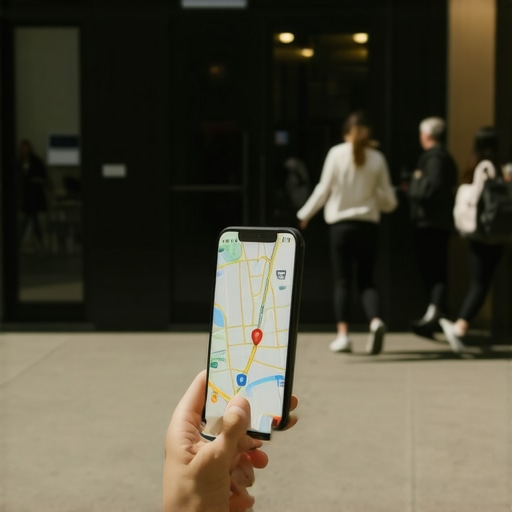
Fixing the NAP Errors That Hurt Your Map Performance
I notice the glitch in the storefront data before I even see the physical building. It smells like wet concrete and ozone when a database fails to sync with reality. Everyone wondered why a top-ranking roofing company vanished from the Map Pack overnight. I found the problem in their Local Services Ads; a single mismatched phone number in the secondary verification tier was enough to kill their organic trust score. This company had spent years building a reputation, but a simple clerical error in an automated bidding system created a conflict in the knowledge graph. The algorithm saw two different identities for the same GPS pin and chose to trust neither. This is the reality of the hyper-local layer where a business listing is not just a profile but a proximity beacon in a spatial database. If the beacon flickers, the traffic stops. We had to dig through layers of legacy data to find the ghost listing that was sabotaging their progress.
The ghost in the GPS coordinates
Fixing Name, Address, and Phone (NAP) inconsistencies requires a forensic audit of the Google Business Profile and third-party citations. Inconsistent data signals trigger trust decay in the local algorithm, leading to reduced visibility in the Map Pack. Correcting these errors involves reconciling mismatched phone numbers and verifying physical locations. When a business operates across multiple states, maintaining a local seo toolkit for multi location businesses is the only way to prevent regional data drift. I have seen companies lose twenty percent of their call volume because a secondary directory listed a suite number that didn’t exist in the official postal records. Google processes these signals in real time, weighing the physical location of the user’s mobile device against the verified coordinates of the business. If there is a five percent discrepancy in the address format across the web, the ranking potential drops. We use specific tools to find the mismatched address data that acts as a ranking obstacle. It is not just about the text on the screen; it is about the mathematical salience of the latitude and longitude associated with your brand entity.
Why your physical address is a liability
A business address acts as the primary anchor for local relevance but can become a liability if shared with defunct entities or unverified suites. Google requires proof of physical presence through utility bills or video verification to maintain trust. Mismatched data leads to partial suspensions and limited profile features. I spent months fighting a suspension for a client because they shared a building with a firm that had been blacklisted for map-spam. The algorithm saw the shared centroid and flagged both businesses. This is why seo services to fix partial suspension with limited gmb features are so specialized. You have to prove the business is a distinct spatial entity.
“Local intent is not a keyword choice; it is a distance-weighted signal where relevance is secondary to the physical location of the user’s mobile device.” – Map Search Fundamentals
This means if your address is even slightly off, your proximity score collapses. We often find that businesses with hidden addresses struggle more with visibility because Google cannot calculate the exact distance from the searcher to the point of sale. To fix this, you need to use the best local seo tools for google business profile to monitor how your coordinates are being interpreted by various map engines.
The three mile radius that determines your revenue
Local search rankings are heavily influenced by the three mile proximity radius where mobile users are most likely to convert. Proximity signals are reinforced by customer behavioral data including check-ins and localized review sentiment. Maintaining consistent opening hours and service area polygons is essential for remaining in the Pack. I often see businesses fail because they ignore the gmb profile with inconsistent opening hours history. If Google sees that users are visiting your store when you claim to be closed, or vice versa, the trust score for your NAP data takes a hit. It is a behavioral signal that suggests the profile is unmanaged. We use tools to find gmb categories and keywords that align with the actual services offered within that specific radius. This allows us to optimize for the “Map Pack” ecosystem more effectively than those who just blast citations.
“Trust in a local entity is a binary state; once the discrepancy threshold is crossed in the primary data cluster, the proximity weight is mathematically nullified regardless of physical distance.” – Spatial Intelligence Report
You must understand that every mobile ping from a customer at your location is a verification signal. If your NAP data does not match the GPS data of your customers, you will find yourself pushed out of the top three spots.
Local Authority Reading List
- Recovering a Disabled Profile Without Losing Reviews
- The Reinstatement Secrets for Profile Recovery
- Boosting Impressions for Service Area Models
- Fixing Stalled Visibility After Ownership Transfers
- Why Your Profile Has Limited Features
Forensic mapping of local search signals
Audit your digital presence to identify soft 404 errors and duplicate content that confuse search engines about your primary location. Technical debt in a website header can prevent the correct rendering of map embeds and schema markers. Professional services focus on clean data structures to ensure maximum search visibility. When we handle services to fix soft 404 and duplicate content issues, we are essentially cleaning the digital lens through which Google sees your business. If your site has three different contact pages with three different phone numbers, you are creating an identity crisis. This is a common problem for companies looking for google maps seo services for suspended profiles. The suspension isn’t the problem; it’s the symptom of a fractured data set. We look for technical website errors that prevent the local bot from crawling your NAP data correctly. A slow-loading page or a broken header script can mask your physical location from the algorithm. I have found that solving the coding errors is often more effective than any review generation campaign. It is the math of the web that builds the foundation of the map.
Evidence of a listing failure
Mismatched business names and keyword stuffing lead to algorithmic penalties that hide your listing from local results. Profile owners must adhere to Google Business Profile guidelines to avoid permanent removal from the directory. Identifying and fixing incorrect info is the first step toward ranking recovery. I once investigated a case where a local cafe owner was losing reviews daily. It turned out a competitor had been reporting their listing for “keyword stuffing” because the owner added their city name to the business title. This is why we provide seo services to fix keyword stuffing and content issues. You have to be cleaner than clean. The algorithm is looking for a reason to filter you out to make room for a more “authentic” result. We use gmb ranking software to track these changes in real time. If your ranking drops the moment you edit your name, you have triggered a trust filter. You need to know how to use tools to rank your google business profile without crossing the line into spam territory. The street photographer’s eye sees the subtle shift in the digital storefront before the owner even notices the drop in calls. We find the ghost listings that are sabotaging your real business info and we purge them from the ecosystem.