The Reinstatement Secrets Google Won’t Tell You for Profile Recovery
The smell of wet concrete always reminds me of a storefront in Brooklyn that didn’t exist. I was standing in the rain, camera in hand, looking at a brick wall where a high-ranking locksmith supposedly operated. This is the reality of the hyper-local layer. It is a world of glitches and spatial lies. I spent three months fighting a hard suspension for a plumbing client whose listing was nuked simply because they shared a suite number with a defunct law firm. Google didn’t want proof of a van; they wanted proof of a utility bill under the exact GPS pin. They wanted to see the physical lease and the specific texture of the office door. This experience taught me that the local algorithm is not a directory. It is a proximity beacon system that punishes any deviance from its microscopic spatial truth. When your profile vanishes, you are not just losing a page; you are being erased from the local coordinate map.
The ghost in the GPS coordinates
Google Business Profile reinstatement requires a deep understanding of spatial salience and the mathematical proof of existence that satisfies a suspicious algorithm. The system uses a proximity-weighted signal where the physical legitimacy of your address outweighs any keyword optimization. I have seen countless businesses fall into the trap of using virtual offices or P.O. boxes. This is a fatal error in the modern ecosystem. If you want to know why you should never use a p-o box for your business map spot, look no further than the recent Vicinity update. It tightened the radius so hard that any address appearing as a shipping center is flagged for manual review. When you are hit with a suspension, you must provide a practical checklist for google business profile recovery that includes unedited video proof of the physical premises. The algorithm is looking for sensory anchors like a permanent sign and a dedicated entrance. Without these, your profile remains a ghost in the machine.
“Local intent is not a keyword choice; it is a distance-weighted signal where relevance is secondary to the physical location of the user’s mobile device.” – Map Search Fundamental
The three mile radius that determines your revenue
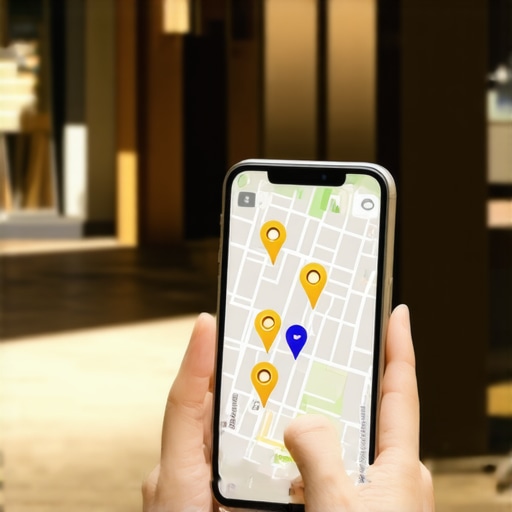
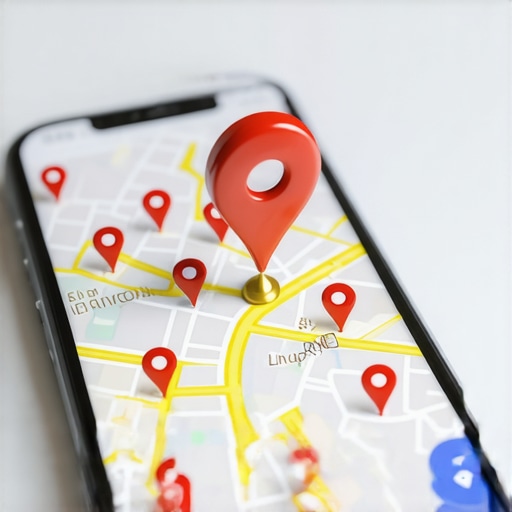
Local SEO rankings are dictated by the centroid of a searcher’s mobile device, creating a tight geographic filter that can exclude your business even if you have perfect reviews. This is the math of proximity. If your competitors are closer to the user by a few blocks, the algorithm might prioritize them regardless of your authority. To combat this, you need a toolkit to rank higher in local map pack that emphasizes local justification triggers. These triggers are snippets of text like ‘sold here’ or ‘website mentions’ that show up in the Map Pack. You can also look at how service based pros can dominate the 20 mile radius by utilizing service area polygons effectively. I once investigated a case where a roofing company lost its top spot because they changed their service area from a 15-mile radius to a 50-mile radius. This diluted their local relevance score. The algorithm perceived them as less authoritative in the core neighborhood. Staying focused on a tight cluster of coordinates often yields higher conversion rates than trying to blanket an entire state.
Local Authority Reading List
- Cleaning up messy listings for better search
- Weekly local search audit checklist
- The danger of shared office spaces
- Identifying errors that hide your profile
- Recovering a disappeared business listing
Why your physical address is a liability
Shared office spaces often trigger the duplicated location filter because multiple businesses are competing for the same GPS pin without unique physical identifiers. This is a common issue for startups and remote service providers. If you are struggling with this, you might need seo services to fix gmb profile stuck in filter for duplicated locations to separate your identity from the crowd. The algorithm looks at the ‘NAP’ (Name, Address, Phone) consistency across the web. If it finds another business with a similar suite number, it may merge the profiles or hide one. This is why how to fix shared address issues that trigger location filters is a core part of any technical audit. You must demonstrate that your business has its own signage and a dedicated phone line. Even a slight variation in the way an address is formatted can cause issues. A messy citation profile acts like static on a radio frequency, making it hard for Google to hear your signal clearly.
Tools to identify the invisible barriers
Google Business Profile ranking software allows you to visualize your visibility across a grid rather than just a single point, revealing exactly where your ranking drops off. Using a heatmap tool for your google business profile is the only way to see the true extent of your reach. Standard search results are misleading. You might rank #1 at your front door but fall to #10 just two blocks away. To fix this, you need to use tools to track and improve gmb rankings that provide real-time spatial data. Many business owners rely on flat reports, but the real growth happens when you analyze the gmb ranking software we use for real-time location tracking. This data shows you where your competitors are weak. For example, if a competitor has fewer reviews in a specific neighborhood, you can target your local ad spend there. Information gain in 2026 is about more than just reviews; it is about the metadata of customer photos. Images taken by real people at your location carry a timestamp and GPS coordinate that Google trusts more than a thousand five-star ratings from unknown accounts.
How to survive the duplicated location filter
Service based businesses often find themselves stuck in a filter because they lack a storefront, leading to aggressive verification hurdles from Google support teams. If you are a plumber or electrician, you need how service based pros can dominate the 20 mile radius without a physical store. The key is to prove your presence through local activity signals like geo-tagged project photos and customer reviews that mention the specific city name. If your profile is flagged, you should know how to contact google support for a successful profile recovery. Do not just fill out the form; prepare a dossier of evidence including your business license and insurance documents. The goal is to prove that you are a legitimate entity serving that area. If you find your listing has been merged with another, you must learn how to separate duplicated business listings without losing ranking power. This usually involves proving the separate legal existence of each entity. The algorithm is trying to prevent spam, but it often catches honest businesses in its net.
“Local search is a trust ecosystem where the smallest inconsistency in data can lead to a total loss of visibility.” – Location Intelligence Whitepaper
The hidden tax of a shared suite number
Technical SEO services for local profiles must address the underlying infrastructure of your web presence, including the way your site handles local schema and indexing. You can use a toolkit for auditing your local gmb presence to find hidden errors in your JSON-LD code. A single mismatched phone number in a footer can destroy months of progress. This is especially true if you are undergoing a domain move. You should follow the domain migration checklist for local seo professional to ensure your map rankings stay intact. Many people think they can just redirect a URL and be done, but Google Maps remembers your old domain history. If that history is messy, it will haunt your new profile. You must also be careful with your backlink strategy. Using over-optimized anchor text patterns can trigger filters that suggest you are trying to manipulate the results. A balanced approach is necessary to maintain long-term authority in the Map Pack.
Final moves for local dominance
The pin moved. Just like that, the revenue stopped. This is the fragility of the local search market. You must be proactive in monitoring your health using modern tools for gmb health monitoring. If you notice a drop, check for duplicate listings immediately. You might need the fix for duplicate profiles that are stealing your customers. Remember that Google is an automated system that values consistency and physical proof. Every photo you upload and every review you respond to is a signal that reinforces your legitimacy. The street photographer in me knows that the details matter. The texture of the sign, the accuracy of the hours, and the speed of your response all count. Do not let your business become a ghost. Use the right tools, follow the verification protocols, and stay within the proximity boundaries that Google respects. This is how you win the reinstatement war and secure your place in the local pack.