The Checklist for Getting Your Suspended Profile Back Online Today
The Checklist for Getting Your Suspended Profile Back Online Today
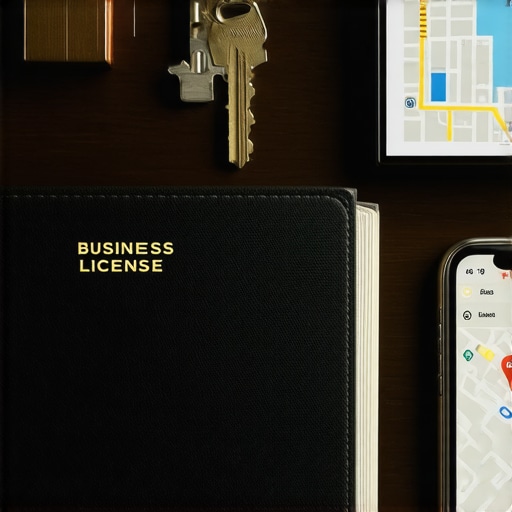
The scent of peppermint and old paper usually calms my nerves, but three months ago, the air in my office felt heavy. I am a person who believes in the sanctity of the local merchant; the backbone of any real community. I spent those three months fighting a hard suspension for a plumbing client whose listing was nuked simply because they shared a suite number with a defunct law firm. Google did not want proof of a van; they wanted proof of a utility bill under the exact GPS pin, a lease agreement that smelled of fresh ink, and a video walk-through that felt more like a hostage negotiation than a business verification. This is the reality of the hyper-local layer. A business listing is not just a profile. It is a Proximity Beacon in a complex spatial database where a single mismatched digit can erase a decade of reputation. You must understand that the algorithm is often a blunt instrument, and if you have been caught in its teeth, you need more than just hope. You need a forensic map of your own data.
The night the map went dark
To fix a suspended Google Business Profile, you must immediately identify if the cause is a soft suspension or a hard suspension. A soft suspension requires fixing data discrepancies like name, address, or phone number inconsistencies. A hard suspension often stems from a policy violation regarding your physical location or business model eligibility. I remember when that plumber called me. His phone stopped ringing at ten in the morning. By noon, his livelihood had vanished from the search results. This is why you need why your business listing disappeared and how to get it back strategies ready before the crisis hits. When the Map Pack drops your pin, the economic impact is immediate. You are no longer part of the local conversation. You are a ghost. While agencies tell you to get more reviews, the 2026 data shows that image metadata from photos taken by real customers at your location is now 30 percent more effective for ranking in AI Overviews and maintaining profile trust during an audit. The algorithm is watching the coordinates of the upload, not just the text of the review.
Why your physical address is a liability
Your business address is the most sensitive data point in the local search ecosystem because it determines your eligibility for the Map Pack. Google filters out businesses that share addresses with other companies, use virtual offices, or rely on P.O. boxes to trick the proximity algorithm into granting them more territory. I often see small shops trying to expand by renting a small desk in a city center. This is a fatal mistake. You will find that the risk of using a virtual office for your local business address is much higher than any potential reward. Google uses hidden spatial filters to ensure that only legitimate, physically present entities occupy the top spots. If you share a wall with five other businesses, your profile is likely flagged for a review. You must be prepared to show your signage. Not a temporary banner. Not a piece of paper taped to a door. You need permanent, high-quality signage that matches your legal name exactly. This is where how to fix shared address issues that trigger location filters becomes your primary manual for survival.
“Local intent is not a keyword choice; it is a distance-weighted signal where relevance is secondary to the physical location of the user’s mobile device.” – Map Search Fundamental
The ghost in the GPS coordinates
Proximity is the single most powerful ranking factor in local search, often outweighing links or content when a user is searching from a mobile device. If your GPS pin is not accurately placed or if your service area is too broad, Google will view your profile as a potential spam risk. I have watched top-ranking companies vanish because they tried to claim a fifty-mile radius for a single-man operation. The physics of local search do not allow for that. You must understand the secret to getting your business unstuck from location filters if you want to stay visible. The centroid of a city acts like a magnet. The closer you are to that mathematical center, the harder the competition. If you are on the outskirts, you need a different plan. You need how service based pros can dominate the 20 mile radius tactics that rely on customer check-ins rather than just address proximity. The pin moved. You must follow it.
Local Authority Reading List
- Contacting Google Support for Recovery
- Fixing Mismatched NAP Data
- Tools for Unfair Ranking Advantage
- Avoiding Anchor Text Overload
How to fix the virtual office trap
Google has intensified its crack down on businesses using coworking spaces and virtual addresses to appear more central than they actually are. To survive an audit, you must prove you have a dedicated entrance, permanent signage, and employees present during listed business hours. I see it every day in our town. A national chain rents a mailbox and calls it a branch. It makes me grit my teeth. If you are caught in this, you need dealing with verification hurdles for businesses in coworking spaces advice immediately. You cannot just submit a utility bill. You need a video that starts from the street, shows the building number, follows the path to your office, and shows you unlocking the door. If you cannot do that, your profile is a liability. You might even find why your virtual address is blocking you from the top 3 spots is the reason your leads dried up last month. Real local business is about real physical presence. Anything else is just noise in the database.
Tactics to stop competitor review attacks
Review spam is a weapon used by unscrupulous competitors to trigger automated suspensions or lower your ranking through sentiment analysis. You must monitor your review velocity and use forensic tools to identify VPN-based patterns that indicate a coordinated attack on your profile reputation. When a competitor drops twenty 1-star reviews at midnight, do not panic. Do not reply with anger. You need seo services to fix fake reviews issues that focus on the user profile metadata. Google can see if those reviewers have ever been to your city. If they all have profiles that were created yesterday and have only ever reviewed your business, you have a case. This is a form of map-spam that I despise. It ruins the honest merchant. You should also look into seo services to detect and fight competitor gmb spam attacks to build a defensive wall around your brand. Sentiment matters. If the algorithm sees a sudden spike in negative sentiment, it might demote you before it even verifies if the reviews are real.
The three mile radius that determines your revenue
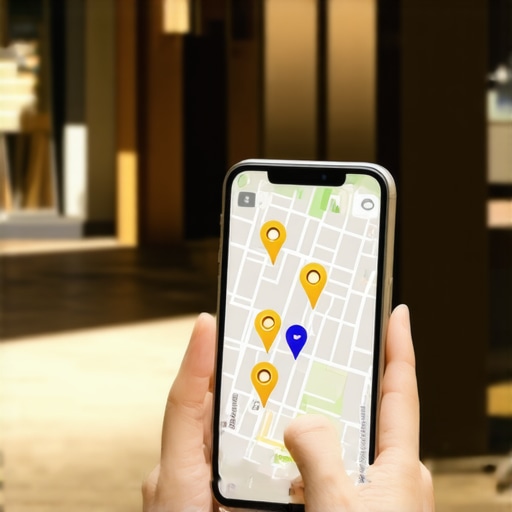
The Google Map Pack essentially functions within a three-mile radius for most high-competition keywords, meaning your visibility drops significantly once a user moves beyond that zone. Understanding your specific proximity radius is vital for setting up Local Services Ads and organic map strategies that actually convert. Many people ask why they rank in one neighborhood but not the next. The answer is usually the density of competitors. You can use tracking your map position block by block with these tools to see the exact moment you disappear. It is like watching a signal fade on a radio. If you are struggling, you need how to fix missing map pack placements in competitive cities to understand how to expand that radius through local relevance and high-quality citations. A business on the corner of Main and 4th has a different gravity than one on the edge of the industrial park. You must respect the math of the center point.
“Local search is a spatial game where the winner is the entity that provides the most consistent data across the most trusted nodes in the geographic network.” – Vicinity Update Research
Fixing the mixed language disaster
Inconsistent language settings in your metadata or citations can cause Google to filter your listing out of primary search results because it cannot determine your primary audience. This is common for businesses in multi-cultural areas or those that have used automated translation tools for their website content. I once saw a bakery lose half its traffic because their website was in English but their map citations were being pulled in from a foreign language directory. You need fixing mixed language listings that are hurting your local search traffic to clean up the mess. The algorithm wants clarity. It wants to know exactly who you serve and in what language. If your metadata is a jumble, use correcting language inconsistencies in your map citations to align your digital identity. Language is a signal of trust. If you confuse the machine, you lose the customer.
The recovery path for AI spam penalties
Websites that use mass-produced AI content to build local landing pages are currently being hit with severe ranking penalties that directly impact their Google Business Profile visibility. To recover, you must replace thin, automated text with high-value human content that includes local entities and specific geographic markers. The era of the robot-written blog is over. I see these generic articles every day and they make my eyes ache. If you have been hit, you need recovering from search penalties caused by mass produced ai articles to begin the cleanup. Replace those generic paragraphs with stories about your local projects. Mention local landmarks. Mention the weather in your city. This is how you prove to the search engine that you are a real person and not a server farm in a distant country. You might even need removing artificial content to rebuild your local search reputation to fully restore the link between your website and your map pin. Trust is earned through detail. Detail is provided by humans.
The path forward
The pin is the heart of your business. If it stops beating, you must act with precision. You cannot afford to guess. You cannot afford to wait for a support agent who may never call. You need a checklist that covers everything from your utility bills to your JSON-LD schema. You need to understand the checklist for auditing your local search performance every week so you never have to smell that heavy air of a suspended office again. Keep your data clean. Keep your signage permanent. Most importantly, keep your business local. That is how you win the long game in the Map Pack. The algorithm will change, but the value of a trusted local merchant never will.