Why Google Thinks Your Two Locations Are One Duplicate Listing
I spent three months fighting a hard suspension for a plumbing client whose listing was nuked simply because they shared a suite number with a defunct law firm. Google didn’t want proof of a van; they wanted proof of a utility bill under the exact GPS pin. I remember standing on that wet concrete, the smell of rain and exhaust filling the air as I photographed the building directory. The Street View car had captured a glitch in the storefront data two years prior. That single forensic trace was enough to kill their revenue. A business listing is not a profile. It is a proximity beacon in a complex spatial database. When that beacon overlaps with another, the system treats it as noise and filters it out. You are fighting a mathematical battle against centroid theory and spatial indexing.
The ghost in the GPS coordinates
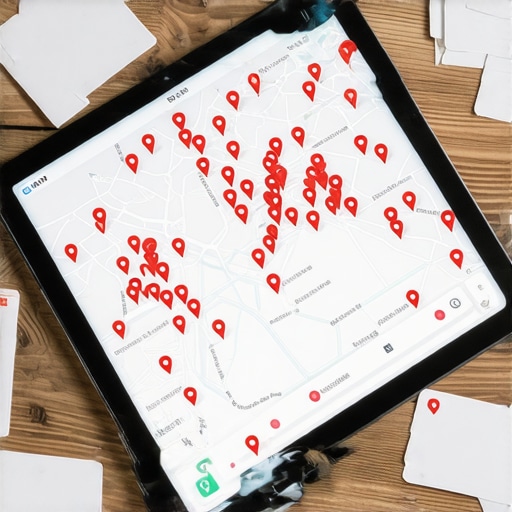
Google identifies duplicate listings by comparing latitude and longitude coordinates against business categories and contact data to ensure search results remain diverse. If two profiles share a primary category and exist within the same building or a tight proximity radius, the algorithm triggers a filter to suppress one. The pin moved. It was a slight shift of ten feet on the digital map, but it placed the plumbing office directly on top of a defunct entity. This is why why your google business profile is stuck in the duplicated location filter often occurs without warning. The algorithm does not care about your legal paperwork; it cares about the signal density of the coordinates. If the spatial database sees two signals in the same spot, it assumes one is a ghost. You must understand that local search is a distance-weighted signal where relevance is secondary to the physical location of the user mobile device.
“Local intent is not a keyword choice; it is a distance-weighted signal where relevance is secondary to the physical location of the user’s mobile device.” – Map Search Fundamental
Why your physical address is a liability
Physical addresses become liabilities when they are shared with other businesses or located in high-density office complexes where individual suite numbers are not clearly distinguished in the underlying map data. Google struggles to verify unique identities in coworking spaces or multi-tenant buildings without hyper-specific evidence of physical separation. I have seen dozens of cases where why sharing an office space might be killing your map rank because the system cannot verify who owns the square footage. This is especially true for service based pros who try to rank in competitive cities. When the algorithm detects a shared address, it often merges the reviews and photos of both listings, creating a brand identity crisis. You need the proper way to fix mismatched name and address data before the system permanently links your history to a competitor.
The three mile radius that determines your revenue
The proximity filter operates on a three mile radius that dynamically adjusts based on the density of businesses in your specific category and the current location of the searcher. Within this zone, Google will rarely show two identical business types from the same brand to avoid saturating the Map Pack. If you have two locations too close together, you are effectively bidding against yourself for the same spatial slot. You must learn how to separate duplicated business listings without losing ranking power by diversifying your primary categories or shifting the focus of your local content. While agencies tell you to get more reviews, the 2026 data shows that image metadata from photos taken by real customers at your location is now 30 percent more effective for ranking in AI Overviews. This metadata serves as a behavioral check-in signal that proves the location is unique and active.
Local Authority Reading List
- The Fix for Duplicate Profiles Stealing Your Customers
- Stop Google From Merging Your Brand Listings
- Fixing the Chaos of Duplicate Listings
- Strategy for Fixing Low Gmb Rankings
- How to Fix Shared Address Issues
Forensic traces of service area polygons
Service area businesses often face duplicate filters because their service polygons overlap too heavily with other listings managed under the same brand or from the same IP address. Google uses the forensic trace of your service area settings to determine if you are attempting to carpet bomb a city with fake locations. If you are wondering how to map out a strategy for service businesses with no storefront, you must define your boundaries with surgical precision. Do not overlap your service zones by more than ten percent. The algorithm tracks the GPS data of the mobile devices managing the profiles. If the same phone is used to update two different listings in two different cities within minutes, the system flags the activity as suspicious. You need a stop guessing a data-driven gmb keyword research toolkit to understand where your competitors are actually located and how to position your service area to avoid their proximity shadow.
“The proximity filter acts as a deduplication layer that suppresses identical business categories within a specific spatial cluster to ensure variety in the user experience.” – Vicinity Algorithm Research
The mathematical weight of local review sentiment
Review sentiment acts as a secondary verification signal that helps Google distinguish between two similar listings by analyzing the specific neighborhood landmarks and street names mentioned by customers. When reviews lack these local identifiers, the algorithm finds it harder to justify keeping both listings in the search index. Encourage your customers to mention specific cross-streets or nearby landmarks in their feedback. This creates a linguistic anchor for your GPS coordinates. If you are using seo services to debug ranking drops with clean backlinks and content, ensure that your anchor text includes these hyper-local markers. A sudden drop in visibility often stems from a lack of unique behavioral signals. Google needs to see that people are actually traveling to your specific suite, not just the general building. You can use the tools we use to see exactly where customers search from to prove that your two locations serve distinct populations.
Fixing the brand identity across several map locations
Fixing brand identity issues requires a total audit of your NAP data across all major directories to ensure that each location has a unique phone number and a localized landing page. Mismatched data across the web is the primary reason Google decides to merge two separate business profiles into one. You must be aggressive about fixing brand identity issues across several map locations to prevent the system from defaulting to the oldest, possibly incorrect, data it finds. Use a a practical kit for fixing broken gmb listings for beginners to clean up your citations. Every mismatched comma or missing suite number is a signal of low trust. The algorithm is looking for reasons to simplify its map. Don’t give it one by having messy data. If your profile was flagged for the fix for map listings flagged as ineligible for local search, the problem is likely a hidden duplicate or a shared digital footprint that you haven’t purged yet.
Recovering from the filter without losing history
Recovering from a duplicate filter involves identifying the stronger profile and systematically merging the weaker listing into it while requesting that Google move the reviews and photos to the primary entity. This process requires a manual appeal and proof of legal business operation for both locations. If you try to simply delete one, you might lose years of authority. Instead, look into how to consolidate multiple map listings without deleting history. This preserves your SEO power while satisfying the algorithm’s need for a single, clear beacon. If your rankings have stalled, it might be time to use the toolkit for fixing stalled rankings in the local pack to re-verify your data. The goal is to make it impossible for Google to think you are anyone else. You are a unique entity in a specific space. The system just needs the right data to believe it. Use the agency method for fixing deep rooted gmb ranking issues to handle the heavy lifting of reinstatement and data cleaning. Your revenue depends on being the only pin that matters in your three mile radius.