The Tools You Need to Monitor Map Pack Stability Every Day
The Tools You Need to Monitor Map Pack Stability Every Day
I spent three months fighting a hard suspension for a plumbing client whose listing was nuked simply because they shared a suite number with a defunct law firm. Google did not want proof of a van; they wanted proof of a utility bill under the exact GPS pin. I stood on the wet concrete outside that office, smelling the damp rain and stale exhaust of the city, realizing that the map was not matching the reality of the ground. The grid had shifted. This is the microscopic world of the proximity engineer. A single mismatched digit in a suite number or a slight drift in a longitude coordinate can vanish a multi-million dollar service business overnight. Mapping data is not static. It is a vibrating, spatial database that requires constant surveillance through specialized toolkits.
The physics of a three mile radius that determines your revenue
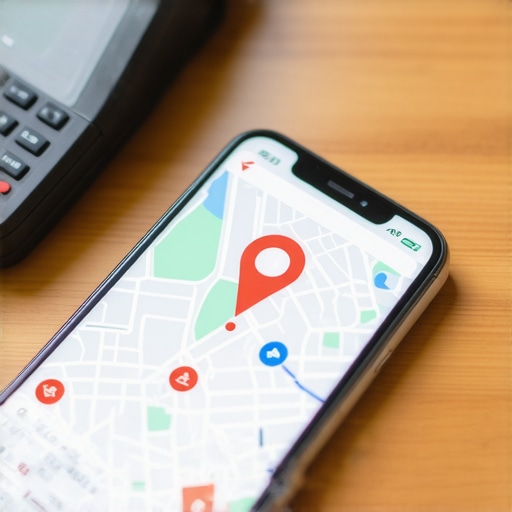
Proximity signals and geospatial relevance are the primary factors that dictate whether a business appears in the Google Map Pack for a specific search query. These signals rely on the latitude and longitude coordinates of the user relative to the verified business address and the service area polygon defined in the Google Business Profile dashboard. While most agencies focus on generic keywords, the real battle is fought in the decimal points of GPS data. I have seen businesses lose thirty percent of their call volume because a competitor moved their pin one block closer to the city centroid. This is why you must understand how to recover rankings when proximity updates push you out of the top spots. The algorithm does not care about your brand history; it cares about the distance between the phone in the customer’s hand and the bricks in your wall. If you are not monitoring this radius every twelve hours, you are flying blind. We use coordinate salience to measure the strength of the beacon. If the signal weakens, the leads stop. It is that simple. The math of the map is unforgiving. You either occupy the space or you are erased from it.
“Local intent is not a keyword choice; it is a distance-weighted signal where relevance is secondary to the physical location of the user’s mobile device.” – Map Search Fundamental
How gmb ranking toolkits work for local seo at a microscopic level
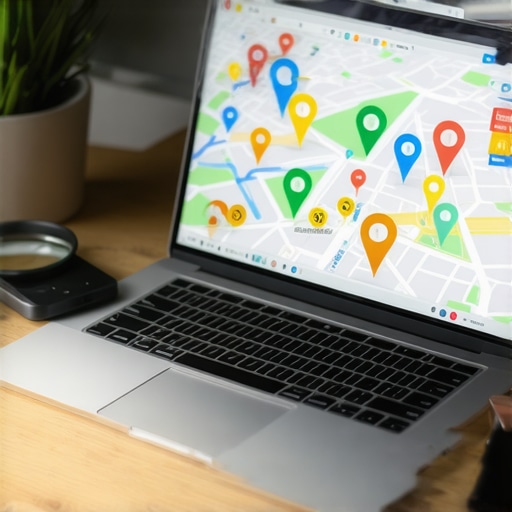
GMB ranking toolkits function by simulating search queries from various GPS coordinates within a specific geographic grid to map out local visibility. These tools use API calls to bypass the browser’s generalized location and provide a data-driven audit of where a Google Business Profile actually ranks in the Map Pack. Many business owners look at their own phones while standing in their lobby and think they are ranking first. They are wrong. You are seeing a proximity bias. To see the truth, you need tools that can drop a pin five miles away and report back. This is why why your ranking software is reporting inaccurate map positions if it does not account for mobile-first indexing and localized IP pings. The toolkit must measure the ‘Proximity Heatmap.’ This heatmap shows the exact point where your business falls off the cliff and disappears from the top three results. If the cliff is too close to your front door, you have a signal problem. You might need the agency method for fixing deep rooted gmb ranking issues that involve more than just changing a description. You are dealing with a spatial authority deficit. The tools help us find where the authority leaks are happening. Sometimes the leak is a competitor using a P.O. box or a virtual office to spoof the centroid. Identifying these glitches is the first step in a forensic map audit.
The ghost in the GPS coordinates and virtual office traps
Virtual offices and coworking spaces represent a major quality violation in the Google Business Profile ecosystem that often leads to hard suspensions or manual actions. Google requires a physical storefront with permanent signage and staff present during stated hours to maintain map pack eligibility and local trust. I have investigated dozens of cases where a business thought they were clever by renting a mailbox at a prestigious address. The algorithm caught them. The ‘Street Photographer’ in me knows that Google’s cars see everything. They know if your sign is a piece of paper taped to a glass door. This is why your virtual office address triggered a hard suspension and why a simple appeal usually fails. You need professional seo services to fix gmb issues caused by virtual office or coworking space setups. You must provide the exact evidence Google needs, such as utility bills, business licenses, and video walk-throughs that prove you are a real merchant. If you are caught in this trap, the recovery is slow. You are fighting a lack of trust. The system flagged you as a spammer. To fix it, you must move to a legitimate physical location and re-verify everything from scratch. There are no shortcuts here. The logic of the map demands physical proof.
Local Authority Reading List
- Why Most GMB Ranking Tools Give Inaccurate Local Data
- Download These Tools To Track Your Real Local Search Rank
- Why Your Business Disappeared From The Map Pack Overnight
- How Local Backlinks Influence Your Google Map Position
- The Hidden Map Signals Your Competitors Are Already Using
Why your physical address is a liability in a proximity update
Address consistency remains the most important foundational signal for local SEO, yet it becomes a liability when proximity filters shrink the ranking radius around a specific city centroid. A business located on the edge of a town may find itself excluded from search results even if it has the most five-star reviews and local authority. This is the ‘Centroid Collapse.’ It happens when Google decides that ‘relevance’ is less important than ‘distance.’ If you are on the wrong side of the tracks, you are invisible. You need local seo services to fix nap inconsistencies across the web to ensure that every mention of your brand reinforces your location. But NAP is just the start. You must also understand how to build a local search strategy that ignores proximity filters by increasing your brand’s ‘prominence’ score. Prominence is the only way to break the three-mile wall. It involves getting mentions in local news, sponsoring local events, and building local backlinks that prove you are the most important business in the region, regardless of the user’s exact location. If you do not have prominence, you are at the mercy of the GPS pin. The tools we use track this prominence score versus the proximity distance. If your competitor is outranking you from further away, they have more prominence. You need to close that gap. It is a war of attrition. You build your fortress one local link at a time.
The forensic trace of ai generated spam content penalties
AI generated spam in the form of fake reviews or keyword-stuffed descriptions triggers manual action penalties that can de-index a Google Business Profile from the Map Pack permanently. Google’s spam fighting algorithms look for linguistic patterns and velocity anomalies that suggest the content was not created by a real customer. If you have been using cheap seo services to clean up ai generated spam content penalties, you know the struggle. The system remembers the footprint. You cannot just delete the bad content and hope for the best. You need a seo services to debug ranking drops with clean backlinks and content strategy. This involves a total audit of your profile’s history. I have seen profiles nuked because they posted too many AI-written updates in a single week. The algorithm sees the lack of ‘human entropy’ in the text. It sees the repetitive structures. To recover, you must replace the garbage with high-quality, human-centric information. This includes geo-tagged images and real customer stories. Most business owners ignore this. They think more is better. In the map pack, better is better. A single high-quality review with a photo taken at your shop is worth fifty AI-generated blurbs. We use how to use geo-tagged images to support map rankings as a primary recovery tactic. It provides the metadata proof that Google’s AI cannot fake. It places your business in a specific time and space. That is what the algorithm craves.
“Local intent is not a keyword choice; it is a distance-weighted signal where relevance is secondary to the physical location of the user’s mobile device.” – Map Search Fundamental
The three mile radius that determines your revenue
Local search trends indicate that service area businesses without a physical storefront must work twice as hard to maintain visibility in competitive markets. These businesses often suffer from over aggressive location page strategy penalties when they try to rank for cities where they do not have a physical presence. I once saw a carpet cleaner try to rank for 50 different towns using duplicate pages. Google caught them in 48 hours. They lost their primary listing and their revenue vanished. This is where you need seo services to fix over aggressive location page strategy penalties and a more surgical approach. You cannot lie to the map. You can, however, use how service area businesses rank high without a physical storefront techniques that focus on the ‘hidden map signals.’ These signals include the service area polygon, local justifications in reviews, and LSA (Local Services Ads) verification data. If you are a contractor, your LSA profile is your second life. If your LSA data does not match your GMB data, the trust score drops. We monitor these mismatches daily. A single wrong phone number in an ad can kill your organic ranking. The tools for monitoring this are specialized. They do not just look at positions; they look at ‘trust integrity.’ If the integrity score drops, the map pack spot goes to the next guy. You have to be the most trusted option in the database. That requires clean data and a clean history.
Recovering from the void and negative seo attacks
Negative SEO attacks against a local business usually involve a competitor flooding a profile with fake one-star reviews or reporting the business for policy violations that do not exist. This can cause a sudden ranking drop or even a profile suspension. If you are under attack, you need services to recover from negative seo attack scenarios immediately. You cannot wait for Google to notice. You must do a forensic audit of user profiles to prove the reviews are fraudulent. We look at the VPN signatures and the account history of the reviewers. If twenty people from another country all hate your local bakery on the same day, there is a pattern. You need to know the truth about recovering from negative map attacks and how to present the evidence. Google’s spam team is overworked. They need a clear, documented case to take action. This is the ‘Logistics Manager’ side of the job. You are managing the flow of information to clear your name. Once the attack is stopped, you need to rebuild. This means rebuilding your local reputation after a mass review removal and getting your real customers back into the conversation. It is a slow process of reclaiming your spot on the grid. But with the right tools, you can see the attack coming before it does permanent damage. Monitoring your map pack stability is your early warning system. Do not ignore the pings. The map is always watching.