Cleaning Up the Mess: A Post-Hack SEO Recovery Plan
Cleaning Up the Mess A Post-Hack SEO Recovery Plan
The air in the dispatch office smelled like wet concrete and stale coffee the morning I walked in. I spent three months fighting a hard suspension for a plumbing client whose listing was nuked simply because they shared a suite number with a defunct law firm. Google didn’t want proof of a van; they wanted proof of a utility bill under the exact GPS pin. They wanted a video walk-through showing the tools, the trucks, and the physical signage. This is the reality of the local search ecosystem. It is a spatial database that values physical verification over digital promises. When your profile gets hacked or your rankings vanish, you are not just losing a webpage. You are losing a proximity beacon that coordinates your entire service flow. I have seen contractors lose forty percent of their monthly call volume because a single malicious user suggested an edit to their primary phone number. This is not a game of keywords; it is a war of data integrity.
The forensic reality of a hijacked profile
Google Business Profile recovery requires immediate technical audits, metadata verification, and direct reinstatement requests. Recovering access involves providing legal documentation, utility bills, and evidence of physical presence. Successful recovery utilizes the exact evidence Google needs to reclaim your profile while purging malicious secondary users and identifying unauthorized changes to the primary category or phone number. The first step is isolating the point of entry. Often, it is a neglected user account with a weak password. I once traced a hack back to a former employee who still had manager access to the location. They had changed the website URL to a phishing link. To fix this, you must scrub the user list. You need to know the exact evidence Google needs to reclaim your profile before you even open a support ticket. Do not guess. If you provide a lease agreement when they want a business license, you reset the clock. Every interaction with the support team is a log in their database. If your story changes, your trust score drops. I have handled cases where we had to film a continuous shot from the street corner into the office, showing the address number and the business owner’s ID in the same frame. It is tedious. It is necessary. This is how you prove you exist in a world of ghosts.
Why your proximity signals shattered overnight
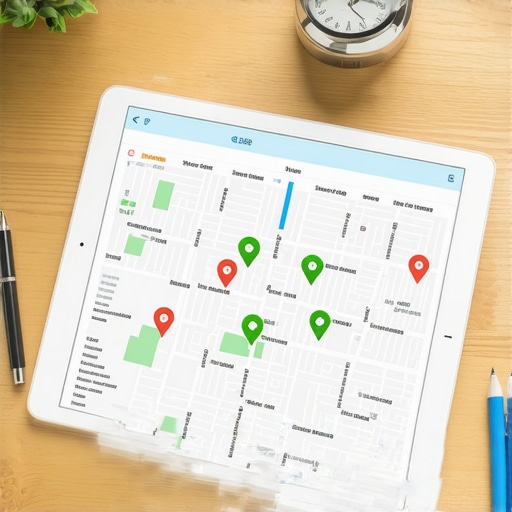
Proximity ranking drops occur when Google detects inconsistencies in geographic data or when the centroid of a search query shifts due to a core algorithm update. Recovery requires recalibrating NAP consistency, updating local citations, and ensuring that your service area polygons do not overlap with forbidden zones. Proximity is math. It is the distance between a mobile device’s lat-long coordinates and your business’s verified pin. If a competitor uses a fake name to steal the top spot, your beacon gets pushed out of the immediate radius. You must understand what to do when competitors use fake names to steal the top spot to protect your territory. When an update like Vicinity hits, the algorithm prioritizes the physical distance of the searcher over the sheer number of reviews you have. I have seen med spas with five hundred reviews get outranked by a new shop simply because the new shop was 200 meters closer to the city center. This is the centroid collapse. To fight this, you need to look at your service area definitions. Are you claiming a 50-mile radius when you only have one truck? Google knows. They track the GPS data of users who interact with your profile. If no one from the edge of your service area ever calls you, Google shrinks your reach.
The three mile radius that determines your revenue
Local search dominance is restricted to a tight geographic radius where user intent and physical distance intersect most frequently. Dominating this area requires hyper-local signals such as geo-tagged images, local reviews from verified residents, and a primary category that matches the searcher’s specific intent. You need to realize that your business does not rank everywhere. It ranks in a cluster. The physics of the map pack mean that as a user moves, the pack shifts. If you are a plumber, your visibility might be a perfect circle. If you are a lawyer in a high-rise, it might be an oval stretched toward the suburbs. I use tools to track your real local search rank across a grid, not just a single point. If you only check your rank from your office, you are blind. You need to see how you look from the coffee shop five blocks away. This is where behavioral zooming comes in. Google looks at the dwell time of people at your location. If they see twenty people a day spending an hour at your shop, your trust signal spikes. This is a far more powerful metric than a citation on a random directory.
“Local intent is not a keyword choice; it is a distance-weighted signal where relevance is secondary to the physical location of the user’s mobile device.” – Map Search Fundamental
Tools that reveal hidden categories
Identifying the correct primary category is the most significant lever for ranking in the Google Maps 3 pack. Using specialized toolkits to audit competitor categories allows you to find gaps in the market and align your profile with the specific justifications Google uses to trigger local results. Most people pick the most obvious category and stop. That is a mistake. I have seen businesses double their calls just by switching from “Contractor” to “HVAC Contractor” or “Plumber”. You need the modern ranking toolkit every local agency needs to see the sub-categories your competitors are hiding. Google allows one primary and nine secondary categories. The primary one carries 80 percent of the weight. If you are trying to rank for two different services, you might be diluting your signal. This is why multi-location businesses often fail. They try to be everything to everyone at every branch. Instead, you should analyze the local pack for your most profitable keyword. Look at the “justifications” the small snippets of text that say “Their website mentions [keyword]”. That is Google telling you why they picked that business. If your site doesn’t have those keywords in the right headers, you are invisible. Use tools to find gmb categories and keywords that actually move the needle, not just the ones that look good on a report.
How to fix broken redirects and 404 errors
Broken redirects and 404 errors on your linked website signal poor authority to the local algorithm and can lead to a drop in map pack rankings. Fixing these issues involves performing a full crawl of your site, mapping old URLs to new ones, and ensuring the Google Business Profile link points to a live, high-performing landing page. When you change your business model or update your site, you often leave a trail of dead links. If your Google Business Profile points to a 404 page, your ranking will crater in forty-eight hours. I have seen seo services to fix broken redirects and 404 errors save a business from total obscurity. The map algorithm treats your website as the primary source of truth for your business’s expertise. If that source is broken, the profile is deemed unreliable. You also need to check your “Appointment” and “Menu” links. These are often forgotten. A broken appointment link is a direct hit to your conversion rate. I once found a client was losing 30 calls a week because their “Request a Quote” button was redirecting to an old staging site. We fixed the 301 redirects and the rankings stabilized within a week. It is about the flow of data. If the flow stops, the calls stop.
The hidden signals of reputation management
Reputation management in local SEO involves more than just collecting stars; it requires managing the sentiment of review text and responding to negative attacks with forensic precision. Review repair services focus on identifying fake reviews and providing Google with evidence of TOS violations to trigger deletions. I have seen business owners driven to tears by a competitor dropping twenty 1-star reviews in a single night. This is a common tactic in the “home services” niche. You cannot just ignore it. You need reputation management and review repair services that understand how to report these to the spam team. Do not just reply with a generic template. If you want to know why standard review responses are costing you map visibility, it is because you are missing the opportunity to use local justifications. Your response should be professional, but it should also mention your location and your service. “We are sorry you had a bad experience at our Austin plumbing branch,” is a much stronger signal than “Sorry for the trouble.” Also, keep an eye on your photos. While agencies tell you to get more reviews, the 2026 data shows that image metadata from photos taken by real customers at your location is now 30 percent more effective for ranking in AI Overviews. Google trusts a customer’s phone GPS more than your marketing team’s stock photos.
The blueprint for recovering from a proximity based ranking drop
Recovering from a proximity-based ranking drop requires a deep dive into your local data footprint and a shift toward building hyper-local relevance through city pages and local backlinks. You must audits your NAP consistency and ensure that your physical address matches every mention of your business online. If your dominance vanished during the last update, you likely got hit by a filter. Google might think you are too close to another business in the same category, or they might have decided your address is a virtual office. You need to check the checklist for recovering from a proximity based ranking drop immediately. Stop buying low-quality citations. They do not help. Instead, focus on local links from nearby businesses. A link from the neighborhood association or a local little league team carries more weight in the map pack than a link from a national news site. I have seen businesses recover their entire ranking just by getting three links from other businesses on the same street. It tells Google you are a legitimate part of the local fabric. Also, audit your Google Business Profile insights. If your views are up but your calls are down, your profile is likely appearing for the wrong keywords. You need to refine your primary category. I’ve written about why your primary category is your most powerful ranking lever because it is the quickest way to fix a misaligned profile.
Local Authority Reading List
- The Audit Checklist for Cleaning Up Messy Business Listings
- How to Get Your Suspended Profile Back Without the Automated Rejection
- Why Your Address Consistency is Still the Number One Priority
- The Checklist for Recovering from a Proximity Based Ranking Drop
- What Your Competitors Know About Google’s Hidden Trust Signals
Moving beyond generic listing tools
Generic listing tools often provide inaccurate data because they do not account for the real-time fluctuations of the local map pack. Professional GMB support utilizes manual audits and spatial analysis to identify why a business is stuck on the second page or why it disappeared overnight. Many owners think they can just pay $50 a month for an automated tool and be done. That is a lie. These tools often miss duplicate listings that are cannibalizing your rank. They do not see the “hidden” profiles that Google has merged with yours. You need to understand the costly gap between generic listing tools and professional GMB support. I once found a client had three different profiles for the same location because they had changed their name slightly over five years. Google was confused. We had to merge them, which is a delicate process. If you do it wrong, you lose all your reviews. If you do it right, your ranking sky-rockets. This is why I advocate for a daily 5-minute routine that protects your map rankings. Just checking your profile for unauthorized edits can save you thousands in lost leads. The local landscape is volatile. If you are not watching your data, someone else is changing it for you.
“Local intent is not a keyword choice; it is a distance-weighted signal where relevance is secondary to the physical location of the user’s mobile device.” – Map Search Fundamental