Why Med Spas With Fewer Reviews Are Beating You in the Map Pack
Why Med Spas With Fewer Reviews Are Beating You in the Map Pack
The Review Paradox: Why Your 500+ Reviews Aren’t Saving You
It is the ultimate frustration for a medical spa owner. You have spent years building a sterling reputation, meticulously requesting feedback from every Botox patient and laser hair removal client. You look at your Google Business Profile (GBP) and see a proud “500 Reviews” badge with a 4.9-star average. Then, you perform a local search for your primary service, only to find a competitor – a clinic that opened six months ago with a mere 40 reviews – sitting comfortably at the #1 spot in the Map Pack. You are relegated to #5 or #6, hidden behind the “More Businesses” click-through.
Welcome to the “Review Paradox.” In the 2026 local search landscape, the old mantra of “more is better” has been officially debunked. If you are wondering Why Your Shop Isn’t Cracking the Top 3 Map Pack Spots Yet, it is likely because you are relying on legacy authority while your competitors are leveraging the modern pillars of local search: Proximity, Relevance, and Prominence, with a heavy emphasis on “Freshness” and “Engagement.”
Google’s algorithm has evolved. It no longer views a massive stockpile of reviews as the ultimate signal of quality. Instead, the algorithm now prioritizes how active, relevant, and physically accessible your med spa is to the user at the exact moment of their search. The “Proximity Paradox” means that a smaller, more “active” profile can easily leapfrog a dormant giant. To understand how to win, we must deconstruct the three pillars that dictate the Map Pack rankings today.
Pillar 1: The Proximity Trap and Distance Bias
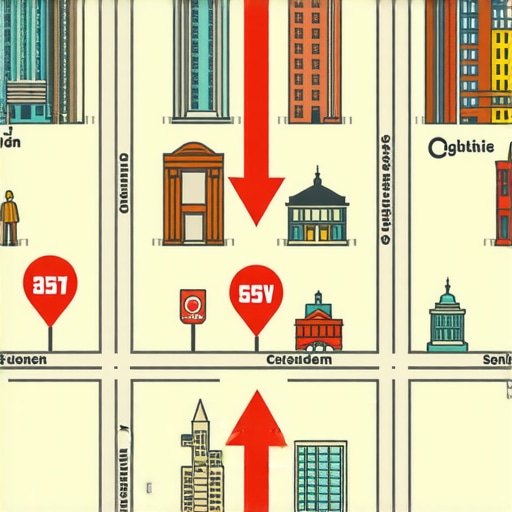
The most powerful, and often most frustrating, factor in the Map Pack is Proximity. You can have the best SEO in the world, but you cannot move your building. Google’s primary goal is to provide the most convenient solution to the user. This creates “Distance Bias.” If a potential client is standing three blocks away from a competitor and five miles away from you, that competitor will often win the #1 spot regardless of their review count.
In 2026, Google’s “Blue-Dot Accuracy” has reached unprecedented levels. The algorithm doesn’t just look at city centers; it looks at dynamic traffic patterns and real-time user location. If a user searches for “lip fillers near me” while stuck in traffic or sitting in a coffee shop, Google calculates the “travel time” relevance. This is why a small boutique med spa in a high-density neighborhood often outranks a massive flagship clinic located in a suburban medical park. They are simply closer to the “Blue Dot.”
However, proximity is not an insurmountable wall. To combat distance bias, you must master google business profile seo. This involves creating “Geo-Relevance” through your content. If you want to rank for users who aren’t standing on your doorstep, your profile and website must prove that you are the authoritative choice for that entire region. This is where many med spas fail; they optimize for their specific address but fail to build “Entity” signals that cover their entire service area. Understanding google map pack ranking factors means recognizing that while proximity is a “soft” cap, it can be stretched by hyper-local content and high engagement rates from users across different zip codes.
Furthermore, Google’s 2026 updates have integrated more “Predictive Proximity.” The search engine looks at where people are likely to be going based on historical data and transit lines. If your competitor is located near a major transit hub or a popular shopping district, they gain a proximity boost that your hundreds of reviews cannot easily overcome without a strategic counter-offensive in relevance and prominence.
Pillar 2: The Relevance Gap and Service-Specific Dominance
Relevance is the second pillar, and it is the most common reason why “smaller” med spas beat the “big” ones. A common mistake med spa owners make is thinking that a review for “Botox” helps them rank for “Laser Hair Removal.” In the eyes of Google, these are distinct service entities.
If a competitor has 40 reviews, but 30 of them specifically mention “CoolSculpting” and include photos of the procedure, while your 500 reviews are a generic mix of “great service” and “friendly staff,” the competitor will win the search for “CoolSculpting near me.” Google is looking for the best match for the *specific* query, not the best overall business. This is why you must focus on How a Simple Primary Category Change Can Make Stalled Map Rankings Improve.
To bridge the relevance gap, you need a professional google maps ranking service that understands “Entity Building.” This involves:
- Primary Category Optimization: Are you listed as a “Medical Spa,” a “Facial Spa,” or a “Skin Care Clinic”? The choice dictates which “buckets” of search you fall into.
- Service Menu Precision: Every service you offer must be listed in the GBP “Services” section with a detailed, keyword-rich description.
- Review Semantics: Google’s AI reads the *content* of your reviews. If your reviews don’t contain the keywords your customers are searching for, they don’t contribute to your relevance.
If you want to rank google business profile higher than the competition, you must audit your relevance signals. Smaller clinics often win because they are hyper-focused. They might only do three things, but they do them so visibly on their GBP that Google views them as the “specialist” for those terms. If you are a generalist med spa, you must work harder to segment your profile so that you appear as a specialist for *every* service you offer. This is the core of effective local seo for med spas.
Pillar 3: Prominence & The “Freshness” Factor
Prominence is often misunderstood as “total reviews.” In reality, prominence is a measure of how “famous” or “important” your business is online, and in 2026, that importance is heavily weighted toward “Freshness.” A review from 2021 is almost worthless in today’s Map Pack algorithm. Google knows that staff changes, equipment degrades, and management shifts. Therefore, 10 reviews received in the last 30 days carry significantly more weight than 100 reviews from three years ago.
This is exactly The Real Reason Your Competitors Own the Map Pack While You Stay Hidden. They have “Review Velocity.” If they are getting 2-3 reviews a week and you are getting 1 a month, Google perceives them as the more “active” and “trending” business. This “Freshness” signal tells the algorithm that the business is currently thriving and providing a good experience *right now*.
Beyond velocity, you must consider “Review Semantics” and “Visual Trust.” Google’s AI now analyzes the sentiment and specific nouns used in reviews. Furthermore, reviews that include photos are treated as high-authority signals. If your review strategy is just about the stars, you are losing. You need to understand Why Your Review Strategy Is Failing and 4 Ways to Get Real Customer Photos. A review with a photo of a patient’s glowing skin after a HydraFacial is worth ten text-only reviews. In 2026, visuals are the currency of trust. Med spas that upload 5+ high-quality, non-stock photos per week see a measurable lift in ranking stability because it signals to Google that the business is real, active, and delivering results.
Prominence also includes your “Digital Footprint” outside of Google. Mentions in local news, backlinks from reputable aesthetic blogs, and active social media profiles all feed into the prominence pillar. If the “small” competitor is a local influencer favorite, their prominence might actually be higher than yours in the eyes of an algorithm that tracks brand mentions across the web.
Section 5: The “Invisible” Signals: Schema and Technical Local SEO
While reviews and photos are visible to everyone, there is a layer of “invisible” signals that often decide the winner of the Map Pack. This is the technical side of google business profile optimization. Many med spa owners ignore their website’s technical health, thinking the Map Pack is a separate entity. It isn’t. Your website and your GBP are tethered together.
One of the most overlooked factors is Local Schema markup. This is code on your website that tells Google exactly where you are, what you do, and what your hours are in a language the AI understands perfectly. You might be missing The Schema Lines Your Developer Probably Forgot to Add, such as “MedicalBusiness” or “HealthAndBeautyBusiness” specific properties. Without this, Google has to “guess” your relevance, and Google hates guessing.
Additionally, NAP (Name, Address, Phone) consistency remains a foundational element, but it has evolved into “Entity Consistency.” Google looks for your business name and address across the entire web. If your clinic is listed as “The Botox Center” on your website and “Botox Center of NYC” on your GBP, you are creating friction. To smooth this out, you should use local seo tools to audit your citations and ensure your business is represented as a single, unified entity across all directories.
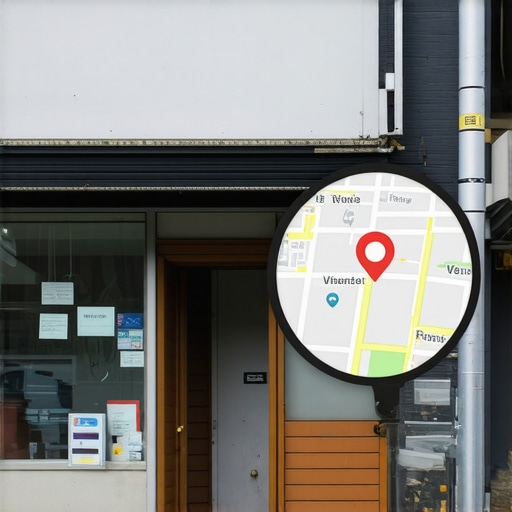
Map embeds also play a role. Is your Google Map embedded on your contact page? Is it embedded on your service pages? These embeds act as “confirmatory signals” for your physical location. When combined with a fast, mobile-optimized website, these technical signals provide the “Prominence” boost needed to overcome a lower review count. If Google trusts your data more than your competitor’s data, you win.
2026 Trends: AI Tagging and Visual Search
As we look toward the future, the Map Pack is becoming increasingly visual. Google now uses advanced “Computer Vision” to analyze the photos you and your clients upload. It can recognize the specific brand of laser equipment in your treatment room or the specific injectable boxes on your counter. This is used to verify your “Relevance.” If you claim to offer “Morphius8” but your photos only show generic spa equipment, you may find that Why Your Maps Optimization Fails 2026 Visual Search Tests.
AI-tagging of photos is the new frontier of google business profile seo. Google’s algorithm automatically categorizes your photos into “Vibe,” “Exterior,” “Interior,” and “Product.” If your profile is filled with stock photos, Google’s AI will flag them as low-relevance. Smaller med spas are beating larger ones by simply being more “real.” They take raw, authentic photos of their staff and their results, which Google rewards with higher engagement and better rankings. In 2026, authenticity is an algorithm signal.
Furthermore, “Visual Search” means that users are often searching by image. A user might take a screenshot of a specific lip filler result and ask Google “where can I get this?” If your GBP has high-quality, AI-tagged photos of similar results, you are the one who will appear in the “Results found in photos” section of the Map Pack. This is one of the 5 Map Pack Ranking Factors That Actually Move the Needle for Local Traffic today.
Conclusion & Your 2026 Action Plan
The era of winning the Map Pack through sheer review volume is over. To beat the “smaller” competitors who are stealing your traffic, you must pivot your strategy from “accumulation” to “optimization.” Focus on your review velocity (freshness), your service-specific relevance, and your technical “Entity” signals. Stop worrying about the 500 reviews you got over the last decade and start worrying about the 5 reviews you need to get this week.
Are you ready to see where your profile actually stands? Don’t guess – data is the only way to win in a competitive market. Use a professional google business profile audit tool to identify the gaps in your proximity, relevance, and prominence today. The Map Pack is yours to reclaim, but only if you play by the new rules of 2026.