5 Real-World Tactics to Turn Map Pack Clicks Into Actual Store Visits
5 Real-World Tactics to Turn Map Pack Clicks Into Actual Store Visits
I’m Kevin Pauls, and I’ve spent years in the trenches of local search. If there is one thing I’ve learned as a Google Business Profile Product Expert, it’s this: ranking #1 is a vanity metric if your front door isn’t swinging open. In the world of google business profile seo, visibility is the bait, but conversion – the actual physical store visit – is the hook. Most agencies will sell you on “impressions,” but I’m here to talk about infrastructure and revenue.
With over 1.5 billion people utilizing Google Maps every single month, the stakes have never been higher. Data shows that businesses appearing in the top 3 spots – the “Map Pack” – often see a 100% or greater increase in clicks, calls, and direction requests compared to those languishing in positions 4 through 10. However, a click on a map pin is just a micro-conversion. Our goal is to bridge the gap between a digital interaction and a physical human being standing at your checkout counter.
The “Visibility vs. Visit” Gap: Why Google Business Profile SEO Matters
The “Visibility vs. Visit” gap is the graveyard of local businesses. You can have the best local seo strategy in the world, but if your profile looks like a generic placeholder, users will bypass you for the competitor three blocks away who looks “real.” According to a Sparks Fintech Case Study, a targeted local strategy once boosted store visits by 480% in just 90 days. They didn’t just “rank”; they optimized for intent.
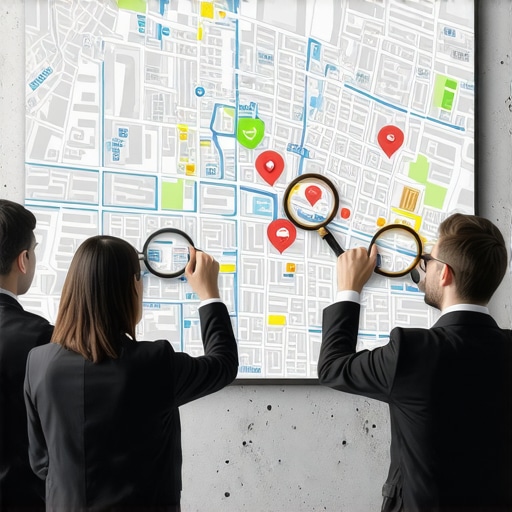
Google’s algorithm for the Map Pack relies on three core pillars: Proximity, Relevance, and Prominence. While you can’t change your physical proximity to a user, you have absolute control over your relevance and prominence. To dominate your local market, you must stop treating your profile as a digital yellow pages listing and start treating it as your most important storefront. For more insights, check out Why Your Shop Is Stuck Outside the Top 3 Map Pack Spots.
Tactic 1: Authenticity Over Aesthetics (The Photo Strategy)
We live in an era where consumers are allergic to stock photos. If your profile is filled with high-gloss, studio-shot images of smiling models who clearly don’t work at your plumbing company, you are losing money. Recent research titled “7 Smartphone Photos Prove Authenticity Beats Studio Quality” highlights a shift in consumer behavior: users trust raw, real-time imagery over polished marketing assets.
Google’s Cloud Vision AI now “reads” your photos. It identifies objects, text, and even the “vibe” of your establishment. When you upload a photo of a technician performing a repair or a customer holding a product, Google associates those visual entities with your business. This is a critical component of google maps optimization.
Actionable Steps:
- The Storefront Shot: Upload a photo of your building from the street. This helps with “wayfinding” – the psychological comfort of a customer knowing exactly what to look for when they arrive.
- The Team in Action: Stop the staged handshakes. Capture photos of the work being done. Google rewards these “real-world” signals.
- AI-Tagging and Metadata: Ensure your photos are relevant to your categories. While Google stripped out some EXIF data benefits years ago, the visual entity recognition is stronger than ever. For a deep dive, see 5 specific photo metadata edits that make your map rankings improve without buying ads.
Tactic 2: The “Infrastructure” of NAP & Schema
I often quote Rashid Rehman, who famously said, “Local SEO isn’t marketing. It’s infrastructure.” If your Name, Address, and Phone number (NAP) are inconsistent across the web, you are telling Google’s algorithm that your business is unreliable. Think of NAP consistency as the foundation of your digital building. If the foundation is cracked, the house won’t stand.
Beyond basic NAP, you need to utilize local seo tools to implement advanced Schema markup. Schema.org is a “behind-the-scenes” language that tells search engines exactly what your data means. For local businesses, the LocalBusiness or Store schema is non-negotiable. It bridges the gap between your website and your Google Business Profile, reinforcing your location data.
Many businesses miss the specific “Missing Schema Lines” that define their service area or store hours in a machine-readable format. When Google’s bots can easily verify your location through multiple data points, your google business profile optimization efforts yield much higher rankings. Read more about The Missing Schema Lines That Tell Google Exactly Where Your Business Lives to ensure your technical foundation is rock solid.
Tactic 3: High-Intent Review Management
Reviews are no longer just about the star rating; they are about the keywords and the context. When a customer leaves a review saying, “Great service,” it does very little for your local map pack seo. However, if a customer writes, “The best plumber in Austin fixed my burst pipe within an hour,” and attaches a photo, that is a high-octane ranking signal.
You need a proactive strategy to generate reviews that contain local seo ranking factors. This involves guiding the customer. Don’t just ask for a review; ask them to mention the specific service they received. Google’s algorithm parses review text to determine if you are a relevant match for specific long-tail queries.
The Strategy:
- The Script: Use a specialized text message script to follow up with customers immediately after a transaction. Timing is everything.
- Keyword Injection: Prompt users by saying, “We’d love to hear what you thought of our [Service Name] in [City Name]!”
- Responding with Intent: Always respond to reviews. Use your responses to naturally include secondary keywords like “google maps ranking service” or “local seo strategy” where appropriate, though keep it natural for the reader.
To see how your current reviews stack up, use a google business profile audit tool. And for the exact wording I use, check out This Text Message Script Gets 5-Star Reviews Without Being Annoying.
Tactic 4: Leveraging 2026 Real-Time Signals
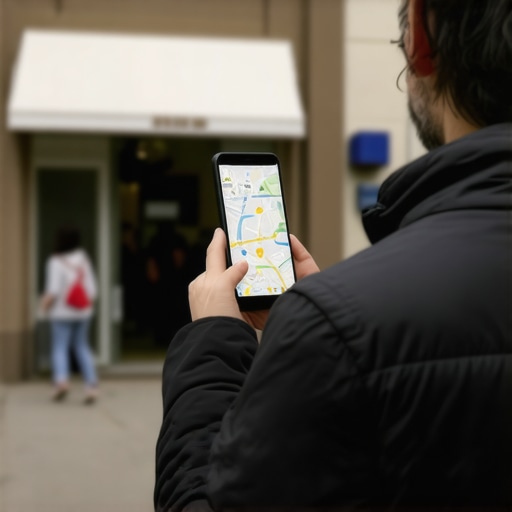
As we move toward 2026, the way we rank google business profile listings is shifting toward real-time data. Google is increasingly using “Blue-Dot Accuracy” – the real-time GPS data from users’ phones – to verify store visits. If 50 people click “Directions” but only 2 actually arrive at your coordinates, Google notices the discrepancy.
Future-proofing your profile means embracing “Live Store Traffic Signals” and “Real-Time Stock Edits.” Google’s “See What’s In Store” (SWIS) feature is becoming a massive driver of foot traffic. If a user searches for a specific product and your map profile shows it is “In Stock” right now, the likelihood of a store visit increases exponentially. This is the ultimate way to rank higher on google maps – by providing utility that competitors ignore.
We are also seeing the rise of AR overlays and drone delivery pathing being integrated into map data. Ensuring your “entrance point” is accurately pinned on the map – not just the center of the building – is a small technical edit that significantly improves the user experience. For more on this, read 4 Real-Time Stock Edits to Make Map Rankings Improve in 2026.
Tactic 5: The PMax & Promoted Pins Shortcut
Sometimes, organic google business profile reviews and optimization take time to gain momentum. If you need store visits *today*, you must look at paid local signals. Harrison Jack Hepp, a leader in local digital advertising, emphasizes the power of Performance Max (PMax) for store goals.
PMax campaigns allow you to show up across YouTube, Display, Search, and most importantly, Maps. “Promoted Pins” allow your business to stand out with a unique square icon or a top-of-pack placement, even if your organic ranking is still climbing. This is a powerful google maps lead generation tools strategy that complements your organic efforts. By dominating both the paid and organic sections of the Map Pack, you create a “monopoly effect” for your local keywords.
Conclusion: The 15-Minute Audit
Turning clicks into visits isn’t about one single “hack”; it’s about the cumulative effect of these five tactics. From the authenticity of your photos to the technical infrastructure of your Schema markup, every detail serves as a signal to both Google and your potential customers. Google business profile seo is a marathon, but you can see immediate gains by fixing low-hanging fruit.
I encourage every business owner to perform a “15-Minute Google Maps Audit.” Search for your primary services in an incognito window, check your NAP consistency, and look at your photos through the eyes of a stranger. Are you a business people want to visit, or just a pin on a map? To help you out, I’ve detailed the process here: The 15-Minute Google Maps Audit That Reveals Why You’re Invisible.